24 Mar 2013

Flashback: The Eleven Doctors

I've been meaning to write an article on a Doctor Who fan film series I made a few years back in the summer holidays - and with talk rife at the moment, what better time to talk about my own take on 'Eleven Doctors' - featuring the voices of Matt Smith, William Hartnell, Patrick Troughton, and all the rest?


I'm sure it won't be news to anyone reading this, but 2013 is a particularly special year for Doctor Who - its fiftieth anniversary, to be exact. At the time of writing - with filming due to start next month - speculations are wild for what the upcoming special story will be like. Will any the old actors who played the Doctor turn up - like in previous years? And what about including ones that are dead, or very old? Could there be other old guest stars, companions, monsters? What does Steven Moffat have up his sleeve?

Well, I don't have any answers*. But I do have my take on what such a special could be like...

It was back in the summer of 2010, and Matt Smith had just done his first 13 week run playing the Doctor (and only 13 week run, come to think of it!). Added to that, for the first time, the earlier Doctors were being released in toy form - fans could get a complete set of all eleven! In this era, where all the early years of the show are readily available and embraced, this sparked a lot of imaginations...
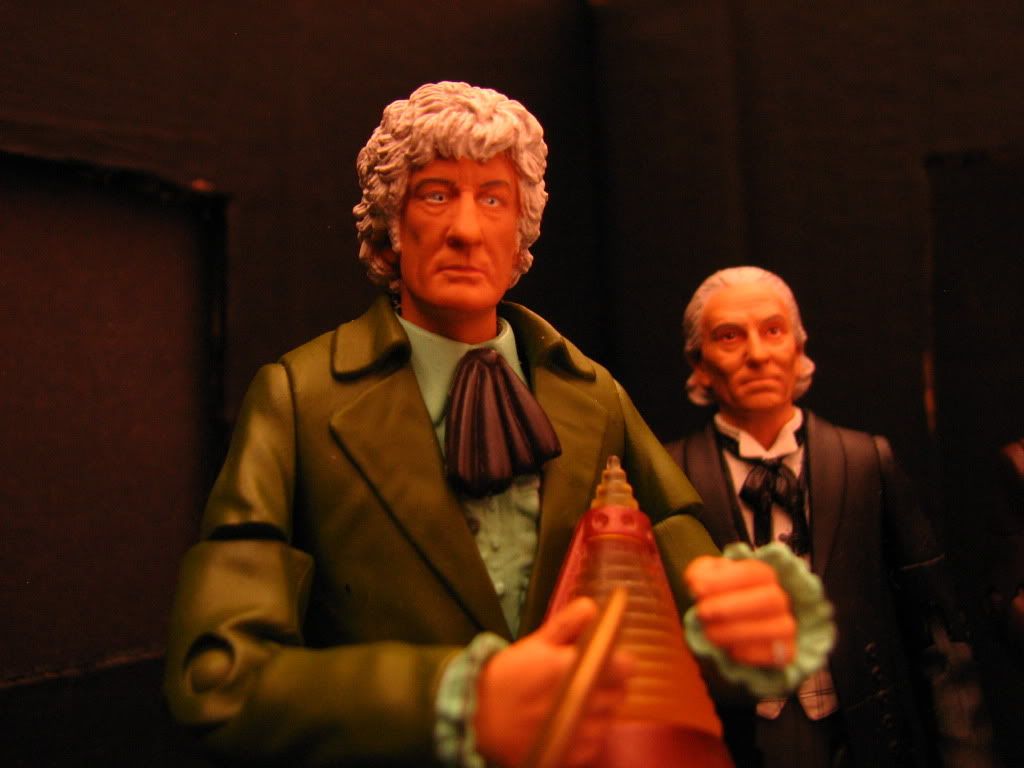

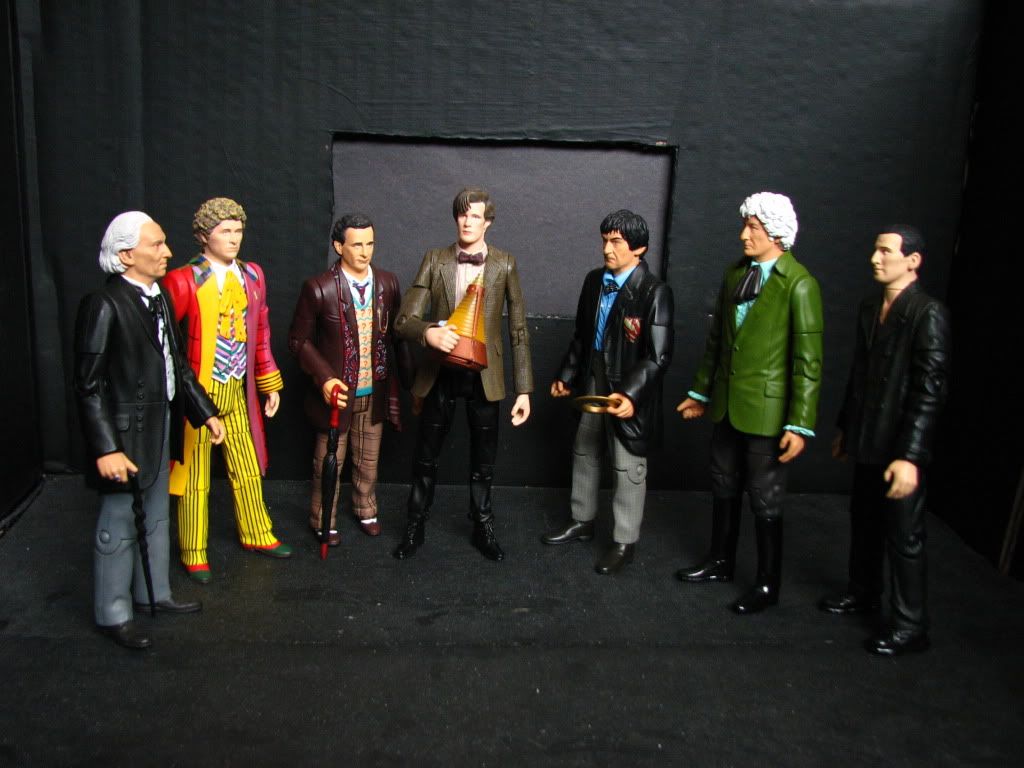
At the time, I'd done a few films with action figures. The Doctor versus the Daleks, that kind of thing, normally stop motion. With some of them, I'd put on voices - and because I'm rubbish at impressions, using sound clips from the TV show. If I was going to do a 'meetup' adventure of all of them - which was irresistable! - I'd have to make them talk to each other, and that meant using the original actors.
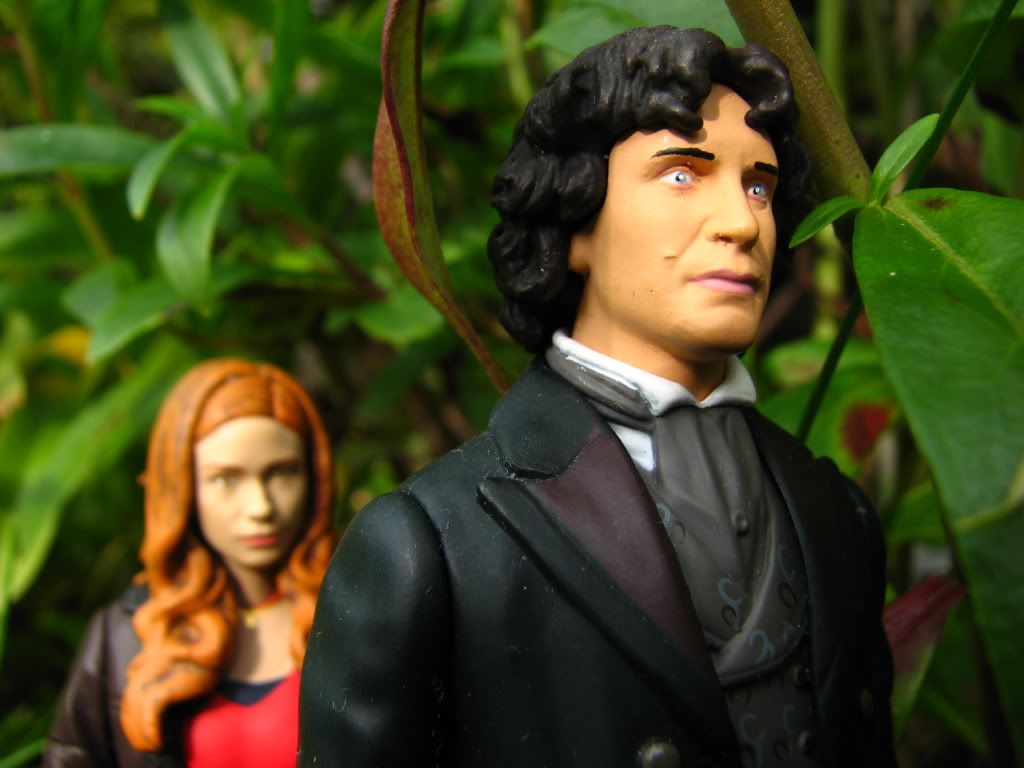
Yep, even Paul McGann!
It was ambitious. Actually, it started off as a one-off - a fun, short episode where the Doctors found themselves together, and decided to argue, ending on a cliffhanger. (I often end things on a cliffhanger, and then never resolve it!) I knew a website which handily offered soundbites from the show, so I was able to pick and choose a range of dialogue for the characters to say, and then piece things together, like a giant jigsaw puzzle. As the scale of the adventure increased - a very exciting prospect! - I quickly exhausted the list, and had to source my own clips from the DVDs, a few audios, deleted scenes, extra games, practically everything (with big thanks to online transcripts of the episodes, saving me a lot of time when I wanted something specific, like opening a door!).

Some ideas I'd had from the start. Others came to me whilst I was collating possible voices - for the story has to be driven by what the characters are able to say, or else the whole thing feels manufactured. One thing was certain - I wanted to feature all the Doctors, taking an equal share of the lead role (a hard task in itself - that's eleven lead characters!). Although I didn't have much choice when it came to companions, as many weren't released yet - I chose Amy, as she was the current one, though I couldn't resist featuring K-9 and Captain Jack too. However, all the big monsters would feature, like in previous specials - so thanks to the range of toys, we had Daleks, Cybermen, The Master (with a rather hammy voice), Weeping Angels, Sea Devils, Sontarans, Autons... the works!
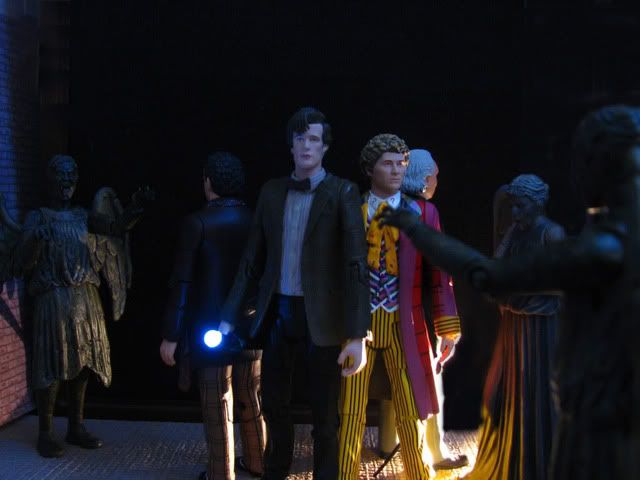
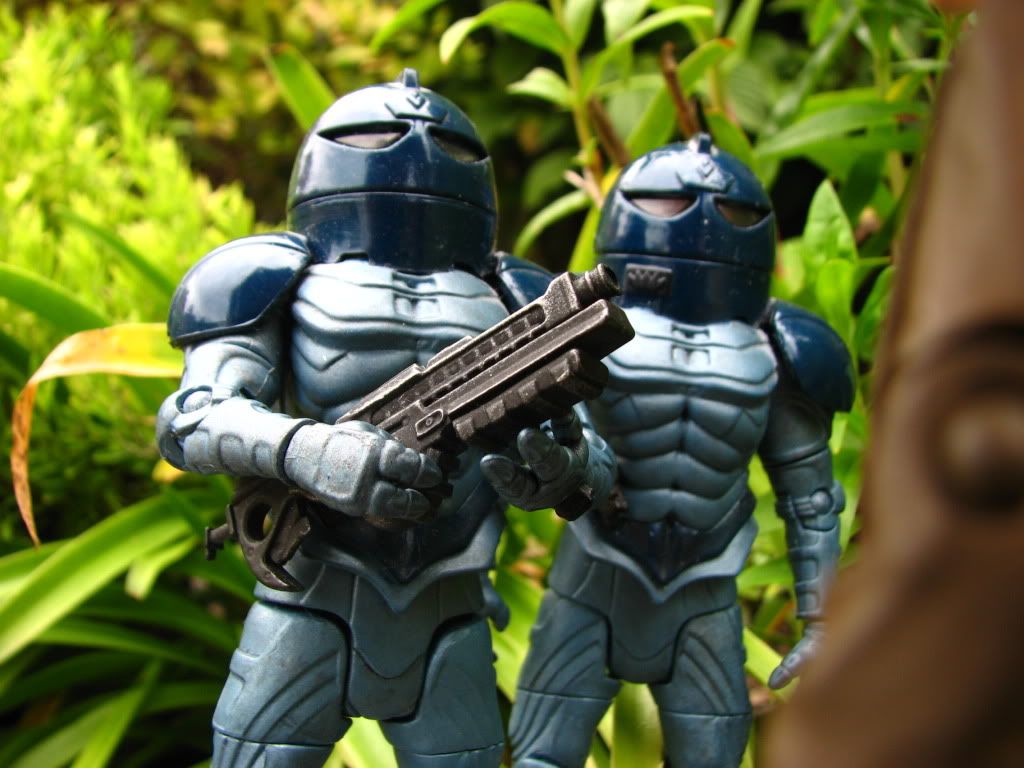
And whilst the plot was always going to be weaker than most, I tried to make it as much like a proper new series story as possible - whilst nicking the general 'quest' format from The Five Doctors, and with a few blatant homages to old stories along the way.

As it turns out, the series was really popular. About two months elapsed between the first and the last part (including a holiday, hence a slightly rushed editing on Part Two), with the production getting slicker as it went - the first part, with static figures in a dark room talking, is a little quaint now I look back. The whole thing totals an hour - pleasingly, about as long as a 'proper' episode!
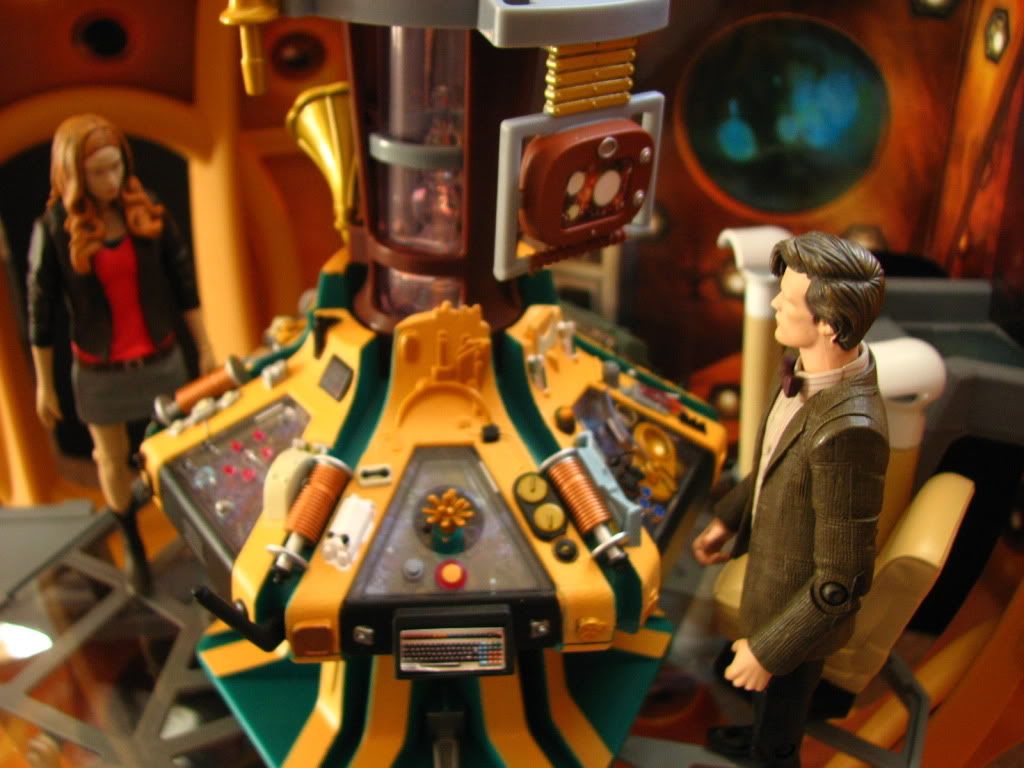
Plus a short scene at the end, in the new TARDIS set - which has just come out when recording the final part!
So, if you haven't seen it yet, why not have a watch? It's made out of six-inch-tall plastic toys by a teenager (on his own!), with various cardboard spaceships and a back garden becoming a rainforest. But it's bursting with imagination - and who could resist pitting William Hartnell against the Weeping Angels?


For more videos, before and since (I was going to follow this up with other invidual Doctor stories - but I only got as far as a dark Tom Baker tale!), see my Youtube Channel - http://www.youtube.com/user/Aquatics64

And Babelcolour's 'The Ten Doctors' is highly recommended - like this, but made out of video clips. Highly accomplished!

(*though I'd expect something like the Doctor visiting his past - possibly solving a mystery, like the Silence stuff - and so we have quite a few references and cameos, but an actual storyline. Think Wedding of River Song crossed with a Who convention!)

5 Mar 2013

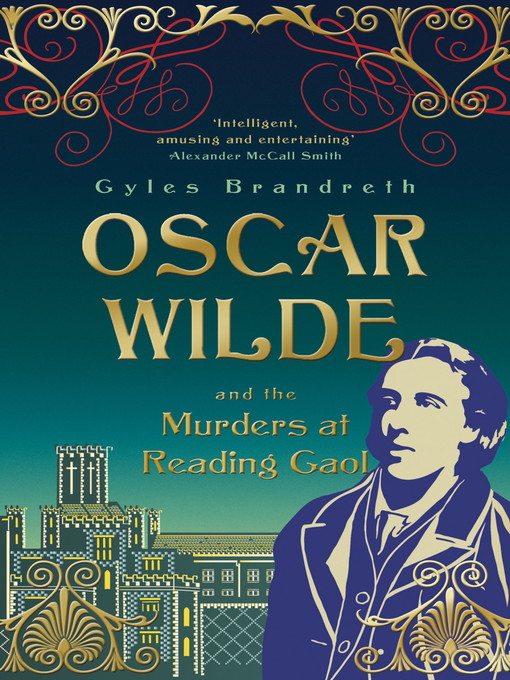
The Oscar Wilde Murder Mysteries


On the 30th August 1889, a very auspicious dinner was held. It was an event to discuss forthcoming material for Lippincott's Monthly Magazine, and among the diners were two of the most acclaimed writers of the forthcoming decade, if not the century. One was Arthur Conan Doyle, who contributed his second novel featuring Sherlock Holmes, 'The Sign of the Four'. In only a few years, Sherlock Holmes would become a household name. As would another writer, but for very different reasons: also attending was Oscar Wilde - the Irish poet, playwright, and personality, later writing 'The Picture of Dorian Gray'.

This meeting provides the incredible conceit behind Gyles Brandreth's ongoing series of novels: what if Oscar Wilde, one of the greatest minds of the age, had investigated murders and crimes, in the style of Sherlock Holmes - together with Conan Doyle (and others) as Watson?

What makes the series far more convincing than you might have first thought, is the level of research. Brandreth - a self confessed Wilde afficiando - plunges you into the time of the 1890s, complete with an array of colourful characters, most of which are real people. Due to Oscar's social standing, he mixes with princes, with acclaimed actresses, and with writers like Bram Stoker - yes, he really did know the man who came to write 'Dracula'. And he captures the vibrant wit and voice of the main character, without reducing him to an endless stream of epigrams and quotes from his plays - at times, delving into Oscar's complex morality and conscience. This grey area chimes well with the dark and shady practices that the books are (entertainingly!) full of - the crimes and corruption that form the 'murder mysteries'.

So far, there are six books in the series - and happily, they can be read in any order. Each is set in a clear place and point in Oscar's life- there's a highly researched picture of London as Oscar would have known it, as well as trips to Italy, and his time spent in Paris, back when he first became famous.

The latest book, published late last year, tackles Oscar's darkest period - the two years of imprisonment, spent in Reading Gaol.
Unlike most of the other books, here there is no Watson figure. It was a time when Oscar found himself cut off from his old way of life, and his old friends, and so rightly it has a very different feel to the rest of the series. Gyles Brandreth takes perhaps a risky approach, by telling the story from Oscar's point of view. He narrates his time spent there, and so we hear of his thoughts and feelings. That this approach is successful, shows what a clear voice the author has shaped throughout the books - that he can get into his mind, and eloquently express the trials and anguish of prison life.

It's a very accomplished book, and like the others in the series, a very good murder mystery indeed. Like the best of them, it keeps you guessing, with a cast of suspicious suspects - although, it's probably best to discount those characters that you know really existed!
In a way, the concrete grounding in fact is the series's weakness. Some of the books feel more researched than others, or having more of a historical basis. They say you should never let the facts get in the way of a good story - although the investigations and murders themselves are fictional (hopefully!), a few of the suspects and cameos are minor celebrities, which can upset the deductive process - where anybody might be the killer!
Nevertheless, there have been a few occasions - including with this book, Oscar Wilde and the Murders at Reading Gaol - just how historically accurate they are. I naively assumed that much of the book, with the inner workings of the prison, with its harsh rules and wardens, were fictionalised, by the author reading between the lines, but no - using detailed accounts from the past, with various documents and testimonies, Gyles Brandreth was able to recreate this dark period of Oscar's life with a high level of detail - that it was so readable does him credit.

 The inside cover of the latest novel provides a final delight - an adaptation of the series could be on the cards, produced with the BBC and also Sprout Pictures, part-owned by a certain Stephen Fry... that would be truly exquisite!

31 Jan 2013

Warm Bodies

Possibly the weirdest idea for a film in a long time, 'Warm Bodies' (out next week) is a post-apocalyptic tale of a teen zombie falling in love with a pretty human girl, who's part of the resistance. And he's eaten her ex-boyfriend. Yep - it's probably the second zom-rom-com around...


The two leads are terrific, especially Nicholas Hoult, who has to spend the film in zombie-makeup. It's surprising just how much we root for him, considering zombies have a top speed of twenty words a minute (excluding voiceovers).

Being a genre mash-up, it's got recognisable set-pieces from both romantic comedies and zombie horror. It could easily feel clichė, but surprisingly it doesn't, which is a testament to the makers of the film. But it's definitely primarily a comedy - and pretty funny, too.

The slightly stock nature of the plot at times could be a bad point, but it does help keep things light. It's a fun movie overall - perhaps let down by the lack of 'heart'. I guess that's obvious for a zombie movie, but these characters feel like they need to be fleshed out more. Besides that, it's pitched well for the audience (with some nifty effects, too), and should be a hit.

24 Jan 2013

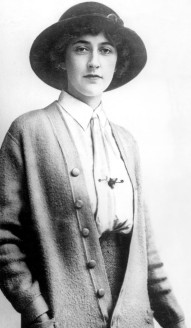
Agatha Christie's Autobiography - a review


After reading almost all of her canon of work, I've delved into one of Agatha Christie's most important tomes - her autobiography. Though published in the months after her death, it covered her life up to when she was in her seventies, about ten years before she died. Whilst I was reading and discovering her books, I'd built up a strong image of who she was - by what subjects she wrote about, or information regarding the publishing of her books, or that famous disappearance - and even some particularly autobiographical characters she created. So, how would I find reading this, her own, perhaps definitive, account of an eventful life?

The book is a long one - it weighs in at 250,000 words, and took her fifteen years to complete it. But the extra time was worth it, as it's packed full of interesting stories and happenings. And whilst there are digressions along the way, it has all the economy - and excitement - of one of her great books.

People who are expecting a complete guide of every process that goes into writing one of her novels are going to be disappointed - it's an autobiography after all, a personal account of the story of her life. The books rarely feature - and when they do, they're the ones that she considers important personally, or that she has strong memories of, or has picked out as a good book when reading back many years later. There's particularly a fair amount about how she came to write her first book, The Mysterious Affair at Styles, and also the publishing side of things.
It's interesting to read how at first Agatha Christie didn't consider herself as a novel writer, but as a wife who started to do that sort of thing on the side to make some extra money. Ten years on, and she found herself writing books even when she didn't want to - a sign, for her, that it was now a job, and she would write a book every year. There are recollections of crafting some of her early work - the light hearted adventure type thrillers "that are more fun, and quicker to write", yet few of the period in the 1930s in which some of her most acclaimed detective stories were published. However, she also delves into other parts of her work (such as poems, short stories, romantic novels and acclaimed plays) and interestingly, her thoughts on the process of writing, and how she came to do it in the first place. Written in the first person, she shares a lot of personal opinions, and it builds up a picture of her own character - and in one frank section, she simply gives us a list of things she likes and things she doesn't!

That's not to say the life she's lead isn't recognisable as something out of a Christie novel. Plenty of autobiographical detail seems to have been included in her work, sure to be picked up on by those who have read it. Things like travelling on the Orient Express, dig sites in Syria and Iraq, or an exotic business holiday to South Africa, which was then extensively used in the early thriller The Man in the Brown Suit. Much of her childhood seems very close to the Mary Westmacott romantic novels, in which she painted a picture of someone's life story - some things copied word for word - and later novels, like Postern of Fate. But these references are fewer than you'd think - she says she rarely based characters on anybody in real life, certainly not people she knew, and after all - in her eyes, they were purely escapism.
Rather, the avid Agatha Christie reader gets a sense of the time she was living in, and the wider world in which her books were written in - a time of country houses, servants, generations of men becoming soldiers, and unexpected foreign travels. It's easy to forget that some of the events she describes happened over a hundred years ago.

After a slow start, though with many detailed recollections of her early years - no less busy than her later ones, as her parents moved around France as she was growing up - she then covers the events of her reaching adulthood, with plenty of prospective husbands! Personally, I found the book picked up pace, despite the many amusing and heartfelt events of her childhood - and became even more interesting when it went on to cover the events of the First World War, and the interesting world of the VADs, and events that would strongly shape her future.

The book, and by extension her own life, covers a lot of ground - from schooling, to nursing, to travelling round the world - and is often a joy to read. Her books are often praised for their readability, and this one is just the same. Despite the length, it's accessible, enjoyable and moving - giving us an insight into the modest, retiring crime writer, whose audience - including me - previously only knew through her detective novels.

13 Jan 2013

Children's TV - and a plea

I have vast swathes of recollections of things I used to watch when I was younger (not to mention books!). CITV generally ruled, although we did watch some CBBC - and that's aside from the indomitable collection of Disney videos. (Breakfast TV, normally filled with cartoons - although that included Pokemon - was strictly limited to holidays)
When I was younger - Thomas the Tank Engine, Bodger and Badger, Noddy, Old Bear, Sooty, Dennis the Menace, Winnie the Pooh (ohh, great cartoons those were). Probably the greatest show, which definitely stands up to rewatching, The Animals of Farthing Wood, and similarly the perfect Mr Bean. Goosebumps, Sabrina the Teenage Witch, Hey Arnold, hazy memories of the ultra scary Blair-Witch style Jeopardy and Are You Afraid of the Dark. Sunday evening dramas like Aquilla, the oft-mentioned (in my family) Black Hearts in Battersea and The Wolves of Willoughby Chase, The Phoenix and the Carpet, and something involving chocolate. The Worst Witch, The Demon Headmaster - based on the books, with a creepy series about plants and cloning too - Children's Ward (a soap, basically). My Parents are Aliens, Jungle Run, Art Attack, Zzzap!. The original, far inferior, Horrible Histories. And also lots of pretty good shows about computer games - which seems odd now, looking back.

And then there's a drama series, which must have been shown around 2002-2003, which I can't for the life of me track down. And of course, I remember a lot about it - albeit not its strange, weird name that you could hardly pronounce (an acronym, perhaps).
It was presented as a game show or reality show, and had a group of about eight children (who were slightly annoying and bickering) staying in "the world's largest film set". A bit like The Truman Show then - weird things happened each week, shot on 'hidden' cameras, but we were given a glimpse of what was happening behind the scenes - stuntmen and actors and people moving the set around.
I think I missed the first episode (it was on twice a week, Mondays and Tuesdays I think, about 4.30 - I used to scour TV listings even when I was younger), but there was a cake competition I remember, which ended up being poisoned and making the entire town ill, and the villagers angry. In another episode, the group ate some drugged blackberries, and then woke up to find the entire set had been switched to the medieval times, in a sort of time travel adventure. In another, the group stood outside a TV shop, when suddenly aliens attacked (at night - so basically just lights and explosions) and random bystanders were seemingly killed in front of them.
Of course, this made an impression on me - but I can't find anything about it online at all. At the end of the series, the group of children that remained won a prize, a huge money prize (a million dollars?) but couldn't spend it until they were older. It's probably an American or Canadian or Australian show or something, which is why I can't find it.

Around the time of this mysterious show they were syndicating lots of similar dramas from other countries. Pirate Islands was good, set on a virtual tropical island with an over-the-top pirate captain's ship parked nearby. Blake Holsey High looked cool, of a similar style to Buffy, but I only saw the first few episodes. Alongside more home-grown stuff - Sir Gadabout and Harry and the Wrinklies, and odd stuff like Don't Eat the Neighbours.

Later I moved to BBC for some reason - watching Blue Peter for once (though I can't remember many others - though Shoebox Zoo was good, and later things like Trapped!) and then, when I was about 13, Doctor Who would have arrived! And it was long overdue...

3 Jan 2013

The Greatest Show in the Galaxy - review

Is this my first proper Doctor Who article on here? Blimey. Well, I saw this late 1980s story recently, and wondered if I could write a review on it. It's a tricky one to get your opinion round, so perhaps it's a good idea. Here goes then.

The icing on the cake of any Doctor Who story is if it includes a scary monster, something that will last long in the memory of children watching. The setting of The Greatest Show in the Galaxy delivers on this front - the Doctor and companion Ace visit the renowned Psychic Circus, whose acts are turning murderous... Killer clowns? It's a classic frightening image that rarely crops up in the show, possibly because it's almost too frightening for half seven in the evening (see The Deadly Assassin for a previous incredibly scary cameo).

And elsewhere, it's a typical Doctor Who adventure, and very reminiscent of other stories of the era. The wealth of location filming in a rather fine desert-like quarry means the production stands up rather well. The writer, Stephen Wyatt, also wrote Paradise Towers in the previous season, to mixed reviews. The similarities are there if you look for them - both have settings populated by a variety of surreal characters, and by the Doctor has arrived, the place has run down, with the robots seemingly developing a mind of their own, in order to appease a god-like figure. But thanks to a much more grounded location - a circus tent! The corridors are simply walled by bits of cloth, genius! - and more focused direction, this second story is far better (even if the production was apparently rather troubled - but you can't tell).

Inside the circus of terror... cheap but cool!


With Sylvester McCoy having found his feet by now, the Doctor is a delight to watch, not least demonstrating some crazy circus skills in the final part. Ace, by comparison, doesn't have an awful lot of character moments, although her fear of clowns is acknowledged (and, in part, overcome), but does get a strong part of the plot, helping the Doctor as his plan comes together whilst defeating robots, without hardly a scream or a pointless question. But it's the mysterious Mags who steals the limelight, getting a nifty twist to her character and a cliffhanger too.

At four parts, it's not too long, but perhaps the story sags in the two middle parts set entirely inside the circus tent. The bad guys only show their faces at the climax of Part Four, alas - and they're pretty famous, bandied about everywhere, like on the DVD cover - though they are done well, with menacing voices. Similar pacing is abound in the likes of Ghost Light or Paradise Towers or The Curse of Fenric - but at least it means the final episode isn't a damp squib.

It's a story with a wonderfully surreal flair, a script that's surprisingly original (not to mention layered - you can read plenty into the McCoy stories, this one included), whilst still keeping traditional monsters and thrills. This surely means, with some competition, The Greatest Show in the Galaxy is among the top stories of the era.

17 Dec 2012

Flickr highlights - 2012

Here's a (relatively) small selection of some of my most popular and best things I've put up this year - some Doctor Who related, some of where I live and other places. For more photos, here's a link to my page on Flickr.

TARDIS (of Mars) Summer Breeze Cyber Love An Awful Lot of Running sunday afternoon Autumn/Winter The Empress Hunting Bath in Miniature II Walk Across a Summer Meadow Tunnel of Love Lost at Sea Roman Baths Dalek Patrol Comic Book of the Daleks! Blue Sky Thinking Abandoned Hospital 1 Prisoner Zero Bath Cityscape Evening View Maximum Extermination! Musn't Linger Sunrise 2 "I am usually referred to as the Master..." Bennett Sunset The Dalek Invasion of Earth (colourised) Ben and Polly (comparison) pastel Now Loading “Marriage is a wonderful institution, but who would want to live in an institution?” Hooded Men Stars Asylum of the Daleks! sunday afternoon 2 pulteney street noir

15 Dec 2012

The War of the Worlds - The New Generation: review


Back in 1978, a musical was released, a strange, electronic, cutting edge musical of one of the first science fiction novels - War of the Worlds. Odd choice - but thanks to a resurgance in apocalyptic fiction, victoriana, electronic music, recent film adaptations, new reissues and stage productions, or simply because it's bloody brilliant... it's still very much going strong. But what's this? A remake?


It's a bit of an odd listen, especially for someone who's listened to the original a lot. It's not a remix - it's far more sympathetic than that, and hardly deviates from the original tracklisting, album length, songs or story. Because the original album has been remastered over the years, and slavishly recreated and rehearsed for the stage show - in order to sound exactly like what fans expect - you won't be surprised to know there's hardly any major changes in this new recording. Instead, there's dozens of new bells and whistles to back up the main tune, modern dancey eye-catching (ear-catching?) effects, echoes and whooshes. And, naturally, a new cast.


Two processes are going through my mind, simultaneously, when I listen to it. The first, is recalling the seemingly perfect, gospel text of the original edition. The second, is a sort of distancing effect, because the extra drumbeats and new synths modernise it and give the whole thing quite a different sound. I also thought it sounded more like a soundtrack to an adventure than before - as if we're just not seeing the visuals that no doubt flash up on large screens on stage; certainly they are conjured by your brain as you listen to it. Whether this was down to the performances, the depth of adding the new instruments, or simply me getting really into it, I'm not sure.

I've no problems with the new musical effects - there's some quite cool gimmicks (I loved the modern underwater bit), extra flourishes that might have been missed out on first recording, so let's look at the cast. Liam Neeson has a terrific voice for the Narrator figure, which helps carry the whole thing along as marvellously as Richard Burton did, and in a similar tone.
Of the singers, Gary Barlow does a good stab at a Justin Haywood impression - but, should he? The version of Forever Autumn is still very good, but is it a bit too faithful? And, dare I say it, is there a whiff of Autotune about his vocals? With Joss Stone, I have the opposite reaction - she's too different. Her voice is good, but it's oversung - there's the annoying habit of adding in far more notes than should be required, giving it a ridiculously overdone feeling to one of the better songs on the original album.
Alex Clare and Maverick Sabre (great name, up there with Lex Shrapnel) don't quite shrug off the original performances, but are well chosen certainly. I was impressed, though, with Ricky Wilson's Artilleryman - not just in singing capability (even if the vocals are a bit overlayered), but in acting. A very natural tone, and makes Brave New World one of the highlights of this.

So, overall - it's different, and certainly interesting, but notably faithful to the original. The cast are, on the whole, great, the new instruments sympathetic, and I'm sure this nuanced version will sell bucketloads for the shiny new up-to-date stage show. And they haven't messed about with Dead London too much, so that made me happy.

It certainly proves this musical has a lot of life left in it. I think this second album will date as the first - something that oozes quality, but is definitely of its time. Whether a third album comes out in years to come, remixed to oblivion, or ground to a pulp under folky cover versions, who knows?

7 Dec 2012

Do you want to do a Maths Degree?

Well, do you? Here are five criteria from me that, ultimately, might help the decision process:

1: Do you like mathematics?

Or rather, do you really like mathematics? And I don't strictly mean if you're good at it or not. Probably, you won't realise if you enjoy maths or not, until about halfway through the degree. Because there's nothing like ten weeks of solid problems to stimulate or shut down the mental processes.

2: Do you like learning?

You'd better. So far, maths lessons for you will have been, ultimately, building on what you did the previous module, or term, or year of study - with the odd exception, such as when you first discovered trigonometry, or calculus, or anything else that would send a normal person running and screaming. But then you find yourself at university, and the first lecture chucks everything you knew out the window. In my first few weeks, I was eagerly clinging on to the bits of differentiation and integration that I recognised amidst the sea of greek letters and set theory. Don't worry - it becomes much easier with time. But you will have to learn a lot of bizarre new things, and fast.

3: Are you terribly precise?

I'm presuming so, as you've got this far. I'm not talking about handwriting - some students I've seen have appalling handwriting, especially in maths. Rather, in copying down symbols and words and phrases from the board. One thing you can't do is just copy down any old rubbish, and copying down blindly means you can't always get the gist either. Mathematics requires precision, almost to the point of pedantry, when it comes to notation. Count your brackets! Swot up on Greek letters! Learn some logic!

4: Are you good at exams?

Compared to other university courses, mathematics particularly seems like a breeze. You won't have a report to hand in every week. There's no compulsory books to read up on. No essays, really. In fact, during the term time, you'll only have one or two pieces of coursework to hand in, three if you're very unlucky.

But then you come to the exams. The exams - which, by the way, are worth about 95% of your grade for this term - requiring you to basically do fifteen questions in ten hours. All crammed into about two weeks. Let's face it, if you're better at coursework than in examinations, I'd probably advise a different subject.

Of course, during the weeks leading up to the exam, you have lectures, you have problem sheets, you have a mounting pile of work that you really should do if you want to pass the exam. So whilst it's by no means a breeze, it does mean you can work at your own pace. Or rather, you can skip a few weeks of work, nobody will notice, until you have to stay up all night before the exam.

5: Do you know what you want to do afterwards?

The choice is simple. Do you want to be an engineer or something practical? Do an engineering course. Or something with computing? Step forward Computer Sciences. Most jobs have a course attached to them - aeronautics, finance, law, even media, ultimately... Mathematics? Well, most of it is theoretical. So, tough luck. But the good news is, maths degrees fit into every kind of job. (Actually - I'll get back to you on that one...) The sort of degree that tells people you've got the brains to do really complicated stuff. Because at the end of the day, it's not the really complex processes you learn in the final year... but learning the way of thinking that you need in order to implement them.

Unless you're one of these people who wants to go on to do a PHD in the subject. Shortly followed by a trip to an asylum, I presume. (joking, joking...)

So... that's my personal advice to any wannabee maths graduates. Oh, and also - it's a great subject - highly engrossing, entertaining, challenging, baffling and rewarding, if you want it to be.