Showing posts with label maths. Show all posts
28 May 2014
The First Five Decades
The new issue of Doctor Who Magazine is upon us, and it's a good one for anyone who likes numbers. Thousands of fans have scored every story from 1 to 10, and all these have been averaged and totted up to find people's favourite - favourite story ever, favourite Doctor, favourite season, you name it. And there's even the prospect of comparing the results to the last time the poll was done, five years ago! (with a whole load of new stories since)
You can find out more about the issue, with a wonderful fold out cover, here. But I thought, since I entered myself, a short summary of what I voted for as my favourites. I rarely sit down and work out my favourite Doctor or story (there's 241 of them) - and my tastes are no doubt only controversial for how average they are - but it's a good game of numbers. (And maybe I've boosted the Slitheen ones up the chart ever so slightly!)
10s went to: (deep breath) The Tomb of the Cybermen, Inferno, The Green Death, The Time Warrior, Genesis of the Daleks, Terror of the Zygons, The Brain of Morbius, The Seeds of Doom, The Deadly Assassin, The Robots of Death, The Talons of Weng-Chiang, City of Death, Earthshock, The Caves of Androzani, Remembrance of the Daleks, The Empty Child / The Doctor Dances, Bad Wolf / The Parting of the Ways, The Girl in the Fireplace, Army of Ghosts / Doomsday, Human Nature / The Family of Blood, Blink, Silence in the Library / Forest of the Dead, Midnight, Turn Left, The Waters of Mars, The Eleventh Hour, The Time of Angels / Flesh and Stone, Vincent and the Doctor, The Pandorica Opens / The Big Bang, The Doctor’s Wife, Asylum of the Daleks.
9s went to: The Dalek Invasion of Earth, The Time Meddler, The Mind Robber, The War Games, Spearhead From Space, Pyramids of Mars, The Curse of Fenric, Dalek,
Father’s Day, Tooth and Claw, School Reunion, The Impossible Planet / The Satan Pit, Smith and Jones,
Utopia / The Sound of Drums / Last of the Time Lords, The Unicorn and the Wasp, The Stolen Earth / Journey’s End, Amy’s Choice, The Impossible Astronaut / Day of the Moon, A Good Man Goes to War, The Girl Who Waited,The God Complex, The Angels Take Manhattan, The Snowmen, The Name of the Doctor
There's a list of top 50 stories to watch right there.
(2s and 1s went to: Planet of Giants, The Space Museum, The Krotons, The Time Monster, Timelash, Time and the Rani; Underworld, Meglos, Time-Flight, Terminus, The Twin Dilemma.)
Per Doctor, it works out that Christopher Eccleston's stories work out the most favourable (my first Doctor, even though I put Matt Smith on the poll), followed by David Tennant and then Matt Smith. Out of the older stories - lower on average no doubt due to ropiness, but they're not that much lower - it goes, surprisingly, Patrick Troughton, Jon Pertwee, Sylvester McCoy, Tom Baker (!), William Hartnell, Paul McGann (his one story), then Colin Baker.
That's stories, not the actors, of course. I tried to keep a wide distribution (or else I'd give them all 9s), and stories I haven't seen (seen, not just heard) are omitted. (This means in DWM, the lesser known 60s stories are voted for by less people... but then most are never going to be front runners, and 'less people' still equates to over a thousand!)
Don't ask me to pick a favourite out of that lot!
30 Aug 2013
14 Forgotten Books from my Childhood
I see lots of books talked about online - but they're mainly classics, or by new or famous authors. From an age before the internet (well, social networking), most of the books I used to read never get publicised any more. And nobody ever recommends children's books anyway.
So here's a few that I remember enjoying - with no Harry Potter, Roald Dahl, Lemony Snicket, Narnia, Anne Fine, Artemis Fowl...
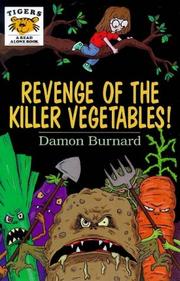
Revenge of the Killer Vegetables -Damon Burnard
I used to say this was one of my favourite books. One of the reasons was probably it's a comic! I don't think I realised that books could be this cool before - the title probably tells you the whole plot! And it's very funny, too. (Captain Underpants is another - sillier - comicky book I remember!)
Beaver Towers - Nigel Hinton
A bedtime story from when I was young - simple, Narnia-esque, about talking animals and magic and old places. And I must have read it lots of times, a rare event now.
Bobby Brewster series - H.E. Todd / Jeremy James books - David Henry Wilson
Two completely unrelated series I've lumped together, as I was about the same age reading both. The first, an old series of short stories from the 60s about a boy who ended up having magical adventures - well, slightly bargain basement adventures, with everyday items like a snowman or a potato coming to life. And the second, much more recent, about the highly comical adventures of an inquisitive four year old boy - I remember one of my teachers being a fan of them too.
Hiding Out - Elizabeth Laird
This used to scare me when I was little. It's about a boy on holiday in France, who then gets left behind and has to fend for himself. It's not creepy as such, just very realistic - although foraging for food and living in a cage isn't really comparable to getting lost in Marks and Spencer.

The Pokemon series - various
It seems a bit odd today. You had the videos games - the important, amazing thing - but also the Pokemon cards, the comics, the toys, the anime series... and you still got excited about the novelisations. Must have been a bit like what Doctor Who was - with Tracey Jump being Terrance Dicks's analogue. Even more excitingly - a few of them were original! I've got about twenty of them.
Choose-your-own-adventure books
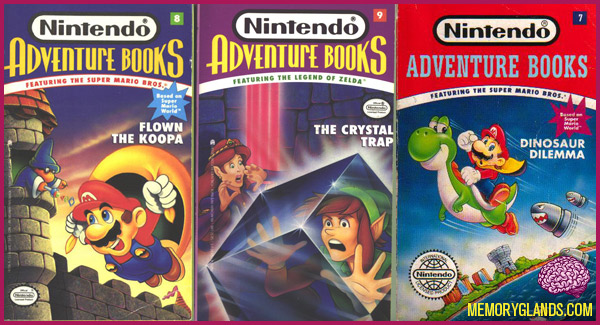
Loved these. For those unfamiliar, you start at page 1, and then whichever pages you choose to read next determines the story. Nothing fancy with dice or paper - my favourites were some rare Super Mario books, which had a load of puzzles and mazes that you had to get right in order to get the best ending. I even made my own once in the back of a notebook on holiday.

Murderous Maths - Kjartan Poskitt
Horrible Histories, Horrible Science, The Knowledge, and all that lot... But my favourite series was Murderous Maths. Perhaps because - shock! - I actually quite liked the subject. And this series was great - actually dealing with pretty complex concepts (A-level standard, even) in amongst the jokes. There's a nifty website too.

Deadly, Wicked etc - Paul Jennings and Morris Gleitzmann
I'm not sure how popular these two authors were - maybe it's a 90s thing, or an Australian thing - but they're highly recommended. I opted more for the oddity and daringness of Jenning's short stories, rather than Gleitzmann's real-life surrealism (though I did like Toad Rage). When they collaborated (on a few series), the results were very insane - giant worms and murderous sheep, that kinda thing.

The Wish List - Eoin Colfer
Everyone knows about Artemis Fowl (hopefully), and there's some great other Eoin Colfer books (Airman, The Supernaturalist, Half Moon Investigations, etc), but this one's a favourite of mine, and very underrated. It's witty and down to earth, about a girl who comes back as an angel in order to help an old man complete his 'wish list' - and sort out her own problems.
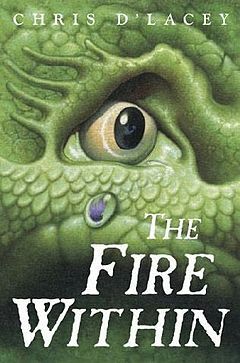
The Fire Within - Chris D'Lacey
I loved the first book - a brilliantly told story about an introduction into the ancient, hidden world of dragons. And also a story-within-a-story about squirrels. More sequels followed (like, five or six of them now) but by the time I got round to reading them I'd forgotten what happened in the first one. Oops.

Muddle Earth - Paul Stewart and Chris Riddell
Incredibly funny. Even for people who don't know Lord of the Rings - it's a spoof of fantasy novels, basically, from the writers of the acclaimed, extraordinary epic The Edge Chronicles (definitely worth reading, those!). They've tried to adapt it a few times, but it doesn't quite work as well as on the page. There was eventually a sequel, but I haven't read it yet.
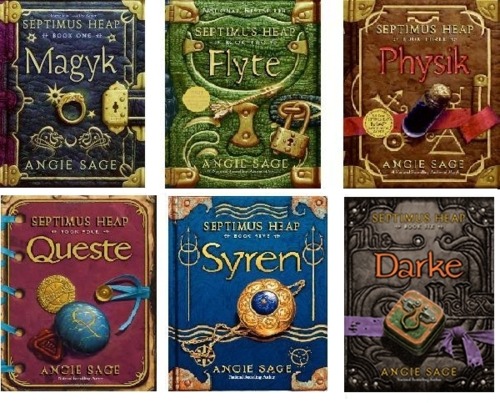
Magyk, et al by Angie Sage
Okay, I was a bit old with this one (though apparently - 2005, so not that old), but it's still bewitching - literally, a book about an apprentice wizard in a very believable fantasy world. It's got a wide range of characters - so it's sometimes hard to keep track of them between books, but it has warmth and humour in spades. And there's a blog here.
TimeRiders - Alex Scarrow
Okay, this is a cheat, as I was about 18 when it came out. But it's still an underrated new YA series. The first book in the series is still my favourite - time travel, Nazis, robots, nuclear war... it's a real action packed blockbuster! Website here.
There's probably lots more - children's fantasy series like The Divide (a boy discovering a mixed up fantasy world), Troll Fell (Vikings discovering trolls!), Otto and the Flying Twins (another fantasy wizarding world), and countless one-offs...
I used to say this was one of my favourite books. One of the reasons was probably it's a comic! I don't think I realised that books could be this cool before - the title probably tells you the whole plot! And it's very funny, too. (Captain Underpants is another - sillier - comicky book I remember!)
| Seriously - a talking potato! |
A bedtime story from when I was young - simple, Narnia-esque, about talking animals and magic and old places. And I must have read it lots of times, a rare event now.
Bobby Brewster series - H.E. Todd / Jeremy James books - David Henry Wilson
Two completely unrelated series I've lumped together, as I was about the same age reading both. The first, an old series of short stories from the 60s about a boy who ended up having magical adventures - well, slightly bargain basement adventures, with everyday items like a snowman or a potato coming to life. And the second, much more recent, about the highly comical adventures of an inquisitive four year old boy - I remember one of my teachers being a fan of them too.
Hiding Out - Elizabeth Laird
This used to scare me when I was little. It's about a boy on holiday in France, who then gets left behind and has to fend for himself. It's not creepy as such, just very realistic - although foraging for food and living in a cage isn't really comparable to getting lost in Marks and Spencer.
The Pokemon series - various
It seems a bit odd today. You had the videos games - the important, amazing thing - but also the Pokemon cards, the comics, the toys, the anime series... and you still got excited about the novelisations. Must have been a bit like what Doctor Who was - with Tracey Jump being Terrance Dicks's analogue. Even more excitingly - a few of them were original! I've got about twenty of them.
| I don't think I got the Zelda books - but I do have Sonic ! |
Loved these. For those unfamiliar, you start at page 1, and then whichever pages you choose to read next determines the story. Nothing fancy with dice or paper - my favourites were some rare Super Mario books, which had a load of puzzles and mazes that you had to get right in order to get the best ending. I even made my own once in the back of a notebook on holiday.
Murderous Maths - Kjartan Poskitt
Horrible Histories, Horrible Science, The Knowledge, and all that lot... But my favourite series was Murderous Maths. Perhaps because - shock! - I actually quite liked the subject. And this series was great - actually dealing with pretty complex concepts (A-level standard, even) in amongst the jokes. There's a nifty website too.
Deadly, Wicked etc - Paul Jennings and Morris Gleitzmann
I'm not sure how popular these two authors were - maybe it's a 90s thing, or an Australian thing - but they're highly recommended. I opted more for the oddity and daringness of Jenning's short stories, rather than Gleitzmann's real-life surrealism (though I did like Toad Rage). When they collaborated (on a few series), the results were very insane - giant worms and murderous sheep, that kinda thing.
The Wish List - Eoin Colfer
Everyone knows about Artemis Fowl (hopefully), and there's some great other Eoin Colfer books (Airman, The Supernaturalist, Half Moon Investigations, etc), but this one's a favourite of mine, and very underrated. It's witty and down to earth, about a girl who comes back as an angel in order to help an old man complete his 'wish list' - and sort out her own problems.
The Fire Within - Chris D'Lacey
I loved the first book - a brilliantly told story about an introduction into the ancient, hidden world of dragons. And also a story-within-a-story about squirrels. More sequels followed (like, five or six of them now) but by the time I got round to reading them I'd forgotten what happened in the first one. Oops.
Muddle Earth - Paul Stewart and Chris Riddell
Incredibly funny. Even for people who don't know Lord of the Rings - it's a spoof of fantasy novels, basically, from the writers of the acclaimed, extraordinary epic The Edge Chronicles (definitely worth reading, those!). They've tried to adapt it a few times, but it doesn't quite work as well as on the page. There was eventually a sequel, but I haven't read it yet.
Okay, I was a bit old with this one (though apparently - 2005, so not that old), but it's still bewitching - literally, a book about an apprentice wizard in a very believable fantasy world. It's got a wide range of characters - so it's sometimes hard to keep track of them between books, but it has warmth and humour in spades. And there's a blog here.
TimeRiders - Alex Scarrow
There's probably lots more - children's fantasy series like The Divide (a boy discovering a mixed up fantasy world), Troll Fell (Vikings discovering trolls!), Otto and the Flying Twins (another fantasy wizarding world), and countless one-offs...
Labels:
a guide to stuff,
books,
childrens,
copyright me,
maths,
personal,
pictures galore,
reading,
writing
7 Dec 2012
Do you want to do a Maths Degree?
Well, do you? Here are five criteria from me that, ultimately, might help the decision process:
1: Do you like mathematics?
Or rather, do you really like mathematics? And I don't strictly mean if you're good at it or not. Probably, you won't realise if you enjoy maths or not, until about halfway through the degree. Because there's nothing like ten weeks of solid problems to stimulate or shut down the mental processes.
2: Do you like learning?
You'd better. So far, maths lessons for you will have been, ultimately, building on what you did the previous module, or term, or year of study - with the odd exception, such as when you first discovered trigonometry, or calculus, or anything else that would send a normal person running and screaming. But then you find yourself at university, and the first lecture chucks everything you knew out the window. In my first few weeks, I was eagerly clinging on to the bits of differentiation and integration that I recognised amidst the sea of greek letters and set theory. Don't worry - it becomes much easier with time. But you will have to learn a lot of bizarre new things, and fast.
3: Are you terribly precise?
I'm presuming so, as you've got this far. I'm not talking about handwriting - some students I've seen have appalling handwriting, especially in maths. Rather, in copying down symbols and words and phrases from the board. One thing you can't do is just copy down any old rubbish, and copying down blindly means you can't always get the gist either. Mathematics requires precision, almost to the point of pedantry, when it comes to notation. Count your brackets! Swot up on Greek letters! Learn some logic!
4: Are you good at exams?
Compared to other university courses, mathematics particularly seems like a breeze. You won't have a report to hand in every week. There's no compulsory books to read up on. No essays, really. In fact, during the term time, you'll only have one or two pieces of coursework to hand in, three if you're very unlucky.
But then you come to the exams. The exams - which, by the way, are worth about 95% of your grade for this term - requiring you to basically do fifteen questions in ten hours. All crammed into about two weeks. Let's face it, if you're better at coursework than in examinations, I'd probably advise a different subject.
Of course, during the weeks leading up to the exam, you have lectures, you have problem sheets, you have a mounting pile of work that you really should do if you want to pass the exam. So whilst it's by no means a breeze, it does mean you can work at your own pace. Or rather, you can skip a few weeks of work, nobody will notice, until you have to stay up all night before the exam.
5: Do you know what you want to do afterwards?
The choice is simple. Do you want to be an engineer or something practical? Do an engineering course. Or something with computing? Step forward Computer Sciences. Most jobs have a course attached to them - aeronautics, finance, law, even media, ultimately... Mathematics? Well, most of it is theoretical. So, tough luck. But the good news is, maths degrees fit into every kind of job. (Actually - I'll get back to you on that one...) The sort of degree that tells people you've got the brains to do really complicated stuff. Because at the end of the day, it's not the really complex processes you learn in the final year... but learning the way of thinking that you need in order to implement them.
Unless you're one of these people who wants to go on to do a PHD in the subject. Shortly followed by a trip to an asylum, I presume. (joking, joking...)
So... that's my personal advice to any wannabee maths graduates. Oh, and also - it's a great subject - highly engrossing, entertaining, challenging, baffling and rewarding, if you want it to be.
Subscribe to:
Posts (Atom)