Showing posts with label reading. Show all posts

24 Jul 2014

Armageddon Outta Here! - the Skulduggery Pleasant short stories


Open up this improbably titled book - after staring at the gorgeous wraparound cover with all the characters brought to life - and you'll see a contents page, or rather, a timeline. Unlike the main (nine or ten) novels, this are the stories inbetween those blockbusting adventures. Short stories!

That's not to say these are small stories. Some of the most memorable deal with the 'gaps' in the series: an unseen first meeting in Friday Night Fights; a story that has fun with the Western genre set back in the Dead Men's heyday; a longer novella in a very different - but no less Derek Landy - style; another very enjoyable (and slightly self-referential) appearance from horror writer Gordon Edgely

These are billed as the 'new' stories, although only the most adventurous fans will have tracked down and read all of the others (I'd only read one before). A lot of the existing stories introduce brand new characters created by readers as part of competitions - not as gimmicky as you'd think, and these stories have more significance after the author crammed in practically every character in the penultimate book last year, Last Stand of Dead Men. And it's also introduced me to The Lost Art of World Domination, a very impressive, hilarious exchange of dialogue, which is set in that odd continuity-sparse hinterland, the 'early days'.

Is the book accessible for new readers then, or ones that haven't read all of the books in the series? I'd say probably yes, as the stories are self contained and introduce people themselves, although you'd miss out a lot of injokes (more than references) back to characters, plots and later twists. It's great for fans then - really enriching the wider edges of the world of the books, or as extra stories on par with the great set-pieces of the bigger novels, or just containing more action with their favourite characters - Skulduggery or Valkrie feature in almost all of them.

Then you get to the last section, the advertised 'exclusive chapter from the final book'. I'm not normally swayed by these things - especially as they're normally a tiny peek compared with sitting down with the full tome when it's published. But I did enjoy this one - action, scares, fun, just like the previous short stories in fact.

Only this one has a shadow over it, as it's set after the really very game-changing events of the penultimate book. Some of the fun might be over, which makes this book - containing references to all the books, thanks to the final chapter - a last chance before we say goodbye. It's extra special.

5 Jun 2014

Hangman's Holiday by Dorothy L Sayers

I seem unable to find the attention span to read a full length novel at the moment (even on holiday!) - so handily I've got this collection of short stories by Dorothy L Sayers (not to be confused with the very similar sounding Busman's Honeymoon!). There's twelve stories, quite short, some with Lord Peter Wimsey, some with Montague Egg, a travelling salesman, and some without a detective.

Alas, this book is a bit unsatisfying. Short story collections are inevitably a mixed bag, and this is no exception.


Let's start with the Peter Wimsey stories - Sayers's most familiar creation, and these stories are longer than the others in this collection. What went wrong here then?
The Image in the Mirror, the first tale, is admittedly well told - most of it a monologue from a stricken man telling Wimsey how he thinks he's going mad and committing murders in his sleep. It's full of detail and is entertaining, but it's spoilt by the ending - almost as preposterous as the man's own explanation of being 'sent into the fourth dimension', but also incredibly guessable from the opening pages - even Wimsey says so, acting thoroughly bored of his own story by the explanation.
The Elopement of Peter Wimsey is very odd - Wimsey doesn't feature at the start, which is more like an MR James pastiche. The second half, as Wimsey changes tack suddenly, not just jarring but very silly. Whatever humour is might have had has been lost by time, and it feels like a waste of pages with too much scene setting.
These first two detective stories are very different to usual, so perhaps it's noble of Sayers to be exploring the possibilities of the genre. The rest of the book is more straightforward. Sadly The Queen's Square, which consists of about twenty pages of the movements of guests leading up to a murder, is infuriating. It's all just names rather than any fleshing out of the characters of the suspects (even though there must be over twenty of them!), and is impossible to follow, let alone guess the very scientific explanation. The Necklace of Pearls fares much better: although characters are still mere sketches on a page, at least it's enjoyable (set at Christmas, a time Sayers apparently hated, and you can tell!).

Onto the Montague Egg stories, then. I approached them with a heavy heart, especially seeing these stories were shorter than the rest. But as a whole, they remind me of the Poirot short stories (or similarly Christie's Parker Pyne or Harley Quinn tales) - nicely uniform in style even if they deal with exotic locations, and the perfect story for this length. There's enough variety to keep you interested too - you've got courtoom drama, identifying a murderer, murder in Oxford, and a missing person - and also a very odd story about cats that has a rather sadistic and sour end. None of them are anything special, but most are satisfying and good to read.
Montague Egg himself is defined almost solely by his profession - he's a travelling wine salesman, eager to please, impossibly sharp eyed, who just happens to come into contact with mysteries and crime! It's a very sketchy character, but it means he's very suited to short stories rather than novels.

The final two stories are thankfully the best. The first, The Man Who Knew How, has a man chasing up suspicious deaths after a chance encounter, with a twist in the tale.
And then there's the enjoyable The Fountain Plays, which dispenses of a detective and instead focuses on the actions of a murderer trying to second guess the police. They're the sort of clever stories that Hitchcock would adapt into films, or would feature as an episode of The Twilight Zone. In particular, neither of them feature acres of detail and suspects, and are all the better for it.

In summary - these stories feel different to what's typically referred to as Dorothy L Sayers's style. Her novels are full of details, in both character and atmosphere, and often eccentric. In the confines of a short story, most of that is stripped back to reveal clever solutions (almost more tricksy and involved than the explanations in her novels!) I get a sense of the writer trying to work out what stories she can tell in this format, the level in quality explained by the stories being collected over, presumably, a number of years. As a collected work, it's not the best book ever, nor is it very memorable, but you should find things in it to enjoy.

14 May 2014

'Murder Must Advertise' by Dorothy L Sayers

A short review of this classic 30s mystery - and the first Sir Peter Wimsey book I've read. Dorothy L Sayers's books regularly show up on lists of the best detective fiction (the Crime Writers Association put her up with Sir Arthur Conan Doyle, Dame Agatha Christie, or Raymond Chandler). But like the rest, there's no clear consensus on her best novel. The Nine Tailors (on my reading list) and Gaudy Night and Strong Poison (two with Harriet Vane assisting Wimsey) are often cited, along with this one.


Set in an advertising agency, Peter Wimsey goes undercover in order to investigate a suspicious death and a drugs plot. Dorothy L Sayers has had considerable knowledge working as a copywriter - and it shows. The atmosphere in the opening chapters (and all the way through the book actually) conjures up a lively workplace of people - most of them thinking up the advertising slogans and campaigns in order to flog unnecessary stuff to the public. She captures the madness of the job with a satirical eye, and it gives the book an edge. The characters are reasonable, and there's lots and lots of them. A pleasing range in female characters, and of men too, but often the workers are interchangeable, and it's hard to pick out somebody in particular as a suspect - nor, do I suspect, does the author want to either.

I've heard that, like this one, Sayers's books focus more on the background and characters than constructing a clever, potentially dry murder mystery. Actually, the crime is quite well thought out, but there's not enough of it to cover 100 thousand words. That's not to say it's boring or that it drags along: there's plenty of ingenious chapters and set-pieces (workplace arguments, some skulking around town, some slight but colourful party scenes, a lengthy cricket match near the end that might confuse people who didn't know the rules).

It might be the first book of hers I've read, but I'm not a stranger to Wimsey - there was a short section with him written by another author in an anthology (to which she also contributed), and I've listened to one of the (3 hour odd) radio adaptations, of her first book 'Whose Body?'. That one was mad - a rambling mystery with little twist in the murderer's identity. The blurb on my edition of Murder Must Advertise says that 'five people will die' - and bar the first murder before the book begins, all of these happen in the last third of the book, and most are forgettable. By the climax, the whole thing is downplayed, with most of Wimsey's conclusions explained beforehand. I was surprised by the 'drug plot' - it sounds a lazy enemy to be up against (police unable to catch them, members potentially everywhere), but it's handled with enough detail to be plausible.

I found the book a great read, with a great setting and plenty of interesting diversions too. So it surprised me to read that the author herself didn't think much of it, that it was apparently written in haste to satisfy her publishers, before she could work on her next book with her preferred setting, the chuch bell-ringing of The Nine Tailors. Will that book hold up against the hype?

4 Apr 2014

Detection Club: The Floating Admiral / Ask a Policeman

A couple of years ago, in my quest reading all of Agatha Christie's work, I stumbled upon a recent reprint of an old collaborative book. Written in 1931, The Floating Admiral was devised by the members of The Detection Club, a 'fun' society whose members included the likes of Agatha, Dorothy L Sayers, GK Chesterton and many many others since. Presumably the reprint was a success as now a second Detection Club novel has been reprinted by HarperCollins, and I've just finished it.


The Floating Admiral was one of the first published collaborations between a group of professional, published authors, and even today it's quite star studded. There's fourteen writers involved, writing a chapter of a detective story each. Naturally, the story suffers - you can't compare it to a typical crime tale, even if the plot has all the hallmarks of one. A body is found murdered, floating on a boat on a river mouth between two towns! Not only is there suspects and alibis and tracing his movements, but also remarks about the tide and how to moor boats!
The style jumps around with each author, especially with the addition of more clues and twists, but it's kept from getting too contrived by an ingenious instruction: each writer, as well as acknowledging everything that came up before, had to come up with a solution to their chapter (printed at the end of the story), their own explanation of the evidence. Agatha Christie, whose short chapter thankfully has a lot of typically good dialogue between characters, came up with a famously great explanation, which I won't spoil here.

It's a very interesting book, and a fun experiment for the Club (they had worked together on a couple of short serialisations before this, but not a full length novel). Many of the writers have faded into obscurity (especially the most florid named such as Canon Victor Whitechurch and Edgar Jepson), so the introduction putting them into context is much needed. The book itself, though, is an odd read. What starts off as atmospheric and scene setting, quickly descends into a mess of overly complex evidence, deduction and counter deduction. The task of the final writer to tie everything up must have been enormous - but I'd prefer something less technical, playing on the fact each chapter has a different author by having a change in style, rather than juggling the plot all of the time. It's skilfully written though, definitely grabbing your attention, and definitely living up to the concept.


Ask a Policeman, the following collaboration, seems to tackle the inherent problems of the first book head on. For starters, it has only half the number of authors than the first book, making it a smoother, slightly more coherent affair. And secondly, this time they bring along their detectives!

The four detectives were probably well known to readers of detective fiction in 1934, but less so now. Whilst I'm familiar with the enthusiastic (and often infuriating) Lord Peter Wimsey from Dorothy L Sayers, and I've heard of Gladys Mitchell's Mrs Bradley (played by Diana Rigg later on TV, and I've got one on my reading pile), the other two I hadn't heard of before. The trouble is that these books are barely in print at the moment, especially Helen Simpson's stage manager Sir John Samaurez and Anthony Berkeley's Roger Sheringham, who, whilst having books adapted into films by Hitchcock (!), remain obscure. Not to mention the other two authors involved in this (and the previous book too), John Rhode and Milward Kennedy. This means it's sometimes hard to see the humour and parody involved when they appear, but they're good characters and very good writers.
In fact, the book itself is marketed under Agatha Christie - and unlike The Floating Admiral, she hasn't even contributed to this one! Rather, they've lumped in a Preface that was published elsewhere, an essay by her about other Detective Fiction writers. However it's a great piece - insightful and critical - and fits this book very well.

It's rather a shame that some of the writers aren't better known, because it's a good read! This book has an odd gimmick - one writer, Rhode, writes the set-up this time, putting in an impossible amount of clues into his relatively short opening. That it stands up to the later repeated scrutiny, and doesn't get too dull when it's explained again and again, shows his merits. (The plot itself is possibly stereotypical, and definitely contrived, with three important pillars of society being involved and suspected in a country house shooting!). Whilst it's all about alibis and timings, the initial chapter is so open, the following chapters are all quite different.
The next four writers each have detectives 'solve' the case - but in a gimmick designed to invoke parody, they swap detectives and are writing in somebody else's style. This doesn't entirely work without knowledge of the originals, but it's put to the background. More important are the deductions, and there's a lot of them. Whilst some of these are long winded or with overly flowery prose, they're different enough to keep holding your attention, especially in small doses. By the end of it though, you know the movements of everybody at Hursley Lodge like the back of your hand, it's been reiterated and debated so many times.
And then, tying up everything in a very fun and ingenious final chapter is Milward Kennedy. The clever conceit is that all of these detectives, whilst their chapters were written independently, worked around each other, and every clue they found was correct - even if they picked different suspects as the murderer. So who really did it? A fifth solution is found, that's meant to be the 'correct' one that fits almost all of the evidence. It sounds horrendous to write, making sense of every clue (and sneakily discounting a couple of murderer's confessions!) but thankfully it's painless to read.

Both of the books are less coherent and less readable than usual detective novels, but then they don't claim to be. Rather, through parody and wit, they enthusiastically push some of the conventions of the genre, in an era where detective fiction was all the rage. These books are better than the concept sounds, and well worth discovering now they've been reprinted once more (in very smart new editions!), and the talent involved means they shouldn't be overlooked in a hurry. Whether any more of the few Detection Club collaborations will be republished, without Agatha Christie's name attached, remains to be seen, but I hope so, if they match this standard.

30 Aug 2013

14 Forgotten Books from my Childhood

I see lots of books talked about online - but they're mainly classics, or by new or famous authors. From an age before the internet (well, social networking), most of the books I used to read never get publicised any more. And nobody ever recommends children's books anyway.

So here's a few that I remember enjoying - with no Harry Potter, Roald Dahl, Lemony Snicket, Narnia, Anne Fine, Artemis Fowl...

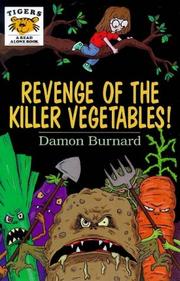
Revenge of the Killer Vegetables -Damon Burnard
I used to say this was one of my favourite books. One of the reasons was probably it's a comic! I don't think I realised that books could be this cool before - the title probably tells you the whole plot! And it's very funny, too. (Captain Underpants is another - sillier - comicky book I remember!)


Seriously - a talking potato!
Beaver Towers - Nigel Hinton
A bedtime story from when I was young - simple, Narnia-esque, about talking animals and magic and old places. And I must have read it lots of times, a rare event now.

Bobby Brewster series - H.E. Todd / Jeremy James books - David Henry Wilson
Two completely unrelated series I've lumped together, as I was about the same age reading both. The first, an old series of short stories from the 60s about a boy who ended up having magical adventures - well, slightly bargain basement adventures, with everyday items like a snowman or a potato coming to life. And the second, much more recent, about the highly comical adventures of an inquisitive four year old boy - I remember one of my teachers being a fan of them too.


Hiding Out - Elizabeth Laird
This used to scare me when I was little. It's about a boy on holiday in France, who then gets left behind and has to fend for himself. It's not creepy as such, just very realistic - although foraging for food and living in a cage isn't really comparable to getting lost in Marks and Spencer.

The Pokemon series - various
It seems a bit odd today. You had the videos games - the important, amazing thing - but also the Pokemon cards, the comics, the toys, the anime series... and you still got excited about the novelisations. Must have been a bit like what Doctor Who was - with Tracey Jump being Terrance Dicks's analogue. Even more excitingly - a few of them were original! I've got about twenty of them.

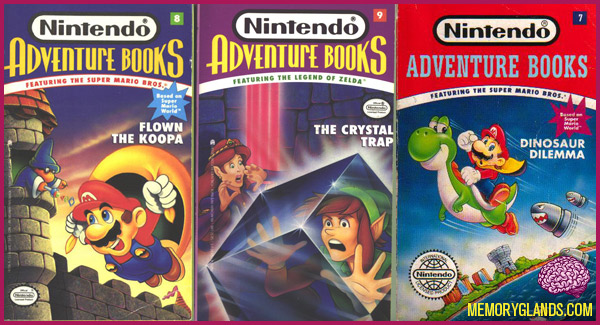
I don't think I got the Zelda books - but I do have Sonic !
Choose-your-own-adventure books 
Loved these. For those unfamiliar, you start at page 1, and then whichever pages you choose to read next determines the story. Nothing fancy with dice or paper - my favourites were some rare Super Mario books, which had a load of puzzles and mazes that you had to get right in order to get the best ending. I even made my own once in the back of a notebook on holiday.

Murderous Maths - Kjartan Poskitt
Horrible Histories, Horrible Science, The Knowledge, and all that lot... But my favourite series was Murderous Maths. Perhaps because - shock! - I actually quite liked the subject. And this series was great - actually dealing with pretty complex concepts (A-level standard, even) in amongst the jokes. There's a nifty website too.

Deadly, Wicked etc - Paul Jennings and Morris Gleitzmann
I'm not sure how popular these two authors were - maybe it's a 90s thing, or an Australian thing - but they're highly recommended. I opted more for the oddity and daringness of Jenning's short stories, rather than Gleitzmann's real-life surrealism (though I did like Toad Rage). When they collaborated (on a few series), the results were very insane - giant worms and murderous sheep, that kinda thing.

The Wish List - Eoin Colfer
Everyone knows about Artemis Fowl (hopefully), and there's some great other Eoin Colfer books (Airman, The Supernaturalist, Half Moon Investigations, etc), but this one's a favourite of mine, and very underrated. It's witty and down to earth, about a girl who comes back as an angel in order to help an old man complete his 'wish list' - and sort out her own problems.
 
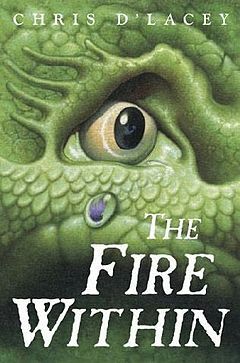
The Fire Within - Chris D'Lacey
I loved the first book - a brilliantly told story about an introduction into the ancient, hidden world of dragons. And also a story-within-a-story about squirrels. More sequels followed (like, five or six of them now) but by the time I got round to reading them I'd forgotten what happened in the first one. Oops.

Muddle Earth - Paul Stewart and Chris Riddell
Incredibly funny. Even for people who don't know Lord of the Rings - it's a spoof of fantasy novels, basically, from the writers of the acclaimed, extraordinary epic The Edge Chronicles (definitely worth reading, those!). They've tried to adapt it a few times, but it doesn't quite work as well as on the page. There was eventually a sequel, but I haven't read it yet.

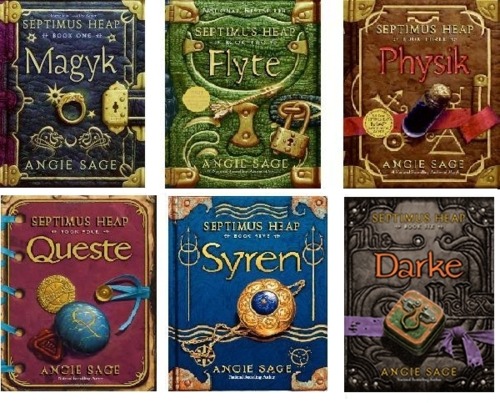
Magyk, et al by Angie Sage
Okay, I was a bit old with this one (though apparently - 2005, so not that old), but it's still bewitching - literally, a book about an apprentice wizard in a very believable fantasy world. It's got a wide range of characters - so it's sometimes hard to keep track of them between books, but it has warmth and humour in spades. And there's a blog here.

TimeRiders - Alex Scarrow
 Okay, this is a cheat, as I was about 18 when it came out. But it's still an underrated new YA series. The first book in the series is still my favourite - time travel, Nazis, robots, nuclear war... it's a real action packed blockbuster! Website here.


There's probably lots more - children's fantasy series like The Divide (a boy discovering a mixed up fantasy world), Troll Fell (Vikings discovering trolls!), Otto and the Flying Twins (another fantasy wizarding world), and countless one-offs...

5 Mar 2013

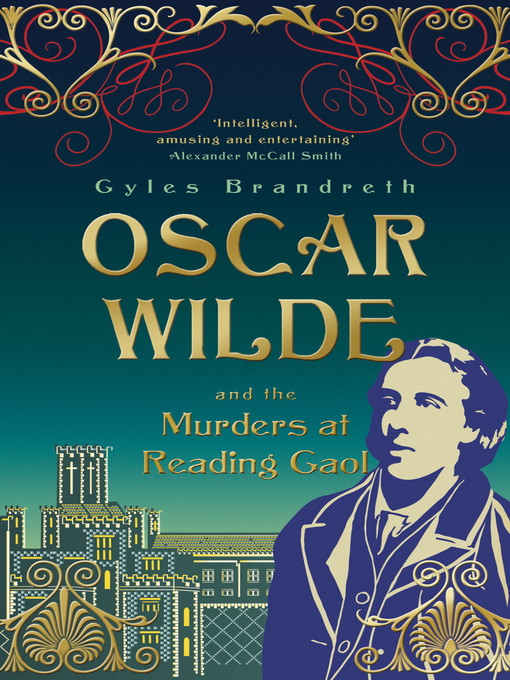
The Oscar Wilde Murder Mysteries


On the 30th August 1889, a very auspicious dinner was held. It was an event to discuss forthcoming material for Lippincott's Monthly Magazine, and among the diners were two of the most acclaimed writers of the forthcoming decade, if not the century. One was Arthur Conan Doyle, who contributed his second novel featuring Sherlock Holmes, 'The Sign of the Four'. In only a few years, Sherlock Holmes would become a household name. As would another writer, but for very different reasons: also attending was Oscar Wilde - the Irish poet, playwright, and personality, later writing 'The Picture of Dorian Gray'.

This meeting provides the incredible conceit behind Gyles Brandreth's ongoing series of novels: what if Oscar Wilde, one of the greatest minds of the age, had investigated murders and crimes, in the style of Sherlock Holmes - together with Conan Doyle (and others) as Watson?

What makes the series far more convincing than you might have first thought, is the level of research. Brandreth - a self confessed Wilde afficiando - plunges you into the time of the 1890s, complete with an array of colourful characters, most of which are real people. Due to Oscar's social standing, he mixes with princes, with acclaimed actresses, and with writers like Bram Stoker - yes, he really did know the man who came to write 'Dracula'. And he captures the vibrant wit and voice of the main character, without reducing him to an endless stream of epigrams and quotes from his plays - at times, delving into Oscar's complex morality and conscience. This grey area chimes well with the dark and shady practices that the books are (entertainingly!) full of - the crimes and corruption that form the 'murder mysteries'.

So far, there are six books in the series - and happily, they can be read in any order. Each is set in a clear place and point in Oscar's life- there's a highly researched picture of London as Oscar would have known it, as well as trips to Italy, and his time spent in Paris, back when he first became famous.

The latest book, published late last year, tackles Oscar's darkest period - the two years of imprisonment, spent in Reading Gaol.
Unlike most of the other books, here there is no Watson figure. It was a time when Oscar found himself cut off from his old way of life, and his old friends, and so rightly it has a very different feel to the rest of the series. Gyles Brandreth takes perhaps a risky approach, by telling the story from Oscar's point of view. He narrates his time spent there, and so we hear of his thoughts and feelings. That this approach is successful, shows what a clear voice the author has shaped throughout the books - that he can get into his mind, and eloquently express the trials and anguish of prison life.

It's a very accomplished book, and like the others in the series, a very good murder mystery indeed. Like the best of them, it keeps you guessing, with a cast of suspicious suspects - although, it's probably best to discount those characters that you know really existed!
In a way, the concrete grounding in fact is the series's weakness. Some of the books feel more researched than others, or having more of a historical basis. They say you should never let the facts get in the way of a good story - although the investigations and murders themselves are fictional (hopefully!), a few of the suspects and cameos are minor celebrities, which can upset the deductive process - where anybody might be the killer!
Nevertheless, there have been a few occasions - including with this book, Oscar Wilde and the Murders at Reading Gaol - just how historically accurate they are. I naively assumed that much of the book, with the inner workings of the prison, with its harsh rules and wardens, were fictionalised, by the author reading between the lines, but no - using detailed accounts from the past, with various documents and testimonies, Gyles Brandreth was able to recreate this dark period of Oscar's life with a high level of detail - that it was so readable does him credit.

 The inside cover of the latest novel provides a final delight - an adaptation of the series could be on the cards, produced with the BBC and also Sprout Pictures, part-owned by a certain Stephen Fry... that would be truly exquisite!

24 Jan 2013

Agatha Christie's Autobiography - a review


After reading almost all of her canon of work, I've delved into one of Agatha Christie's most important tomes - her autobiography. Though published in the months after her death, it covered her life up to when she was in her seventies, about ten years before she died. Whilst I was reading and discovering her books, I'd built up a strong image of who she was - by what subjects she wrote about, or information regarding the publishing of her books, or that famous disappearance - and even some particularly autobiographical characters she created. So, how would I find reading this, her own, perhaps definitive, account of an eventful life?

The book is a long one - it weighs in at 250,000 words, and took her fifteen years to complete it. But the extra time was worth it, as it's packed full of interesting stories and happenings. And whilst there are digressions along the way, it has all the economy - and excitement - of one of her great books.

People who are expecting a complete guide of every process that goes into writing one of her novels are going to be disappointed - it's an autobiography after all, a personal account of the story of her life. The books rarely feature - and when they do, they're the ones that she considers important personally, or that she has strong memories of, or has picked out as a good book when reading back many years later. There's particularly a fair amount about how she came to write her first book, The Mysterious Affair at Styles, and also the publishing side of things.
It's interesting to read how at first Agatha Christie didn't consider herself as a novel writer, but as a wife who started to do that sort of thing on the side to make some extra money. Ten years on, and she found herself writing books even when she didn't want to - a sign, for her, that it was now a job, and she would write a book every year. There are recollections of crafting some of her early work - the light hearted adventure type thrillers "that are more fun, and quicker to write", yet few of the period in the 1930s in which some of her most acclaimed detective stories were published. However, she also delves into other parts of her work (such as poems, short stories, romantic novels and acclaimed plays) and interestingly, her thoughts on the process of writing, and how she came to do it in the first place. Written in the first person, she shares a lot of personal opinions, and it builds up a picture of her own character - and in one frank section, she simply gives us a list of things she likes and things she doesn't!

That's not to say the life she's lead isn't recognisable as something out of a Christie novel. Plenty of autobiographical detail seems to have been included in her work, sure to be picked up on by those who have read it. Things like travelling on the Orient Express, dig sites in Syria and Iraq, or an exotic business holiday to South Africa, which was then extensively used in the early thriller The Man in the Brown Suit. Much of her childhood seems very close to the Mary Westmacott romantic novels, in which she painted a picture of someone's life story - some things copied word for word - and later novels, like Postern of Fate. But these references are fewer than you'd think - she says she rarely based characters on anybody in real life, certainly not people she knew, and after all - in her eyes, they were purely escapism.
Rather, the avid Agatha Christie reader gets a sense of the time she was living in, and the wider world in which her books were written in - a time of country houses, servants, generations of men becoming soldiers, and unexpected foreign travels. It's easy to forget that some of the events she describes happened over a hundred years ago.

After a slow start, though with many detailed recollections of her early years - no less busy than her later ones, as her parents moved around France as she was growing up - she then covers the events of her reaching adulthood, with plenty of prospective husbands! Personally, I found the book picked up pace, despite the many amusing and heartfelt events of her childhood - and became even more interesting when it went on to cover the events of the First World War, and the interesting world of the VADs, and events that would strongly shape her future.

The book, and by extension her own life, covers a lot of ground - from schooling, to nursing, to travelling round the world - and is often a joy to read. Her books are often praised for their readability, and this one is just the same. Despite the length, it's accessible, enjoyable and moving - giving us an insight into the modest, retiring crime writer, whose audience - including me - previously only knew through her detective novels.

23 Nov 2012

Pride and Prejudice


Slightly daunting, this article. What can I say about a book that's often quoted as the 'best loved', a book that's spawned hundreds of adaptations, and caught the hearts and minds of millions? Elizabeth Bennet meets Mr Darcy, they hate each other, and then gradually are drawn together through fate and events... yeah, I knew the basics, although not the ending. (And wasn't there a famous scene with Darcy coming out of a lake?) Well, I can say that I'd never read it, nor watched it, until now.

It's a good story, isn't it? I was rather overwhelmed by the length of the book - it's about 150,000 words, which is more than a 'light read', and probably took me about two or three weeks as I kept dipping in and out of it.

But the main thing that struck me was - it's written 200 years ago, and yet it's lovely to read. Out of the 19th Century books I've read (relatively few), I gave up on Frankenstein, and the others are much later, nearer 1900. So it was a surprise that a book which celebrates its bicentenary in a few months would be so readable. I have to admit, the cover being plastered with quotes extolling the humour, saying it's the 'funniest book ever written'... uh, no, it isn't. Not for today's audiences mind you, but I bet the Georgians were chuckling at the wry humour of Elizabeth's parents.

That's not to say the book is dated. Whilst the trappings of the story, the world in which the characters live, is firmly in the 1800s - things like daughters not being allowed to inherit, or the ettiquette of dancing at balls, or the scandals of class and marriage - the characters are utterly realistic, the scenario so timeless, that the book speaks for itself, and probably hits a chord in all of us. The reader is swept along by the inner feelings of Elizabeth Bennet, her passionate views and noble character. And that at the heart of the story, our heroine marries for love, despite her class and money, is a very modern angle, I think, and a very happy one. No wonder then that this is a much loved book, with a joyous ending, despite the drama of the journey.


Jane Austen has quite a few connections around the city of Bath, but I was still surprised to see it mentioned in the novel. On the second-to-last page, naturally. (And that lake scene? Never shows up, unfortunately, only on TV. And that looks like a fine adaptation to watch)

15 Oct 2012

Agatha Christie's "Absent in the Spring"

Another Mary Westmacott - so I thought I'd blog about it. (I could make a habit of this!)

As ever, it's an emotionally engaging book - the contemporary review on the back compared it to Brief Encounter! - and, surprisingly considering the last one I read, fairly short.

Absent in the Spring was written in 1944 - ten years since her last book published under the name Mary Westmacott. It's a sizeable gap in a long career - inbetween she's done stage plays and many novels, including classics like The ABC Murders, Death on the Nile and the sublime And Then There Were None.

And she's also worked on her writing style. The book is written in a third-person narrative, but centred around a single main character and her reminiscences. A 'thoughts-and-all' approach, you could say. It's uncommon, but not unique - it brings to mind similar passages of a woman in the dock in Sad Cypress (1940) and perhaps Endless Night (1967 - although that's in the first person).

But perhaps it links in nicely with a lot of her novels, particularly the later ones - it focuses on memory. When Joan, a fifty-ish year old woman, gets stranded when travelling back from Baghdad (a place Christie was fond of - having based at least three of her novels around Iraq, some with an archeological flavour), she finds herself all alone, with little to do but to think about her life and to find her character.

The book is, basically, a character study - something Christie's very good at when she gets it right. And she does here. It's easy to relate and to imagine the middle-class wife and mother Joan, blind to her selfishness and her overprotective nature with regards to her children and her husband, the lawyer Rodney. (Personally, I "cast" in my mind Penelope Keith, and Paul Eddington in The Good Life - the comparison is quite a good one, and shows how familiar the characters seem!)

The stranded-in-the-East setting is, for the most part, merely window dressing, the icing on a surprisingly moreish cake. It's quite a readable and engaging book - what could seem like a very meandering, random series of flashbacks builds up into a jigsaw puzzle of the woman's life. Each character has a lot of room to grow, despite many never truly appearing - her grown-up children, the placated husband, a schoolfriend who's lived a completely different life. And just when you get tired of the format, there's a change - and she starts to see the bigger picture. All the scenes we've seen, with half-heard or ambigious lines - some of the more obvious than others - she finally gets what people see in her. It's a character study, but one coming from the outside world, and one sketched from qualities that she lacks, more than those she has.

Agatha Christie may be good at characters, but she's also good at plotting, and giving clues. Despite no crime being involved here, there's a lot of clues - the whole thing is, considering what little we know when both we and Joan start this journey. But a coherent plot? Luckily, Christie rescues it in an all-too-brief coda, as she finally gets home to see her family. But given what she now knows about herself, will she change for the better? It's a satisfying ending for a novel that, yes, is actually quite emotionally affecting.

The author's said that this novel felt satisfying to write - in three days hurried typing apparently! - but also written sincerely. As a reader and a reviewer, I can only agree.