Showing posts with label review. Show all posts

24 Jul 2014

Armageddon Outta Here! - the Skulduggery Pleasant short stories


Open up this improbably titled book - after staring at the gorgeous wraparound cover with all the characters brought to life - and you'll see a contents page, or rather, a timeline. Unlike the main (nine or ten) novels, this are the stories inbetween those blockbusting adventures. Short stories!

That's not to say these are small stories. Some of the most memorable deal with the 'gaps' in the series: an unseen first meeting in Friday Night Fights; a story that has fun with the Western genre set back in the Dead Men's heyday; a longer novella in a very different - but no less Derek Landy - style; another very enjoyable (and slightly self-referential) appearance from horror writer Gordon Edgely

These are billed as the 'new' stories, although only the most adventurous fans will have tracked down and read all of the others (I'd only read one before). A lot of the existing stories introduce brand new characters created by readers as part of competitions - not as gimmicky as you'd think, and these stories have more significance after the author crammed in practically every character in the penultimate book last year, Last Stand of Dead Men. And it's also introduced me to The Lost Art of World Domination, a very impressive, hilarious exchange of dialogue, which is set in that odd continuity-sparse hinterland, the 'early days'.

Is the book accessible for new readers then, or ones that haven't read all of the books in the series? I'd say probably yes, as the stories are self contained and introduce people themselves, although you'd miss out a lot of injokes (more than references) back to characters, plots and later twists. It's great for fans then - really enriching the wider edges of the world of the books, or as extra stories on par with the great set-pieces of the bigger novels, or just containing more action with their favourite characters - Skulduggery or Valkrie feature in almost all of them.

Then you get to the last section, the advertised 'exclusive chapter from the final book'. I'm not normally swayed by these things - especially as they're normally a tiny peek compared with sitting down with the full tome when it's published. But I did enjoy this one - action, scares, fun, just like the previous short stories in fact.

Only this one has a shadow over it, as it's set after the really very game-changing events of the penultimate book. Some of the fun might be over, which makes this book - containing references to all the books, thanks to the final chapter - a last chance before we say goodbye. It's extra special.

5 Jun 2014

Hangman's Holiday by Dorothy L Sayers

I seem unable to find the attention span to read a full length novel at the moment (even on holiday!) - so handily I've got this collection of short stories by Dorothy L Sayers (not to be confused with the very similar sounding Busman's Honeymoon!). There's twelve stories, quite short, some with Lord Peter Wimsey, some with Montague Egg, a travelling salesman, and some without a detective.

Alas, this book is a bit unsatisfying. Short story collections are inevitably a mixed bag, and this is no exception.


Let's start with the Peter Wimsey stories - Sayers's most familiar creation, and these stories are longer than the others in this collection. What went wrong here then?
The Image in the Mirror, the first tale, is admittedly well told - most of it a monologue from a stricken man telling Wimsey how he thinks he's going mad and committing murders in his sleep. It's full of detail and is entertaining, but it's spoilt by the ending - almost as preposterous as the man's own explanation of being 'sent into the fourth dimension', but also incredibly guessable from the opening pages - even Wimsey says so, acting thoroughly bored of his own story by the explanation.
The Elopement of Peter Wimsey is very odd - Wimsey doesn't feature at the start, which is more like an MR James pastiche. The second half, as Wimsey changes tack suddenly, not just jarring but very silly. Whatever humour is might have had has been lost by time, and it feels like a waste of pages with too much scene setting.
These first two detective stories are very different to usual, so perhaps it's noble of Sayers to be exploring the possibilities of the genre. The rest of the book is more straightforward. Sadly The Queen's Square, which consists of about twenty pages of the movements of guests leading up to a murder, is infuriating. It's all just names rather than any fleshing out of the characters of the suspects (even though there must be over twenty of them!), and is impossible to follow, let alone guess the very scientific explanation. The Necklace of Pearls fares much better: although characters are still mere sketches on a page, at least it's enjoyable (set at Christmas, a time Sayers apparently hated, and you can tell!).

Onto the Montague Egg stories, then. I approached them with a heavy heart, especially seeing these stories were shorter than the rest. But as a whole, they remind me of the Poirot short stories (or similarly Christie's Parker Pyne or Harley Quinn tales) - nicely uniform in style even if they deal with exotic locations, and the perfect story for this length. There's enough variety to keep you interested too - you've got courtoom drama, identifying a murderer, murder in Oxford, and a missing person - and also a very odd story about cats that has a rather sadistic and sour end. None of them are anything special, but most are satisfying and good to read.
Montague Egg himself is defined almost solely by his profession - he's a travelling wine salesman, eager to please, impossibly sharp eyed, who just happens to come into contact with mysteries and crime! It's a very sketchy character, but it means he's very suited to short stories rather than novels.

The final two stories are thankfully the best. The first, The Man Who Knew How, has a man chasing up suspicious deaths after a chance encounter, with a twist in the tale.
And then there's the enjoyable The Fountain Plays, which dispenses of a detective and instead focuses on the actions of a murderer trying to second guess the police. They're the sort of clever stories that Hitchcock would adapt into films, or would feature as an episode of The Twilight Zone. In particular, neither of them feature acres of detail and suspects, and are all the better for it.

In summary - these stories feel different to what's typically referred to as Dorothy L Sayers's style. Her novels are full of details, in both character and atmosphere, and often eccentric. In the confines of a short story, most of that is stripped back to reveal clever solutions (almost more tricksy and involved than the explanations in her novels!) I get a sense of the writer trying to work out what stories she can tell in this format, the level in quality explained by the stories being collected over, presumably, a number of years. As a collected work, it's not the best book ever, nor is it very memorable, but you should find things in it to enjoy.

14 May 2014

'Murder Must Advertise' by Dorothy L Sayers

A short review of this classic 30s mystery - and the first Sir Peter Wimsey book I've read. Dorothy L Sayers's books regularly show up on lists of the best detective fiction (the Crime Writers Association put her up with Sir Arthur Conan Doyle, Dame Agatha Christie, or Raymond Chandler). But like the rest, there's no clear consensus on her best novel. The Nine Tailors (on my reading list) and Gaudy Night and Strong Poison (two with Harriet Vane assisting Wimsey) are often cited, along with this one.


Set in an advertising agency, Peter Wimsey goes undercover in order to investigate a suspicious death and a drugs plot. Dorothy L Sayers has had considerable knowledge working as a copywriter - and it shows. The atmosphere in the opening chapters (and all the way through the book actually) conjures up a lively workplace of people - most of them thinking up the advertising slogans and campaigns in order to flog unnecessary stuff to the public. She captures the madness of the job with a satirical eye, and it gives the book an edge. The characters are reasonable, and there's lots and lots of them. A pleasing range in female characters, and of men too, but often the workers are interchangeable, and it's hard to pick out somebody in particular as a suspect - nor, do I suspect, does the author want to either.

I've heard that, like this one, Sayers's books focus more on the background and characters than constructing a clever, potentially dry murder mystery. Actually, the crime is quite well thought out, but there's not enough of it to cover 100 thousand words. That's not to say it's boring or that it drags along: there's plenty of ingenious chapters and set-pieces (workplace arguments, some skulking around town, some slight but colourful party scenes, a lengthy cricket match near the end that might confuse people who didn't know the rules).

It might be the first book of hers I've read, but I'm not a stranger to Wimsey - there was a short section with him written by another author in an anthology (to which she also contributed), and I've listened to one of the (3 hour odd) radio adaptations, of her first book 'Whose Body?'. That one was mad - a rambling mystery with little twist in the murderer's identity. The blurb on my edition of Murder Must Advertise says that 'five people will die' - and bar the first murder before the book begins, all of these happen in the last third of the book, and most are forgettable. By the climax, the whole thing is downplayed, with most of Wimsey's conclusions explained beforehand. I was surprised by the 'drug plot' - it sounds a lazy enemy to be up against (police unable to catch them, members potentially everywhere), but it's handled with enough detail to be plausible.

I found the book a great read, with a great setting and plenty of interesting diversions too. So it surprised me to read that the author herself didn't think much of it, that it was apparently written in haste to satisfy her publishers, before she could work on her next book with her preferred setting, the chuch bell-ringing of The Nine Tailors. Will that book hold up against the hype?

24 Nov 2013

The Day of the Doctor

"Great men are forged in fire. It's up to lesser men to light the flame."

Saturday 23rd November, 2013 - fifty years to the day since Doctor Who was first shown, and going stronger than ever. Of course everyone expects a special episode to commemorate it - and so we got The Day of the Doctor, the latest anniversary extravaganza!

Whilst I can't comment on the 3D (though I'm sure it looked cool), this Doctor Who special was big (and yet contained), brilliantly written, and beautifully directed. The sort of anniversary special the series needed, even if people didn't know it. Matt Smith and Jenna Coleman (both good value, as ever), David Tennant (seamlessly appearing again, even though it's been almost four years), and the very clever casting coup of John Hurt as a long lost Doctor. Who could resist?

19 Oct 2013

Skulduggery Pleasant: Last Stand of Dead Men - spoiler-free review

It's a challenge in a review not to just recount the plot. Especially in this review - this book's got a heck of a lot of plot - and it's book eight of nine in a bestselling fantasy series, chances are you haven't read all of them. So I'm trying be as spoiler free as I can (as author Derek Landy would wish) for this, the latest, heaviest, and perhaps best book in the series. Here goes...


For those who aren't clued up, these books are a lively mixture of strong characters, misguided villians, cool magic, and dry wit. The main characters are the titular Skulduggery, who's a skeleton and a detective. His associate Stephanie starts off as a normal teenage girl before discovering a crazy world and becoming Valkryie Cain, sorcerer. And if you really haven't read it before - stop reading this and pick up the first book!

8 Sept 2013

Spare Parts - a review

In my local libraries, there's been some old Big Finishes popping up for once - some of the earlier releases by the looks of it. And when I saw Spare Parts, I had to get it. It's my first 'main range' one I've listened to, I think.

The story of Mondas in The Tenth Planet was always a little bit farfetched. The idea is good, but Earth having a twin planet? And one that's just like ours - presented here as having buildings and most of the technology just like London in the 1950s - what are the chances? You can tell why, in the new series when riffing off this story in Rise of the Cybermen, they decided to go down the parallel world route instead.

But aside from that, it tries to create a very realistic world, in a small scale and quiet production too. There's an air of the Sylvester McCoy years in its real world analogies - a secret police, call up papers, and in a setting of post-war Britain.

18 May 2013

The Great Gatsby

At the moment, I'm reading another of F Scott Fitzgerald's books - in fact his first, This Side of Paradise. (It's rather dragging I'm afraid - well written, just not too engaging - but that's another story entirely) Undoubtedly the most famous of the things he wrote was The Great Gatsby - a novel which has just come out as a Hollywood blockbuster movie starring Leonardo DiCaprio and Carey Mulligan, directed by showman extraordinaire Baz Luhrmann.


A few months ago I read the book itself. It had been on my reading list for a while, given its popularity - but I went into it knowing very little, especially about the plot. So I didn't quite know what to expect - it wasn't as if I'd read any other of Fitzgerald's work, or was familiar with his distinctive, effortlessly poetic writing style. (I haven't seen any other film adaptations either!) But I did enjoy it.

I was caught up in the characters, the plot, the words, the atmosphere. In my mind, though the prose was pleasant (and the cynic in me thought it was almost written to be analysed for countless GCSE literature courses), the atmosphere seemed pretty harsh and brutal. This was a shady world of corruption and capitalism and, in the end, murder and death. Strangely enough I hadn't got the full impact of it - it's a book trying to define its time, but read ninety years later, you take the motor cars and the alcoholic parties for granted. When in actual fact this was the era of Prohibition (hey - I'm not American, perhaps that's why some of it was lost on me). But I could see why it was successful, even if I didn't quite get everything on my first (and only, thus far) reading.

But then you read that it wasn't initially successful at all. When it was first published in 1926, though the author had realised he was creating a novel's novel, a fine piece of literature which would, in part, define and also transcend its decade... it received mixed reviews. It didn't sell very well. People, apparently, didn't quite get it. So bear that in mind when reading the book - or indeed, seeing the new film that's just been released (you know, that one that's been getting mixed reviews...).

So what about the film?

The first thing that strikes you is the visuals - it's a blockbuster in every sense of the word, and it looks absolutely lavish. The parties are wild, and brilliantly staged. There's great sweeping shots from one bay to the next, and cars whizzing by over huge landscapes - created, of course, by the latest computer effects. In fact, for me watching it in 2D, there's a bit too much of it, and at times it's almost too well done. Almost all the exteriors of the film are done in greenscreen, which gives it an odd look to my somewhat trained eyes, almost like a comic-book. Given that it isn't, and the subject matter isn't sci-fi or fantasy, it's jarring. Whether or not it looks better in 3D (even if you have to wear the glasses and focus a lot), I don't know.


Where the film shined the most for me, apart from it being gorgeous to look at, was the actors. The quieter moments, where the characters are sitting in a room and talking. And they are good characters, and very good actors - after all, one of the reasons the book is adapted is because of the plot and the characters. Even though at first it doesn't really feel like they're centre stage, amongst all the visual trappings. And the music too - it's a great soundtrack, the dazzling jewel in the film being Lana Del Rey's sumptuous Young and Beautiful, and there's also Florence + the Machine's amazing, directly-inspired Only the Love. Sure, it's odd seeing people in the 1920s dancing along to modern club music, to rap, and a jazzy rendition of Beyonce's Crazy in Love. But, it's of its time, and it works. Coupled with the CGI, the 3D, and the glitz and glamour, this film will date very very fast - ironic, given the source material. But hey - Hollywood does this sorts of blockbusters every year, so why not, in Gatsby's spirit, give people a huge showstopper to remember?

It's definitely a tough book to film. Being somebody else's adaptation of the novel, it's always going to be somebody else's view of what they think the novel is saying. It's one of those books where you often have to read into the poetry or things that are happening just out of the main picture - subtlety, in other words. That's kind of hard to capture - the film uses voiceover, but then that ruins the scenes where the characters are properly interacting.
Watching it on screen, with the film following the plot of the novel faithfully (overly so, perhaps), some scenes I thought were spoilt by showing it in detail, and would be better left to our imaginations - I didn't imagine Gatsby's love affair was quite so passionate when I read it, for instance. And then, some scenes I thought worked really well, where the film deliberately showed us its themes, and what the story was all about. And then spelt it out in voiceover. And underlined with a red pen, twice.

The book, I believe, has reached high acclaim, right up there as one of the best American novels. Similarly, the film absolutely adores the book. Take the last chapter, the last paragraph: reading it fresh, I thought it was an enigmatic, poetic, if downbeat end to the whole story, but I didn't realise that it was especially famous. The ending of the movie tries to capture the essence of those words on the page... well, it tries too hard. I'd have been happy with just a voiceover to be honest. When the film starts to quote parts of the book, literally writing the words up on the screen, you realise this is a very unusual adaptation. Whether it's a good thing or not is up to the viewer.

6 Apr 2013

The Rings of Akhaten

Odd title, that one.


I thought I'd write something longer about this week's Doctor Who, given the general split in people's initial opinion. So:

It's always going to be an uphill struggle, doing an alien story like this. Building a culture, making it look the part, finding something to connect to - and I thought it worked. Having a bunch of random aliens in the marketplace may be a bit Star Wars, but it draws you in (even if I was playing 'spot the reused bits of alien'). It even makes you forget most of the episode is done in a studio. As to the culture - the idea behind the religion not only felt original and emotional, but also gave the story a plot (and a monster) that was a twist on the usual.

There's a lot of green-screen, which works to various degrees - the lowest one being the very ambitious hover moped chase across an asteroid field. But they were trying very hard with that one. But the lovely vistas and alien suns are just pretty distractions - for the acting! It's lovely to finally see Jenna Louise-Coleman in the companion role - the getting-into-trouble role, and actually apart from the Doctor for once. Yes, I know she did similar things with ice monsters and Spoonheads, but it feels right, here. Almost traditional - in a story that tries very hard to be different. And Matt Smith, well - I was thinking he was being marvellous even before he made his speech at the end.

But maybe it's the sign of a dull episode that - when you notice how good the regulars are (which invariably they are, every week!). And for a story that seemed very 'Episode 2', it's like somebody smudged together lots of different Doctor Who tales together - you've got exploding planets and weird freaky aliens (Episode 2 in 2005), mysterious religious cults with alien gods (Episode 2 in 2008), a lost girl that the companion finds (that'll be Episode 2 in 2010), a CGI menace that was held back by reciting in a theatre (well, a bit of a stretch, but it reminded me of the Shakespeare one - though the singing was quite new, if a little out of place).

That's not to say the episode didn't work in its own right, or that it wasn't an exotic slice of adventure. Although I'm not sure where they're going with Clara - whilst it's lovely to see her past, are they trying to make us warm to her, or be fearful of who she might really be...?

24 Jan 2013

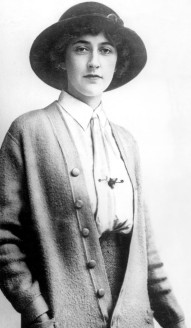
Agatha Christie's Autobiography - a review


After reading almost all of her canon of work, I've delved into one of Agatha Christie's most important tomes - her autobiography. Though published in the months after her death, it covered her life up to when she was in her seventies, about ten years before she died. Whilst I was reading and discovering her books, I'd built up a strong image of who she was - by what subjects she wrote about, or information regarding the publishing of her books, or that famous disappearance - and even some particularly autobiographical characters she created. So, how would I find reading this, her own, perhaps definitive, account of an eventful life?

The book is a long one - it weighs in at 250,000 words, and took her fifteen years to complete it. But the extra time was worth it, as it's packed full of interesting stories and happenings. And whilst there are digressions along the way, it has all the economy - and excitement - of one of her great books.

People who are expecting a complete guide of every process that goes into writing one of her novels are going to be disappointed - it's an autobiography after all, a personal account of the story of her life. The books rarely feature - and when they do, they're the ones that she considers important personally, or that she has strong memories of, or has picked out as a good book when reading back many years later. There's particularly a fair amount about how she came to write her first book, The Mysterious Affair at Styles, and also the publishing side of things.
It's interesting to read how at first Agatha Christie didn't consider herself as a novel writer, but as a wife who started to do that sort of thing on the side to make some extra money. Ten years on, and she found herself writing books even when she didn't want to - a sign, for her, that it was now a job, and she would write a book every year. There are recollections of crafting some of her early work - the light hearted adventure type thrillers "that are more fun, and quicker to write", yet few of the period in the 1930s in which some of her most acclaimed detective stories were published. However, she also delves into other parts of her work (such as poems, short stories, romantic novels and acclaimed plays) and interestingly, her thoughts on the process of writing, and how she came to do it in the first place. Written in the first person, she shares a lot of personal opinions, and it builds up a picture of her own character - and in one frank section, she simply gives us a list of things she likes and things she doesn't!

That's not to say the life she's lead isn't recognisable as something out of a Christie novel. Plenty of autobiographical detail seems to have been included in her work, sure to be picked up on by those who have read it. Things like travelling on the Orient Express, dig sites in Syria and Iraq, or an exotic business holiday to South Africa, which was then extensively used in the early thriller The Man in the Brown Suit. Much of her childhood seems very close to the Mary Westmacott romantic novels, in which she painted a picture of someone's life story - some things copied word for word - and later novels, like Postern of Fate. But these references are fewer than you'd think - she says she rarely based characters on anybody in real life, certainly not people she knew, and after all - in her eyes, they were purely escapism.
Rather, the avid Agatha Christie reader gets a sense of the time she was living in, and the wider world in which her books were written in - a time of country houses, servants, generations of men becoming soldiers, and unexpected foreign travels. It's easy to forget that some of the events she describes happened over a hundred years ago.

After a slow start, though with many detailed recollections of her early years - no less busy than her later ones, as her parents moved around France as she was growing up - she then covers the events of her reaching adulthood, with plenty of prospective husbands! Personally, I found the book picked up pace, despite the many amusing and heartfelt events of her childhood - and became even more interesting when it went on to cover the events of the First World War, and the interesting world of the VADs, and events that would strongly shape her future.

The book, and by extension her own life, covers a lot of ground - from schooling, to nursing, to travelling round the world - and is often a joy to read. Her books are often praised for their readability, and this one is just the same. Despite the length, it's accessible, enjoyable and moving - giving us an insight into the modest, retiring crime writer, whose audience - including me - previously only knew through her detective novels.

3 Jan 2013

The Greatest Show in the Galaxy - review

Is this my first proper Doctor Who article on here? Blimey. Well, I saw this late 1980s story recently, and wondered if I could write a review on it. It's a tricky one to get your opinion round, so perhaps it's a good idea. Here goes then.

The icing on the cake of any Doctor Who story is if it includes a scary monster, something that will last long in the memory of children watching. The setting of The Greatest Show in the Galaxy delivers on this front - the Doctor and companion Ace visit the renowned Psychic Circus, whose acts are turning murderous... Killer clowns? It's a classic frightening image that rarely crops up in the show, possibly because it's almost too frightening for half seven in the evening (see The Deadly Assassin for a previous incredibly scary cameo).

And elsewhere, it's a typical Doctor Who adventure, and very reminiscent of other stories of the era. The wealth of location filming in a rather fine desert-like quarry means the production stands up rather well. The writer, Stephen Wyatt, also wrote Paradise Towers in the previous season, to mixed reviews. The similarities are there if you look for them - both have settings populated by a variety of surreal characters, and by the Doctor has arrived, the place has run down, with the robots seemingly developing a mind of their own, in order to appease a god-like figure. But thanks to a much more grounded location - a circus tent! The corridors are simply walled by bits of cloth, genius! - and more focused direction, this second story is far better (even if the production was apparently rather troubled - but you can't tell).

Inside the circus of terror... cheap but cool!


With Sylvester McCoy having found his feet by now, the Doctor is a delight to watch, not least demonstrating some crazy circus skills in the final part. Ace, by comparison, doesn't have an awful lot of character moments, although her fear of clowns is acknowledged (and, in part, overcome), but does get a strong part of the plot, helping the Doctor as his plan comes together whilst defeating robots, without hardly a scream or a pointless question. But it's the mysterious Mags who steals the limelight, getting a nifty twist to her character and a cliffhanger too.

At four parts, it's not too long, but perhaps the story sags in the two middle parts set entirely inside the circus tent. The bad guys only show their faces at the climax of Part Four, alas - and they're pretty famous, bandied about everywhere, like on the DVD cover - though they are done well, with menacing voices. Similar pacing is abound in the likes of Ghost Light or Paradise Towers or The Curse of Fenric - but at least it means the final episode isn't a damp squib.

It's a story with a wonderfully surreal flair, a script that's surprisingly original (not to mention layered - you can read plenty into the McCoy stories, this one included), whilst still keeping traditional monsters and thrills. This surely means, with some competition, The Greatest Show in the Galaxy is among the top stories of the era.

15 Dec 2012

The War of the Worlds - The New Generation: review


Back in 1978, a musical was released, a strange, electronic, cutting edge musical of one of the first science fiction novels - War of the Worlds. Odd choice - but thanks to a resurgance in apocalyptic fiction, victoriana, electronic music, recent film adaptations, new reissues and stage productions, or simply because it's bloody brilliant... it's still very much going strong. But what's this? A remake?


It's a bit of an odd listen, especially for someone who's listened to the original a lot. It's not a remix - it's far more sympathetic than that, and hardly deviates from the original tracklisting, album length, songs or story. Because the original album has been remastered over the years, and slavishly recreated and rehearsed for the stage show - in order to sound exactly like what fans expect - you won't be surprised to know there's hardly any major changes in this new recording. Instead, there's dozens of new bells and whistles to back up the main tune, modern dancey eye-catching (ear-catching?) effects, echoes and whooshes. And, naturally, a new cast.


Two processes are going through my mind, simultaneously, when I listen to it. The first, is recalling the seemingly perfect, gospel text of the original edition. The second, is a sort of distancing effect, because the extra drumbeats and new synths modernise it and give the whole thing quite a different sound. I also thought it sounded more like a soundtrack to an adventure than before - as if we're just not seeing the visuals that no doubt flash up on large screens on stage; certainly they are conjured by your brain as you listen to it. Whether this was down to the performances, the depth of adding the new instruments, or simply me getting really into it, I'm not sure.

I've no problems with the new musical effects - there's some quite cool gimmicks (I loved the modern underwater bit), extra flourishes that might have been missed out on first recording, so let's look at the cast. Liam Neeson has a terrific voice for the Narrator figure, which helps carry the whole thing along as marvellously as Richard Burton did, and in a similar tone.
Of the singers, Gary Barlow does a good stab at a Justin Haywood impression - but, should he? The version of Forever Autumn is still very good, but is it a bit too faithful? And, dare I say it, is there a whiff of Autotune about his vocals? With Joss Stone, I have the opposite reaction - she's too different. Her voice is good, but it's oversung - there's the annoying habit of adding in far more notes than should be required, giving it a ridiculously overdone feeling to one of the better songs on the original album.
Alex Clare and Maverick Sabre (great name, up there with Lex Shrapnel) don't quite shrug off the original performances, but are well chosen certainly. I was impressed, though, with Ricky Wilson's Artilleryman - not just in singing capability (even if the vocals are a bit overlayered), but in acting. A very natural tone, and makes Brave New World one of the highlights of this.

So, overall - it's different, and certainly interesting, but notably faithful to the original. The cast are, on the whole, great, the new instruments sympathetic, and I'm sure this nuanced version will sell bucketloads for the shiny new up-to-date stage show. And they haven't messed about with Dead London too much, so that made me happy.

It certainly proves this musical has a lot of life left in it. I think this second album will date as the first - something that oozes quality, but is definitely of its time. Whether a third album comes out in years to come, remixed to oblivion, or ground to a pulp under folky cover versions, who knows?

30 Nov 2012

Akhnaton - a play by Agatha Christie

As you might expect from the striking front cover and title, this is something a bit different. In fact, I'd probably never read it if it wasn't for Agatha-Christie-devouring completeness.

It's a historical play (so not a murder mystery) set in Ancient Egypt. It's never been properly performed however (though she must have liked it to want it published), and has 'little commercial value', apparently. Which I read as code for being 'utterly boring'.

But whilst it's not boring, it is a bit dry. You don't need too much background knowledge when reading it - entry level Egyptology will suffice' - but the play concerns the reign of the pharoah Akhnaton (whose wife Neferiti was probably more famous, as was his successor Tutankhamun), and his subsequent downfall. The play wobbles between historical background and research (names of gods, practices, lineage and castes, especially apparent in long speeches) with typical human drama and emotion (idle talk between townsfolk, many of the characters' conversations). It's melodramatic, and more highbrow than your usual fare.

But altogether, it hangs together quite nicely. For its big scale and subject matter (there's many sets and costumes, and always talk of far off rebellion) it wrings every bit of human drama out of the royal court, with the mad king (which felt a bit Shakespearean, but it works), his right-hand-man, and plots against him by priests and saboteurs. He was the king who shook off using multiple religious gods, instead reverting to one, represented by the sun. Agatha paints him as young, artistic and peace loving, ambitious but weak and misguided, and ultimately very very mad. So that's fairly hard to warm to, when your main character goes off on one at the end of the scene.

Whilst it's nowhere near the usual Agatha Christie in subject matter (despite her referring to history and archaeology many times), somehow in places characters end up talking very much like Agatha Christie characters, circa 1937 when it was written (seriously, the discussions about the nature of art could come straight from Five Little Pigs or The Hollow).

Its main feat is creating an actual readable (or performable) play out of such a sparse, yet rich, strain of history. It's worth noting that, as it was written in 1937, much of the historical 'accuracy' has been disproved by now, or even by 1973 when the book was published. It was only written fifteen years after Howard Carter discovered Tutankhamun's tomb. However, given the historically dry subject matter, to experts and non-experts alike, her later Ancient Egyptian murder mystery Death Comes As The End is probably a safer, more mainstream choice.

4 Nov 2012

A small piece on Hunted

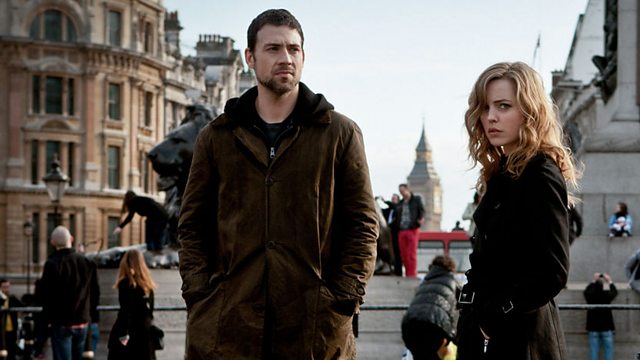
Okay, the series isn't over yet, so I'll keep it short. Hunted is a rare UK/US co-production currently airing on BBC One, in this country at least. Helmed in part by prolific production company Kudos - and created by one of the writers behind the X-Files - it's an action show involving spies and conspiracies and intrigue, which has lead to comparisons to Spooks.

Now, I love Spooks - and this isn't it. It's a different style of show entirely - for starters, it's less of an episodic mission-of-the-week series, and more about an ongoing investigation. Secondly, the spies aren't working for the government, they're in private security (ooh - modern and edgy!). And also, there's a definite main character, in the form of Melissa George playing Sam - and she doesn't do too badly, either.


The series is well made, very expensive - especially a first episode involving exotic locations and jaw dropping scenery (the whole show, in fact, looks gorgeous) as well as being deliberately slow and unusually paced. From then on, however, it becomes your standard conspiracy/undercover drama. The cast is reasonable, the script is reasonable... but then we come to the characters.

The show is cold - even with the odd joke here and there, its tone is serious, but it's not just that. I know it takes a while to warm to any characters - it probably took me half a season to love Ruth and Zoe and Adam and co in Spooks - but this series seems to be going out of its way to make everyone shifty and uninviting. The main character, Sam, is deliberately messed up - her past is shown to us via frenetic flashbacks, so we have to wait six weeks to discover the whole picture, unfortunately. The rest of the team are either bland or mysterious or underwritten - honestly, some characters have literally nothing to do apart from explain the plot - and the tantalising subplot about one of them being a mole means that we care very little. Everybody outside the team is either about to discover Sam's really a spy, or going to be killed a few weeks down the line.

Yes, there's some violence - done in a typically modern, extremely fast cutting, ruthless fashion. It's realistic, but sometimes gratiutious. There's also an impressive stunt or two, particularly a big explosion, and some cars. And there's also a very deliberately scary man who injects people through their eyes...

It's a very masculine show, despite the main character's gender - perhaps as a result of the American side of things. There's not that many female characters, with the antagonists being cockney business people (Patrick Malahide is enjoying himself though, and manages to pull off a pretty ludicrous character), and of those that are female, half of them seem to have got their clothes off. Hmm.

Overall? It's not a series to love, but it's expensive and watchable. Better than Torchwood's Miracle Day, for sure. Whether it's going somewhere, who the hell knows?

22 Oct 2012

'Wolfblood' (CBBC)

I have to say, I didn't have particularly high expectations when I heard about the latest drama offering on the CBBC channel. That's not to say the quality across the board is bad - quite the reverse! Recently you've got offerings as diverse as Young Dracula, The Sparticle Mystery, Leonardo and The Sarah Jane Adventures. But a drama with werewolves? Hasn't that been done before? And how's that going to work for a children's - well, family - show?

Actually, the line 'a drama with werewolves' sums up the show nicely - it's a drama first, werewolves second. These are just ordinary kids - our hero Maddy, loyal Tom, geeky Shannon, and new boy, outsider Rhydian - at an ordinary school, albeit in a very picturesque location, dealing with ordinary problems. But then that's wrong... because they're not werewolves, they're Wolfbloods.

Ohh yeah, I'm a fan! It was a speedy conversion; from the first episode I knew that this was a good show. Looking at the series as a whole, despite the complex nature of the wolves, it's greatest strength is how true it is. Not only does it accurately portray school life, and not shying away from having unlikeable (but ultimately harmless) classmates, but it doesn't patronise the viewer, or insult our intelligence. Like life, it's got heart and humour as well as sensitive issues. A key plotline to the show is Shannon's passion about sightings of a wild beast on the moors. And the show tackles this head on, with Maddy coming ever nearer to having her secret found out. It reaches a head surprisingly early on in the series, and as a result really feels like the character's personal struggle, rather than a weekly plotline. These characters don't forget the previous episodes. Every week they grow and develop - as do the Wolfblood side of things.

There's plenty in this series to love. All the leads are excellent finds, and make the show seem effortless. Maddy's parents are both likeable and realistic, and are deservedly main characters. The CGI - for a CBBC show, especially - is phenomenal. In fact, the show's got a real feel to it - something I initially was worried about. Children running through wild woods, backed by wonderful folky music, is its mission statement (you'll never get the theme song out of your head!) - although there are plenty of ventures into the urban setting of human life.

Above all, it's a very satisfying series - including that finale - and it certainly wouldn't be out of place in my Nineties childhood, and that's probably the highest compliment. And it has been quickly, and rightfully, recommissioned! More Wolfblood? Yes please!

15 Oct 2012

Agatha Christie's "Absent in the Spring"

Another Mary Westmacott - so I thought I'd blog about it. (I could make a habit of this!)

As ever, it's an emotionally engaging book - the contemporary review on the back compared it to Brief Encounter! - and, surprisingly considering the last one I read, fairly short.

Absent in the Spring was written in 1944 - ten years since her last book published under the name Mary Westmacott. It's a sizeable gap in a long career - inbetween she's done stage plays and many novels, including classics like The ABC Murders, Death on the Nile and the sublime And Then There Were None.

And she's also worked on her writing style. The book is written in a third-person narrative, but centred around a single main character and her reminiscences. A 'thoughts-and-all' approach, you could say. It's uncommon, but not unique - it brings to mind similar passages of a woman in the dock in Sad Cypress (1940) and perhaps Endless Night (1967 - although that's in the first person).

But perhaps it links in nicely with a lot of her novels, particularly the later ones - it focuses on memory. When Joan, a fifty-ish year old woman, gets stranded when travelling back from Baghdad (a place Christie was fond of - having based at least three of her novels around Iraq, some with an archeological flavour), she finds herself all alone, with little to do but to think about her life and to find her character.

The book is, basically, a character study - something Christie's very good at when she gets it right. And she does here. It's easy to relate and to imagine the middle-class wife and mother Joan, blind to her selfishness and her overprotective nature with regards to her children and her husband, the lawyer Rodney. (Personally, I "cast" in my mind Penelope Keith, and Paul Eddington in The Good Life - the comparison is quite a good one, and shows how familiar the characters seem!)

The stranded-in-the-East setting is, for the most part, merely window dressing, the icing on a surprisingly moreish cake. It's quite a readable and engaging book - what could seem like a very meandering, random series of flashbacks builds up into a jigsaw puzzle of the woman's life. Each character has a lot of room to grow, despite many never truly appearing - her grown-up children, the placated husband, a schoolfriend who's lived a completely different life. And just when you get tired of the format, there's a change - and she starts to see the bigger picture. All the scenes we've seen, with half-heard or ambigious lines - some of the more obvious than others - she finally gets what people see in her. It's a character study, but one coming from the outside world, and one sketched from qualities that she lacks, more than those she has.

Agatha Christie may be good at characters, but she's also good at plotting, and giving clues. Despite no crime being involved here, there's a lot of clues - the whole thing is, considering what little we know when both we and Joan start this journey. But a coherent plot? Luckily, Christie rescues it in an all-too-brief coda, as she finally gets home to see her family. But given what she now knows about herself, will she change for the better? It's a satisfying ending for a novel that, yes, is actually quite emotionally affecting.

The author's said that this novel felt satisfying to write - in three days hurried typing apparently! - but also written sincerely. As a reader and a reviewer, I can only agree.

7 Oct 2012

Agatha Christie - 'Giant's Bread'

As you may or may not know, over the past three or four years, I've been reading the works of Agatha Christie. What started with dipping my toe into detective fiction, by reading the likes of 'Roger Akroyd', 'Death of the Nile' and 'Murder on the Orient Express', became the voracious task of trying to read all 80 odd of her works.

So now, after finally completing that task (well, nearly - I've still got a book of short stories to track down), I'm tackling some of her wider work; namely, the books written under the name of 'Mary Westmacott'.

They're often clubbed together - despite her having written them over the course of about thirty years, and with no common characters. And they're often dubbed 'romantic fiction' - despite there being few happy endings, even without the grisly murders...


So - 'Giant's Bread'. This was her first non-Crime novel, published in 1930, and it's quite an epic, being about double the word length of your standard Christie.

Perhaps unfortunately, I've read her second book, 'Unfinished Portrait', before this one - so I'm picking up on the apparent similarities of the two. But both, bar framing devices at the start, deal with the life and loves of their central character - in this case, Vernon Deyre.

We first meet him as a child, but quickly he grows up into a young man. Too quickly, you could say - as it's this child's perspective that Christie does rather well, dealing with imaginary friends and childhood games, but also topics like adultery, class, and deaths in the family, through a child's eyes. Yet still keeping the characters in focus - this is the rather selfish, troubled Vernon Deyre, not an idealised childhood.
She rightly uses it much more in 'Unfinished Portrait' - in which we see the girl, Celia, go from a young child, having governesses, moving abroad, going to finishing school... Here, there's a sudden jump from between the ages of about ten and twenty - missing out Vernon's schooling in Eton and Cambridge. Similarly later in the book, little is said about fighting in the (albeit fairly recent in the memory) Great War - instead, we're given the full scoop on the everyday life of VAD work. Well, they say write about what you know...

It's easy to see Agatha Christie's mark on these stories - even this one. Anyone who's read her early short stories will know her love of the opera. Here, Vernon is a musical genius, and although he struggles with his art, the composer of avante garde operas. One might say this reflects her own struggles with coming up with new novels (despite this being the start of a particularly fruitful era for her). Despite one or two laboured points - being scared of pianos gets a little bit forced - the musical side of things is done with conviction.

Whilst there's a particularly open ended prologue which doesn't give too much away, sadly the blurb - and many write-ups, do. It's a flaw of the novel that the plot point oft mentioned (being killed in the war, and his wife remarrying) only turns up in the final third of the book. That's not to say it's not good to read - it's mostly a breeze, despite me taking a couple of weeks with it - and not that there's unexpected moments. You're kept guessing at who Vernon will choose to marry - and for what reasons. Will it be his meek cousin Enid? The charmingly pretty Nell? Or the temptress singer Jane? Even though, from Vernon's point of view, it's not about love (or sex - which hardly gets a mention, discreet or otherwise) but about the music.

In terms of characters, you've also got his arty, rebellious cousin (almost sister) Joe, and neighbour-turned-best-friend, the Jewish wealthy Sebastian (who's surely the best choice for Vernon, no?). It's with him that Christie treads a fine line, from a modern perspective. On the one hand, having a main character who's Jewish - one of the strongest and most forefront in her books - is perhaps mould-breaking and championing. But on the other, he's a stereotype, down to the descriptions of yellow faces and loving of money, and a host of anti-Semetic remarks from other characters. But in the end, he's a stereotype with a heart, and a proper character of his own, so maybe it is a success.

Overall, it's a long meandering book, but as readable as most Christies happily are. There's some memorable characters, and a quite pessimistic tone - and whilst the ending isn't quite as fulfilling given the rest of the book, it's a good 'first' novel from the enigmatic Ms Westmacott.