Showing posts with label 2014. Show all posts

31 Dec 2014

Flickr Highlights: 2014 in photos

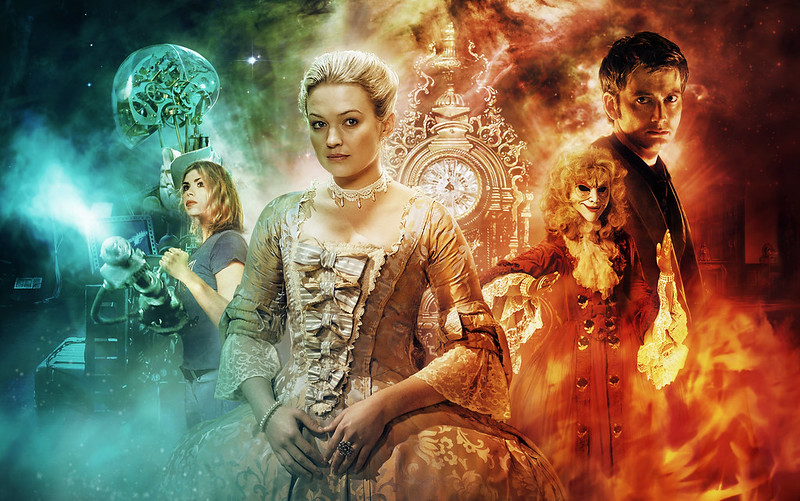
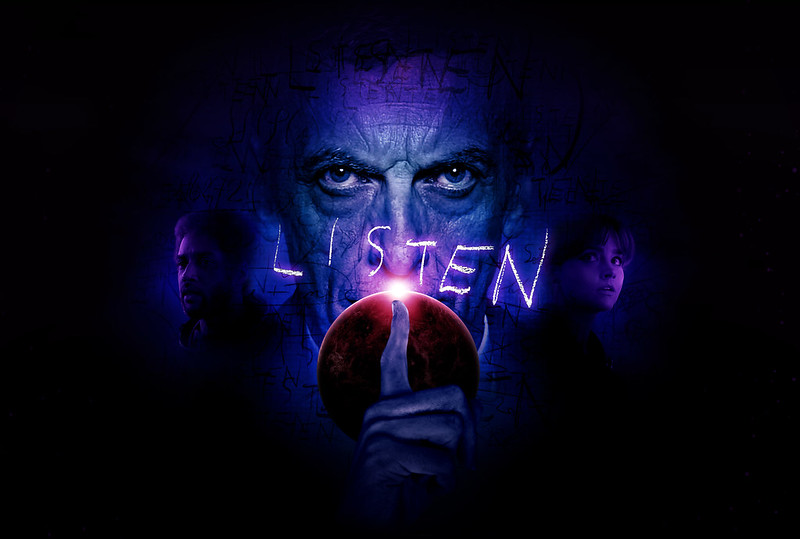
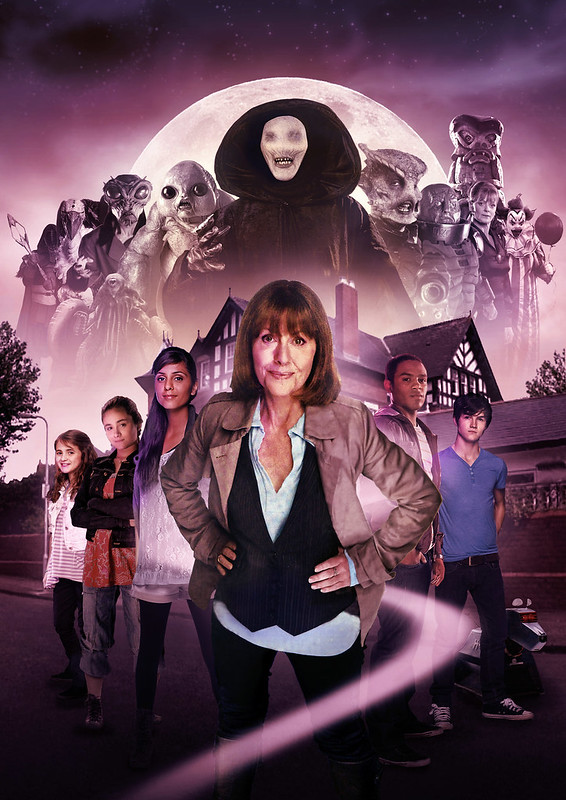
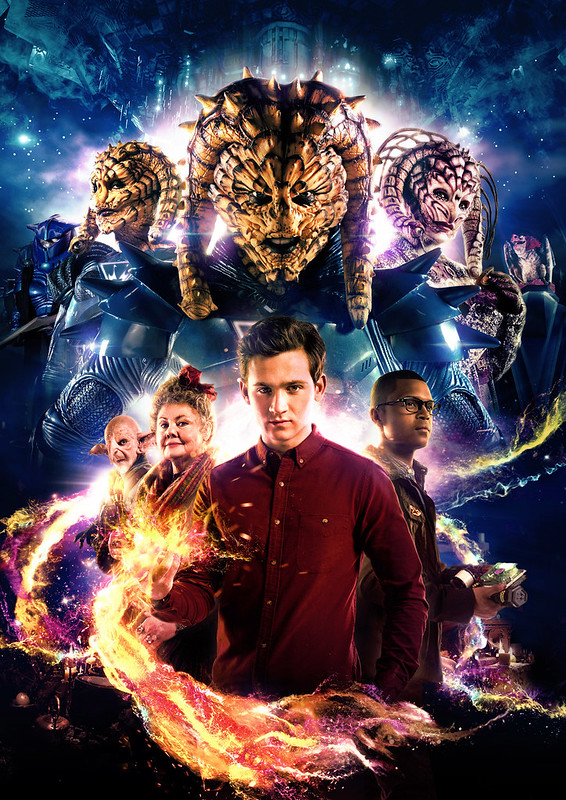
'2014 in photos' sounds rather grander than this will be - I'll be honest, I haven't taken many this year, and I've put even fewer up online. But since I want to make a tradition of it, here's some of my better Photoshop work I did in the last twelve months along with a few snaps. Enjoy!

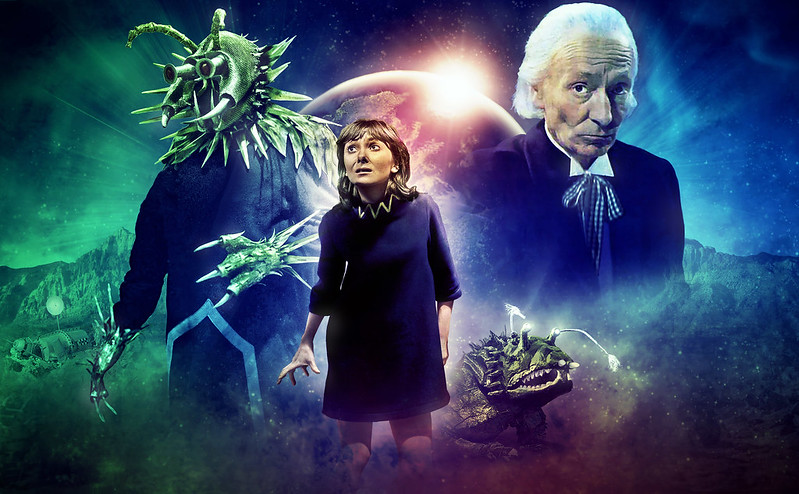
The Rescue

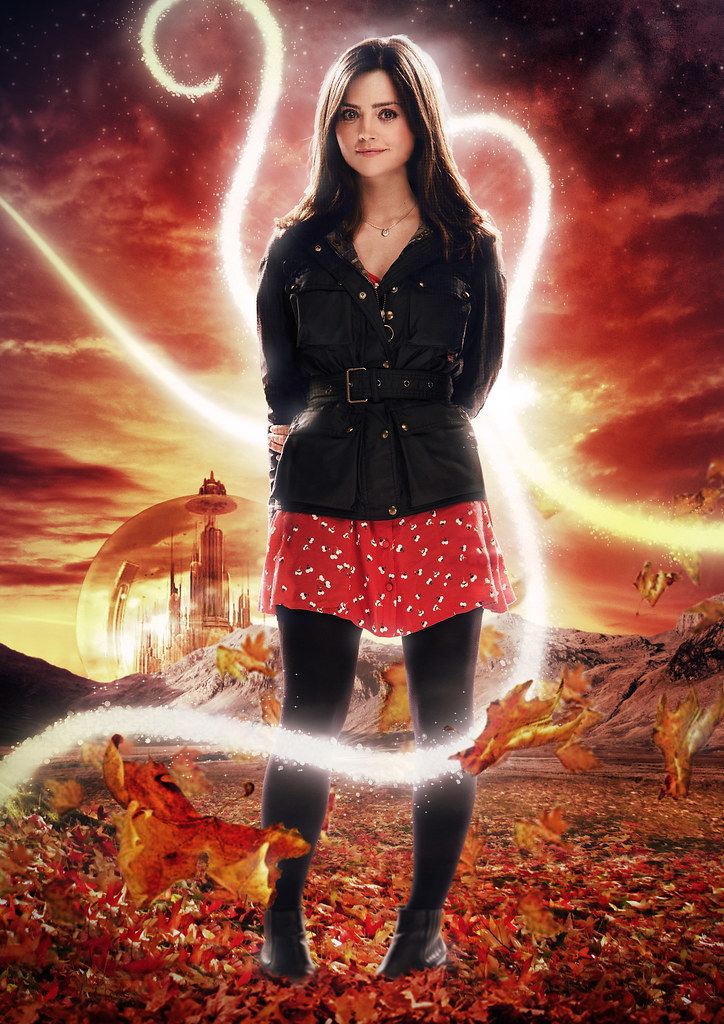
Miss Oswin Oswald The Impossible Girl

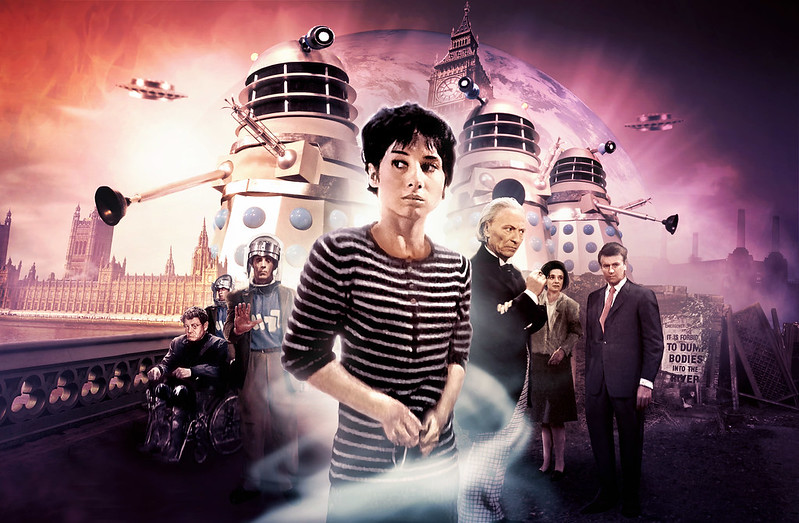
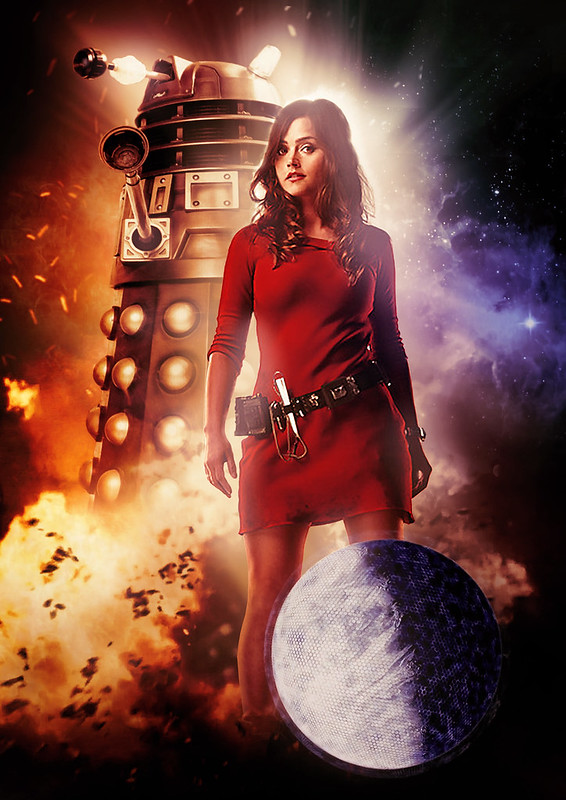
The Dalek Invasion of Earth

Deep Breath

Army of Ghosts

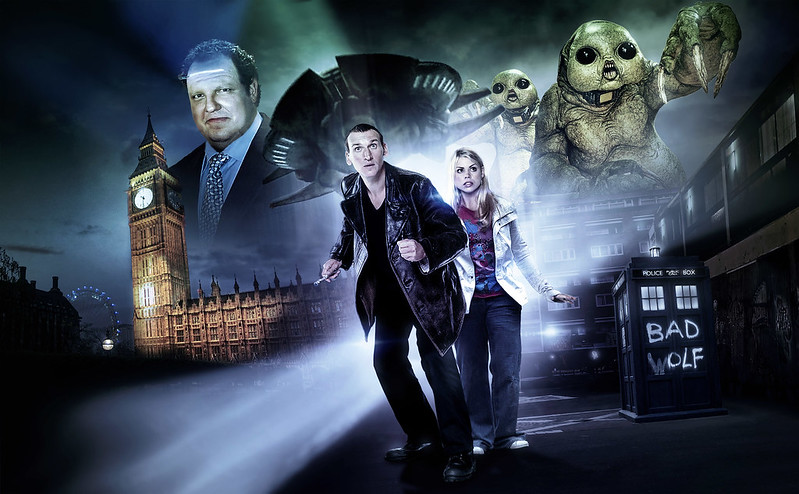
Aliens of London/World War Three

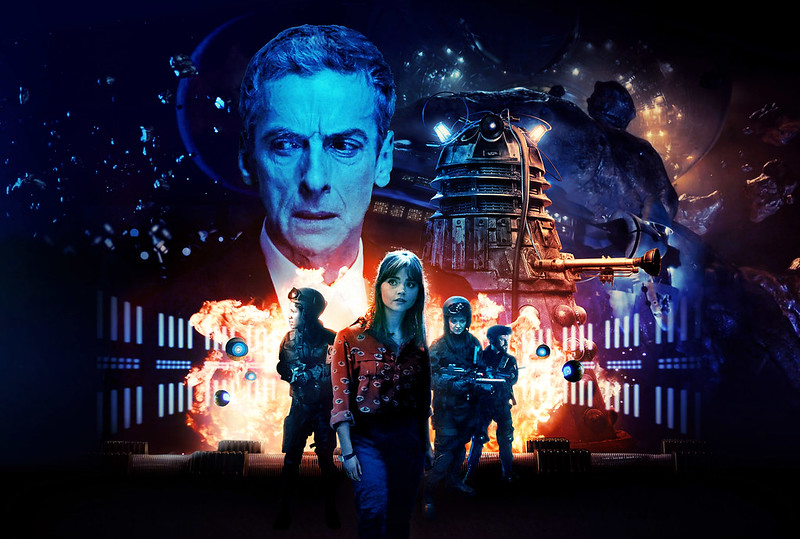
Into the Dalek

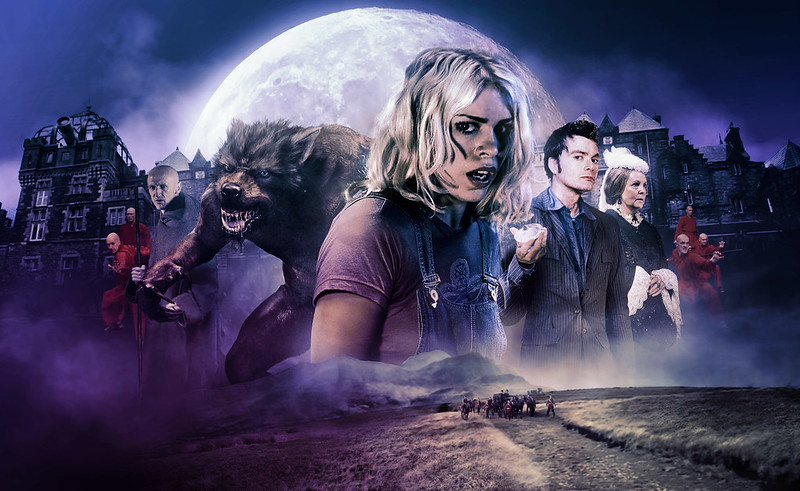
Tooth and Claw

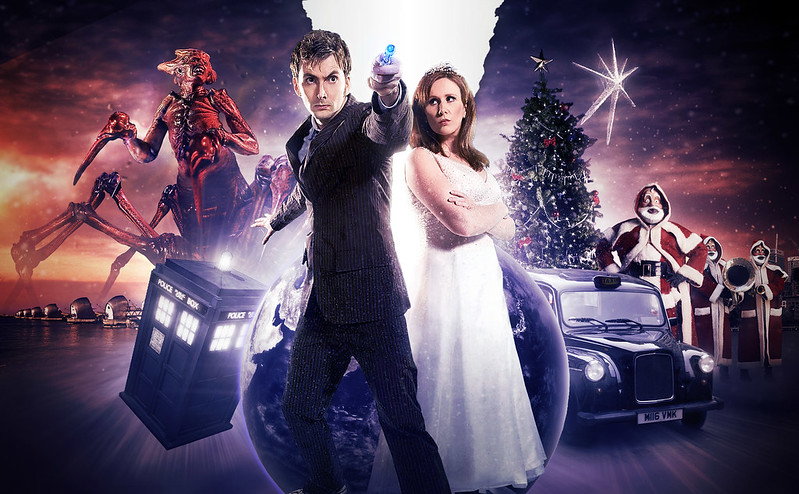
42 The Runaway Bride

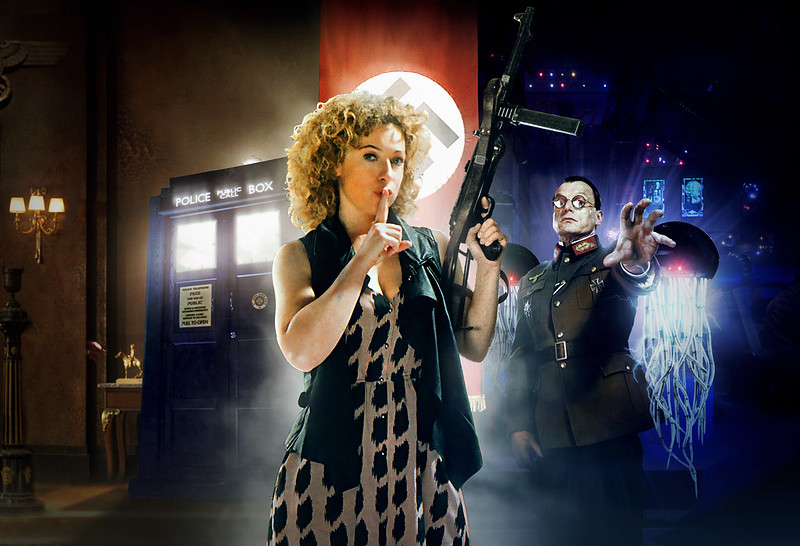
The Sound of Drums Let's Kill Hitler

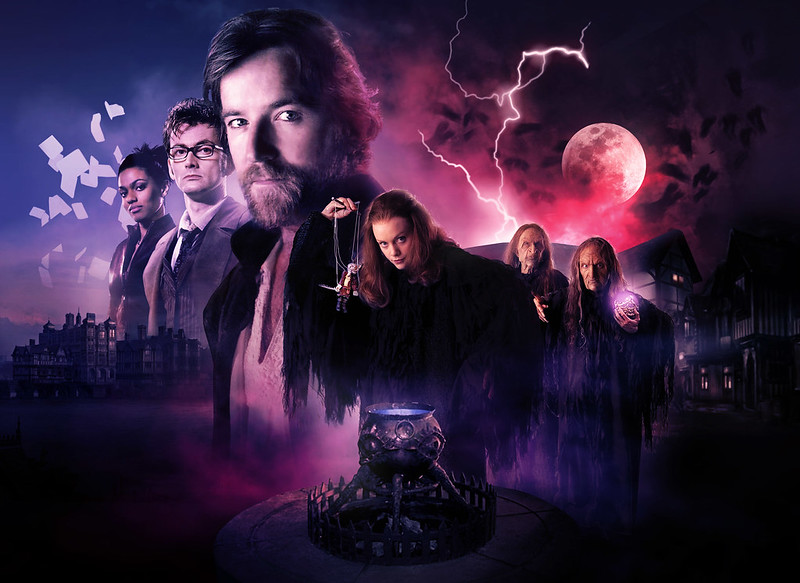
The Shakespeare Code

The Girl in the Fireplace

Listen

The Sarah Jane Adventures It's Wizards Vs Aliens!

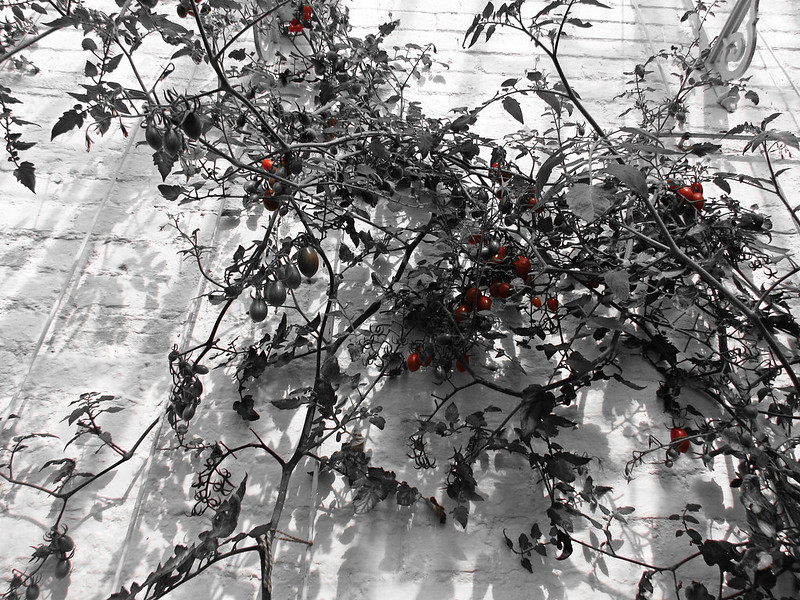
view from Arundel Castle tomatoes

Yellow Fields Starfish

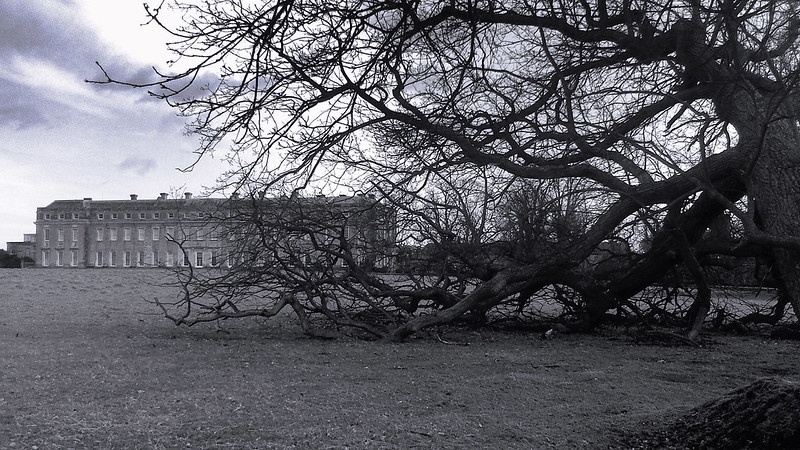
fish school Petworth House

poppy field poppy field view

29 Oct 2014

Doctor Who: Who is Missy?

It's being billed as a mystery - not just what the hell is going on with Doctor Who's dead-people-coming-back arc, not even what the grand plan is. But there's something else promised, most likely a cherry on the cake for fans. Because "Missy", is...?

"You know who I am..."

Well, everyone has their theories, and here are mine. One of them's probably true as they're a bit obvious, so if this spoils it for you, stop reading.

Missy is Clara!
Okay, this is a rather literal interpretation of the (possession?) scenes billed in the trailers. Of course Clara's good... isn't she? Whilst this is probably the safest option, I personally wouldn't want to see Clara's newfound personality explained away by having a dark secret.

Missy is the Doctor!
New Doctor, new bad guy, and they seem to be equals, so why not? It had precedent - an evil Doctor popped up in 1986, so maybe Missy is a side-effect of the new regeneration and linked to the new identity crisis. Is he a good man, or a good woman? A female future Doctor would be a good way to skirt around that issue. I wouldn't like to analyse her line about the Doctor being her boyfriend though!

Missy is the Master!
Which leads us onto this similar theory, only more out-and-out evil - the Doctor's arch nemesis, reborn. The last time we saw him, he was John Simm and probably trapped on Gallifrey. Now that's been saved, perhaps the Master had a new life cycle too? Would fans appreciate a bold new take on the character? (very bold, in places!)

Missy is The Rani! Or Romana! Or Susan!
Ones for the fans - the female Time Lords who haven't turned up yet in the series. Regenerating The Rani and Romana have been done recently in Big Finish, so anything's possible. But would they bring back characters last seen in the 80s?

Missy is the TARDIS!
No idea how that works, but it's appeared as a mad Victorian lady the other year.


Missy is River Song!
Oh come on, Alex Kingston only appeared last year.

Missy is somebody who was sneakily introduced only a few episodes ago!
You see that little girl who pops up in the middle of that episode you didn't like very much? That was her!!

Missy is God/Missy is the Devil!

Frankly, for Doctor Who, that would be a cop-out. 

18 Oct 2014

Six Reasons Why I Love Wolfblood

Wolfblood is currently experiencing its third series run on CBBC and I think it's one of the best dramas on TV, genuinely doing solid and extraordinary things, full stop. I've written about it before on this blog, but two years on, it's clear to see why it's ahead of the opposition:

1. It's a serial show. With Wolfblood you get more out of it if you started watching from the start, discovering the main characters' special abilities in the first episode (super-powered werewolf-like humans), and the gradual layering of new characters and events. More than that, the characters properly develop and show new sides, almost every week too. I was genuinely surprised in the first series how much they probed into the character's lives - Maddy's best mate Shannon's monster-spotting obsession being properly addressed, or later on with the slow and subtle romantic and non-romantic friendships between characters. Plotlines have been introduced that pay off later on, and plot elements that have proved useful before are taken for granted.


2. It's a fast show. Big things happen every week - big for the young characters and audience, like falling out with friends. And more importantly, it doesn't patronise its audience by undoing things after each episode. The secret of Wolfbloods living among us must be kept secret, and that's always a danger. Those high-stakes moments - at the series finales, or the threat of doctors running tests - feel like the whole thing could suddenly come crashing down.


3. It's not a scary show, it's not horror. The creator, Debbie Moon, envisaged her "werewolves" as normal people with superpowers - superpowered hearing, smell, the ability to run really fast and dealing with becoming a wolf at every full moon. That's particularly present in the most recent two-parter when one of the characters gets to experience what it's like as a Wolfblood. Stripped from the horror tropes, it becomes pure character drama with cool fantasy moments. And whilst there's sometimes big angry wolves, the scariness comes from characters messing up or getting found out, rather than death or getting attacked.


4. It's a realistic show, even with the fantasy elements (no, especially because of the fantasy elements, because without them you wouldn't be able to broach some of the subjects so easily). Whilst a lot of children's telly has a school setting, this really feels like the characters go to school - they get told off for skipping lessons, they have parents, they hang out at school at lunch break or in the toilets. Perhaps in another show the mundanity of French class and school assemblies would ground the rest of the fantasy and provide a safe haven before they go out to fight monsters. In this show, the monsters come from inside you, and school life provides enough drama for some episodes. As it's telly, we only see one class of course (well it's a tiny rural village!), but all of British school life is represented here: the sporty boys, the mean girls, the geeks, the loners, and the people who fall into the gaps. And the teacher Mr Jeffries is a real teacher too - like all the other (often more wolflike!) antagonists, he's not evil, he has interests and humour and warmth. That's what I've liked about the wild Wolfbloods and urban Wolfbloods introduced in series 2 and 3 - whilst they pose a threat to our main characters, they're always painted in shades of grey. No out-and-out evil villainy, that wouldn't be interesting enough.


5. It's a funny show, especially as the writers and actors have stretched their wings as they've gone on. The supporting cast of fellow school pupils might on the surface be a bunch of archetypes, but the strong polarised characters allows for some amazing moments and realistically snarky remarks. Recently the girl gang of The Three Ks have had some brilliant hilarious scenes (plus some brilliant drama), the writing and acting now honed over the three series to pitch perfect levels. There's variety in the humour too (bad dad jokes and insults to slapstick and farce) and a lot of it is refreshingly honest and grown-up for a show like this.


6. It's an amazing looking show, with a visual style and sound that's unlike anything on CBBC or elsewhere, and feels very assured from the first episode. The music has a wild folky quality (topped off by the theme song), even if ultra-modern chart music sometimes intrudes. There's bright yellow eyes, a wild muddy forest, slow-mo and stunts and night shoots. It's very impressive work all round - this series there's been seriously impressive closeups, drone shots, split-screen, the works. All this and CGI wolves! Rightly, this looks and feels like shows that have ten times its budget.

And these are just the shots that stood out!

So there's six reasons - and to be honest, I could easily come up with six more delving into the characters and the positive storylines. It's thrilling, it's fun, it's addictive to watch each week - I hope this has whetted your appetite if you haven't discovered it yet.

21 Sept 2014

Time Heist - almost a review

Today I'm wondering how they could have improved Time Heist. Don't know why, but bear with me - it's probably because I didn't quite know what to think of it when I saw it, in a bad way.

Don't get me wrong - it fits the Saturday night bill perfectly. The show needs at least one episode every year which throws everything at the screen, rips off a bunch of favourite movies and genres, and everything ends happily. It's a formula for fun lightweight telly that has produced the likes of Dinosaurs in a Spaceship, Curse of the Black Spot, Planet of the Dead, and it's not a bad thing. We can't have Listen every week.

And there were some terrific elements to it - the Teller, Keeley Hawes as Miss Delphox, the gang, the look and style, the ending - pretty much all of it, on paper. Except for me it's less than the sum of its parts, and I'd say it's in the writing. Not that the writers haven't put a ton of work into the often labyrinthine plot, just that it could do with a few more solid character scenes, or explain things away easier.

Loved the opening: the Doctor and Clara, definitely how to open a story, even if it's very close to their first scenes together in Listen. And then the Memory Worm (a nice return of this plot device/joke machine creature), fast but wordy introductions to our new gang and why we're here. Guards banging on the outside and we realise it's going to be quicker than we thought. No time for questions now, let's go - straight into the plot and sneaking into the bank. In the most part, it works, I'll give them that, but I'd have liked another (possibly filmed but cut) scene outside the bank with the gang. Or for them to go the whole hog with the genre, and have a montage of security guards with a voiceover telling them exactly what the plan is.

I'm only saying this because the frantic pace of the opening, helped by the sudden jump in plot via a memory wipe, goes straight away once they get into the inner corridors of the bank. There's little in the way of geography - Into the Dalek had that in a similar setup, simply because it was inside a recognisable structure, though Journey to the Centre of the TARDIS didn't - or really threat, because the bank's so huge and devoid of guards and the Teller's slow and only used a few times. But I'm jumping ahead here - before the gang break in, there's a very fine scene where the Teller is introduced, a completely faceless character meets a grim fate, and Miss Delphox has a way with words. The direction and slow mo works a treat, and I love all the dry bleak hyperbole of the bank protocol in the script (reminiscent to Doctor Who fans especially from Robert Holmes's The Sun Makers): "open up and you'll be humanely disposed of", "fired with pain". And especially the dark "that's not tears, that's soup", which you can imagine Peter Capaldi relishing.

It's a shame then the plot dries up after this - it's often been wordy so far and full of unwieldy explanations and get-out clauses, but saved by the pace. Couldn't they think of a couple more (cheap!) set-pieces to fill the middle act? But the new 'companions' in the Doctor's gang get things to do, and become slightly more than just their stock characters (clever updating, but they're still undoubtedly cliches - a lot of thanks go to the actors and costumers as well as the writers). Psi and Saibra are great additions to the ever growing list of the Doctor's casual acquaintances, so it's good to see them survive for another adventure. Though with an obvious teleporting effect, their 'deaths' were undermined from the start, even with the muddled explanation of the importance of yet another mysterious gadget in a case put there by a mysterious... zzz...

Still, we've got some creepy scenes with the Teller being let loose, like a more colourful, lighter-toned version of The God Complex from a few years back (though what's up with the editing between scenes? again, geography). 'Don't think' resembles all too many monster weaknesses these days, and Clara alone comes almost too soon after Deep Breath, unless they're trying to make a running theme of it. And then by the time we're left with the Doctor and Clara, everything ties up a bit too early into an anti-climax and we're left wanting answers - and then we get them.

Peter Capaldi's Doctor needs more scenes with villains, including in this story. Karabraxos was a surprise to me (come on, the Architect figure was obvious, which distracted me a bit) but she's handled surprisingly by the Doctor - little time for any contempt, no punishment, because he's bound by the laws of time and trying to work out the plot.

And what is the plot? I think they fudged the explanation a little bit by explaining it in the wrong order (though working things out in your own time isn't a bad thing - just look at Listen) but here's my take:
Decades after having received the Doctor's phone number and then left, Karabraxos on her deathbed has a change of heart and wants to put things right by saving The Teller - right up the Doctor's street - but can only do so in the moment when she left it just before the solar storm hit or else she'd change time. She doesn't come up with the plan - the Doctor does, recruiting the best people to help him do it, and placing the gadgets and everything beforehand.
It's not much of a time loop really, just a bit of prior knowledge as to the moment, because the magical destroying solar storm means it had to be this moment for them to be able to break in (as explained halfway through) and they couldn't go by TARDIS, or just jump straight to the private vault... for some reason.
And finally, memory wiping had to be done for them to get past The Teller (as explained at the start when it's introduced) and to stop the younger Karabraxos finding the whole thing out. It's a rescue mission for the creature that would have been killed otherwise.

Contrived as heck, but then it's ridiculously high concept to begin with (the bit with the two aliens as the end is also quite similar to - and an improvement on - the ending of last year's Hide). I just hope Clara's "there has to be some logic behind all this" isn't the stick that people use to beat it with - once everything's explained and you've got your head around the oddness, it's a good story.

As the end shows, this is lightweight fare, even with a couple of grim bits. Our heroes made it out alive, everything's back to normal with Clara, job done. There's no final shot of the Doctor being dour, or prophetic about his own death, or realising something about the story arc. Nope, this is as Saturday night as they come.

(What's this? A phone call from somebody in the future: "I want you to write an article on how to improve Time Heist". Sounds contrived as heck, but why not...)

30 Aug 2014

Deep Breath - almost a review

Doctor Who and the Deep Breath - and Peter Capaldi's debut, and I really enjoyed it. A Victorian setting with some familiar faces, tackling big old themes of the show in a fresh and dramatic way, and all pointing towards a bright new future.

(I'm saying 'almost a review', because I'm not trying to cover everything. Rather, here's some bits that jumped out at me when I watched it, or have been floating around in my head ever since.)

Deep Breath

Peter Capaldi first... well, he's amazing. He has tons to do - high comedy and high drama - he plays a million different facets of the same character. And he does it all brilliantly. There's not much more I can say.

Then there's Clara. I've heard other, cleverer, people talk about how this is the show through the companion's eyes again, not the Doctor's as it has been with Matt Smith. This probably explains why suddenly we're noticing Clara having character - not that she never had one, but that the Doctor was the one who did everything. Here, she's reacting to plot of the Doctor changing, coming to terms with who this man is, and being angry with him - it's wonderful to watch. She holds her own for long scenes where the Doctor is missing (and Jenna Coleman can definitely act it) especially in some very dramatic scenes with Madame Vastra and the villain, the Half-Faced Man. The first one is pure drama especially, verbal sparring between two, an argument we can see both sides and relate to both characters. It feels almost unique in the show to have the companion being in such a strong scene, and the Doctor absent. I loved it. Clara suddenly shoots up to the pantheon of great Doctor Who companions, as similar moments with Rose and Sarah Jane spring to mind.

Viewers of the last series, however, might have noticed a change. Madame Vastra got on quite happily with Clara in the previous two or three times that they met (if they met at all in some scenes), although she was a little bit frosty and protective in The Snowmen. Clara's met many incarnations of the Doctor onscreen beforehand, so shouldn't be quite so stressed that her Doctor has changed (that's another kettle of fish), and her defensive comments about how she's never been swayed by the Doctor's youthful looks hasn't really been explored either way. And has Clara been such a control freak? There's hints - she fits in her TARDIS travels around her own weekly schedule, she masterminds the Doctor to accompany her to the family Christmas dinner - but it's never been stated outright as in this episode. I admire that they're finally giving her a proper character now, and giving her things to do, and I admire that they're sticking to the same character brief from before, even if I've probably only read it in interviews. I'm just not sure the qualities we're banged over the head with here are especially realistic, or make a good character on their own.

But still, the second is notable - it seems like we've had few of these scenes lately, not least because there's been a lack of proper villains. Clara can be strong and terrified and still showing her character. The robotic monsters work extremely well too: it's that mix of tangible real world scary things (clockwork sounds, robotic zombie people), cool design, and a villain who's played absolutely straight and absolutely perfectly. With the cherry on the cake of a Doctor Who monster - something that can be imitated in the playground. That's not to say they have what it takes to become a regular popular feature, just that they work especially well here, as a particularly big, well oiled cog in a wider machine - and cleverly (very Steven Moffat) reflecting the Doctor's character and the core themes of change and renewal and humanity.

Let's not forget it's the first story of the new Doctor - one of those rare, pivotal 'regeneration stories' - and many of the hallmarks are here, even if you have to look harder for some of them. There's the worry that the Doctor's regeneration might have 'gone wrong', with scenes of him breaking normal rules of etiquette (always more so than in later episodes when he 'calms down'). The companion doesn't quite know what has happened, and there's familiar characters to reassure us it's the same show, including a first - a cameo acting appearance from the previous man telling us to trust him. It reminded me of an old address to camera from Patrick Troughton: "this time I'm just a little bit more frightening than last time. If your mummy or daddy are scared, just hold their hand." Of course, this came at the end of the story, after plenty of scares and bewildering moments, so it was less of a warning, more of a straightforward cameo.

And then there's the - arguably - traditional moment, just after the plot kicks in, where the Doctor as we know him is back with us. He might be suited up already, or he might not. But, like here, we finally see the glimmer of the new character away from the post-regenerative madness. In The Christmas Invasion, David Tennant finally woke and stepped out of the TARDIS to face the Sycorax. In The Eleventh Hour, the moment came earlier, when Matt Smith was asking Amy to trust him, or perhaps when he was investigating the crack in her wall. In Deep Breath, Peter Capaldi rips his face off to reveal the Doctor underneath. That's where I see the Doctor stepping in, even with the T-Rex and the lovely restaurant business beforehand - he's finally found some clothes that don't smell, he's facing the villain for the first time, and he definitely hasn't abandoned Clara. Even then, as this leads into an excellent face-off (pun intended) upstairs against the Half Faced Man, we're not sure of who the Doctor is, of how far he can go. We're still not really sure after the credits have rolled. But we trust him - and we certainly trust in Peter Capaldi.

If the familiar elements are hard to find, I put that down to the new tone and style, orchestrated by Ben Wheatley. It would be more straightforward to play this story as one of the last few years, chewing up the meaty character scenes into bitesize quips. It's a brave opening gambit - the show will be more thoughtful, more weighty (rather than any of the now meaningless terms like 'dark', or even more meaningless here, 'adult'). Events will have consequences and take time to recover from, supporting characters will have their own motivations, the companion can be terrified of the monster and still stand up to them. Nothing here in the direction, either, is flashy for being flashy. I've seen relatively little of Ben Wheatley's output - only A Field in England - but it doesn't surprise me that there's few moments of extravagance in editing or the music or the effects. Not that his flourishes aren't there, but they feel natural and earned. It's the anti-Sherlock, from the writer of Sherlock. No wonder it all feels different.

But I'd also add that with this drawn out, more serious style came an underlying sense of bewilderment expressed by me and many other viewers. (AI: 82, say no more) I've nothing against the second half of the story which is traditional as anything and pure Doctor Who. And it's not the pacing - which wasn't particular bad or slow even when the plot hadn't kicked in yet. No, I find fault with the opening sequence, in the same way that Cold War left me, well, cold. In that story and this, everything's introduced in a blur, with the Doctor and Clara arriving in the middle of the action, so we and they don't quite know what's going on. Then there's jumps in time - Clara or the Doctor falling unconscious - a general lack of exposition/characters being filled in off-screen, and finally the whole episode takes a shift into a completely different style to what you were expecting (in Cold War, the Ice Warrior coming out of its casing). If the opening left me breathless, that change bewildered me.

You could make the case that it's about the format - forty five minutes is a short amount of time when having to introduce things - but Deep Breath has that extra time. And it's hardly an action packed opening either, people just talk! It's a storytelling problem, even if it could have been ironed out in editing. That first scene is a great scene, but I only noticed how great it was on the second viewing, when I had the right expectations of how it would play out. The trouble is with Doctor Who, more so than most dramas, a good chunk of the audience will only watch the show once, on a Saturday night, some of them too young to take in all of it. It needs to be accessible, and not just in continuity, something I think this lacks slightly. (for an opening sequence I think works, well, take your pick - though The Christmas Invasion works because it's short, and The Runaway Bride works because it picks up on crazy things shown months ago, and establishes them proper. No sudden dinosaurs here!) And an audience that is bewildered to begin with, with no Doctor to latch onto (and when he is there, he's behaving very oddly), could find themselves lost before the familiar, safer elements kick in, before Matt Smith reminds the viewers that this man is still him. It could have been their intention to alienate the audience a little, not making them comfortable with the new show (let alone the new Doctor), but I think a more accessible, or perhaps traditional, first half would have made this perfect.
24 Jul 2014

Armageddon Outta Here! - the Skulduggery Pleasant short stories


Open up this improbably titled book - after staring at the gorgeous wraparound cover with all the characters brought to life - and you'll see a contents page, or rather, a timeline. Unlike the main (nine or ten) novels, this are the stories inbetween those blockbusting adventures. Short stories!

That's not to say these are small stories. Some of the most memorable deal with the 'gaps' in the series: an unseen first meeting in Friday Night Fights; a story that has fun with the Western genre set back in the Dead Men's heyday; a longer novella in a very different - but no less Derek Landy - style; another very enjoyable (and slightly self-referential) appearance from horror writer Gordon Edgely

These are billed as the 'new' stories, although only the most adventurous fans will have tracked down and read all of the others (I'd only read one before). A lot of the existing stories introduce brand new characters created by readers as part of competitions - not as gimmicky as you'd think, and these stories have more significance after the author crammed in practically every character in the penultimate book last year, Last Stand of Dead Men. And it's also introduced me to The Lost Art of World Domination, a very impressive, hilarious exchange of dialogue, which is set in that odd continuity-sparse hinterland, the 'early days'.

Is the book accessible for new readers then, or ones that haven't read all of the books in the series? I'd say probably yes, as the stories are self contained and introduce people themselves, although you'd miss out a lot of injokes (more than references) back to characters, plots and later twists. It's great for fans then - really enriching the wider edges of the world of the books, or as extra stories on par with the great set-pieces of the bigger novels, or just containing more action with their favourite characters - Skulduggery or Valkrie feature in almost all of them.

Then you get to the last section, the advertised 'exclusive chapter from the final book'. I'm not normally swayed by these things - especially as they're normally a tiny peek compared with sitting down with the full tome when it's published. But I did enjoy this one - action, scares, fun, just like the previous short stories in fact.

Only this one has a shadow over it, as it's set after the really very game-changing events of the penultimate book. Some of the fun might be over, which makes this book - containing references to all the books, thanks to the final chapter - a last chance before we say goodbye. It's extra special.

28 May 2014

The First Five Decades


The new issue of Doctor Who Magazine is upon us, and it's a good one for anyone who likes numbers. Thousands of fans have scored every story from 1 to 10, and all these have been averaged and totted up to find people's favourite - favourite story ever, favourite Doctor, favourite season, you name it. And there's even the prospect of comparing the results to the last time the poll was done, five years ago! (with a whole load of new stories since)

You can find out more about the issue, with a wonderful fold out cover, here. But I thought, since I entered myself, a short summary of what I voted for as my favourites. I rarely sit down and work out my favourite Doctor or story (there's 241 of them) - and my tastes are no doubt only controversial for how average they are - but it's a good game of numbers. (And maybe I've boosted the Slitheen ones up the chart ever so slightly!)

10s went to: (deep breath) The Tomb of the Cybermen, Inferno, The Green Death, The Time Warrior, Genesis of the Daleks, Terror of the Zygons, The Brain of Morbius, The Seeds of Doom, The Deadly Assassin, The Robots of Death, The Talons of Weng-Chiang, City of Death, Earthshock, The Caves of Androzani, Remembrance of the Daleks, The Empty Child / The Doctor Dances, Bad Wolf / The Parting of the Ways, The Girl in the Fireplace, Army of Ghosts / Doomsday, Human Nature / The Family of Blood, Blink, Silence in the Library / Forest of the Dead, Midnight, Turn Left, The Waters of Mars, The Eleventh Hour, The Time of Angels / Flesh and Stone, Vincent and the Doctor, The Pandorica Opens / The Big Bang, The Doctor’s Wife, Asylum of the Daleks.

9s went to: The Dalek Invasion of Earth, The Time Meddler, The Mind Robber, The War Games, Spearhead From Space, Pyramids of Mars, The Curse of Fenric, Dalek,
Father’s Day, Tooth and Claw, School Reunion, The Impossible Planet / The Satan Pit, Smith and Jones,
Utopia / The Sound of Drums / Last of the Time Lords, The Unicorn and the Wasp, The Stolen Earth / Journey’s End, Amy’s Choice, The Impossible Astronaut / Day of the Moon, A Good Man Goes to War, The Girl Who Waited,The God Complex, The Angels Take Manhattan, The Snowmen, The Name of the Doctor


There's a list of top 50 stories to watch right there.

(2s and 1s went to: Planet of Giants, The Space Museum, The Krotons, The Time Monster, Timelash, Time and the Rani; Underworld, Meglos, Time-Flight, Terminus, The Twin Dilemma.)


Per Doctor, it works out that Christopher Eccleston's stories work out the most favourable (my first Doctor, even though I put Matt Smith on the poll), followed by David Tennant and then Matt Smith. Out of the older stories - lower on average no doubt due to ropiness, but they're not that much lower - it goes, surprisingly, Patrick Troughton, Jon Pertwee, Sylvester McCoy, Tom Baker (!), William Hartnell, Paul McGann (his one story), then Colin Baker.

That's stories, not the actors, of course. I tried to keep a wide distribution (or else I'd give them all 9s), and stories I haven't seen (seen, not just heard) are omitted. (This means in DWM, the lesser known 60s stories are voted for by less people... but then most are never going to be front runners, and 'less people' still equates to over a thousand!)

Don't ask me to pick a favourite out of that lot!

14 May 2014

'Murder Must Advertise' by Dorothy L Sayers

A short review of this classic 30s mystery - and the first Sir Peter Wimsey book I've read. Dorothy L Sayers's books regularly show up on lists of the best detective fiction (the Crime Writers Association put her up with Sir Arthur Conan Doyle, Dame Agatha Christie, or Raymond Chandler). But like the rest, there's no clear consensus on her best novel. The Nine Tailors (on my reading list) and Gaudy Night and Strong Poison (two with Harriet Vane assisting Wimsey) are often cited, along with this one.


Set in an advertising agency, Peter Wimsey goes undercover in order to investigate a suspicious death and a drugs plot. Dorothy L Sayers has had considerable knowledge working as a copywriter - and it shows. The atmosphere in the opening chapters (and all the way through the book actually) conjures up a lively workplace of people - most of them thinking up the advertising slogans and campaigns in order to flog unnecessary stuff to the public. She captures the madness of the job with a satirical eye, and it gives the book an edge. The characters are reasonable, and there's lots and lots of them. A pleasing range in female characters, and of men too, but often the workers are interchangeable, and it's hard to pick out somebody in particular as a suspect - nor, do I suspect, does the author want to either.

I've heard that, like this one, Sayers's books focus more on the background and characters than constructing a clever, potentially dry murder mystery. Actually, the crime is quite well thought out, but there's not enough of it to cover 100 thousand words. That's not to say it's boring or that it drags along: there's plenty of ingenious chapters and set-pieces (workplace arguments, some skulking around town, some slight but colourful party scenes, a lengthy cricket match near the end that might confuse people who didn't know the rules).

It might be the first book of hers I've read, but I'm not a stranger to Wimsey - there was a short section with him written by another author in an anthology (to which she also contributed), and I've listened to one of the (3 hour odd) radio adaptations, of her first book 'Whose Body?'. That one was mad - a rambling mystery with little twist in the murderer's identity. The blurb on my edition of Murder Must Advertise says that 'five people will die' - and bar the first murder before the book begins, all of these happen in the last third of the book, and most are forgettable. By the climax, the whole thing is downplayed, with most of Wimsey's conclusions explained beforehand. I was surprised by the 'drug plot' - it sounds a lazy enemy to be up against (police unable to catch them, members potentially everywhere), but it's handled with enough detail to be plausible.

I found the book a great read, with a great setting and plenty of interesting diversions too. So it surprised me to read that the author herself didn't think much of it, that it was apparently written in haste to satisfy her publishers, before she could work on her next book with her preferred setting, the chuch bell-ringing of The Nine Tailors. Will that book hold up against the hype?

4 Apr 2014

Detection Club: The Floating Admiral / Ask a Policeman

A couple of years ago, in my quest reading all of Agatha Christie's work, I stumbled upon a recent reprint of an old collaborative book. Written in 1931, The Floating Admiral was devised by the members of The Detection Club, a 'fun' society whose members included the likes of Agatha, Dorothy L Sayers, GK Chesterton and many many others since. Presumably the reprint was a success as now a second Detection Club novel has been reprinted by HarperCollins, and I've just finished it.


The Floating Admiral was one of the first published collaborations between a group of professional, published authors, and even today it's quite star studded. There's fourteen writers involved, writing a chapter of a detective story each. Naturally, the story suffers - you can't compare it to a typical crime tale, even if the plot has all the hallmarks of one. A body is found murdered, floating on a boat on a river mouth between two towns! Not only is there suspects and alibis and tracing his movements, but also remarks about the tide and how to moor boats!
The style jumps around with each author, especially with the addition of more clues and twists, but it's kept from getting too contrived by an ingenious instruction: each writer, as well as acknowledging everything that came up before, had to come up with a solution to their chapter (printed at the end of the story), their own explanation of the evidence. Agatha Christie, whose short chapter thankfully has a lot of typically good dialogue between characters, came up with a famously great explanation, which I won't spoil here.

It's a very interesting book, and a fun experiment for the Club (they had worked together on a couple of short serialisations before this, but not a full length novel). Many of the writers have faded into obscurity (especially the most florid named such as Canon Victor Whitechurch and Edgar Jepson), so the introduction putting them into context is much needed. The book itself, though, is an odd read. What starts off as atmospheric and scene setting, quickly descends into a mess of overly complex evidence, deduction and counter deduction. The task of the final writer to tie everything up must have been enormous - but I'd prefer something less technical, playing on the fact each chapter has a different author by having a change in style, rather than juggling the plot all of the time. It's skilfully written though, definitely grabbing your attention, and definitely living up to the concept.


Ask a Policeman, the following collaboration, seems to tackle the inherent problems of the first book head on. For starters, it has only half the number of authors than the first book, making it a smoother, slightly more coherent affair. And secondly, this time they bring along their detectives!

The four detectives were probably well known to readers of detective fiction in 1934, but less so now. Whilst I'm familiar with the enthusiastic (and often infuriating) Lord Peter Wimsey from Dorothy L Sayers, and I've heard of Gladys Mitchell's Mrs Bradley (played by Diana Rigg later on TV, and I've got one on my reading pile), the other two I hadn't heard of before. The trouble is that these books are barely in print at the moment, especially Helen Simpson's stage manager Sir John Samaurez and Anthony Berkeley's Roger Sheringham, who, whilst having books adapted into films by Hitchcock (!), remain obscure. Not to mention the other two authors involved in this (and the previous book too), John Rhode and Milward Kennedy. This means it's sometimes hard to see the humour and parody involved when they appear, but they're good characters and very good writers.
In fact, the book itself is marketed under Agatha Christie - and unlike The Floating Admiral, she hasn't even contributed to this one! Rather, they've lumped in a Preface that was published elsewhere, an essay by her about other Detective Fiction writers. However it's a great piece - insightful and critical - and fits this book very well.

It's rather a shame that some of the writers aren't better known, because it's a good read! This book has an odd gimmick - one writer, Rhode, writes the set-up this time, putting in an impossible amount of clues into his relatively short opening. That it stands up to the later repeated scrutiny, and doesn't get too dull when it's explained again and again, shows his merits. (The plot itself is possibly stereotypical, and definitely contrived, with three important pillars of society being involved and suspected in a country house shooting!). Whilst it's all about alibis and timings, the initial chapter is so open, the following chapters are all quite different.
The next four writers each have detectives 'solve' the case - but in a gimmick designed to invoke parody, they swap detectives and are writing in somebody else's style. This doesn't entirely work without knowledge of the originals, but it's put to the background. More important are the deductions, and there's a lot of them. Whilst some of these are long winded or with overly flowery prose, they're different enough to keep holding your attention, especially in small doses. By the end of it though, you know the movements of everybody at Hursley Lodge like the back of your hand, it's been reiterated and debated so many times.
And then, tying up everything in a very fun and ingenious final chapter is Milward Kennedy. The clever conceit is that all of these detectives, whilst their chapters were written independently, worked around each other, and every clue they found was correct - even if they picked different suspects as the murderer. So who really did it? A fifth solution is found, that's meant to be the 'correct' one that fits almost all of the evidence. It sounds horrendous to write, making sense of every clue (and sneakily discounting a couple of murderer's confessions!) but thankfully it's painless to read.

Both of the books are less coherent and less readable than usual detective novels, but then they don't claim to be. Rather, through parody and wit, they enthusiastically push some of the conventions of the genre, in an era where detective fiction was all the rage. These books are better than the concept sounds, and well worth discovering now they've been reprinted once more (in very smart new editions!), and the talent involved means they shouldn't be overlooked in a hurry. Whether any more of the few Detection Club collaborations will be republished, without Agatha Christie's name attached, remains to be seen, but I hope so, if they match this standard.