20 Jun 2013

The Silent Scream

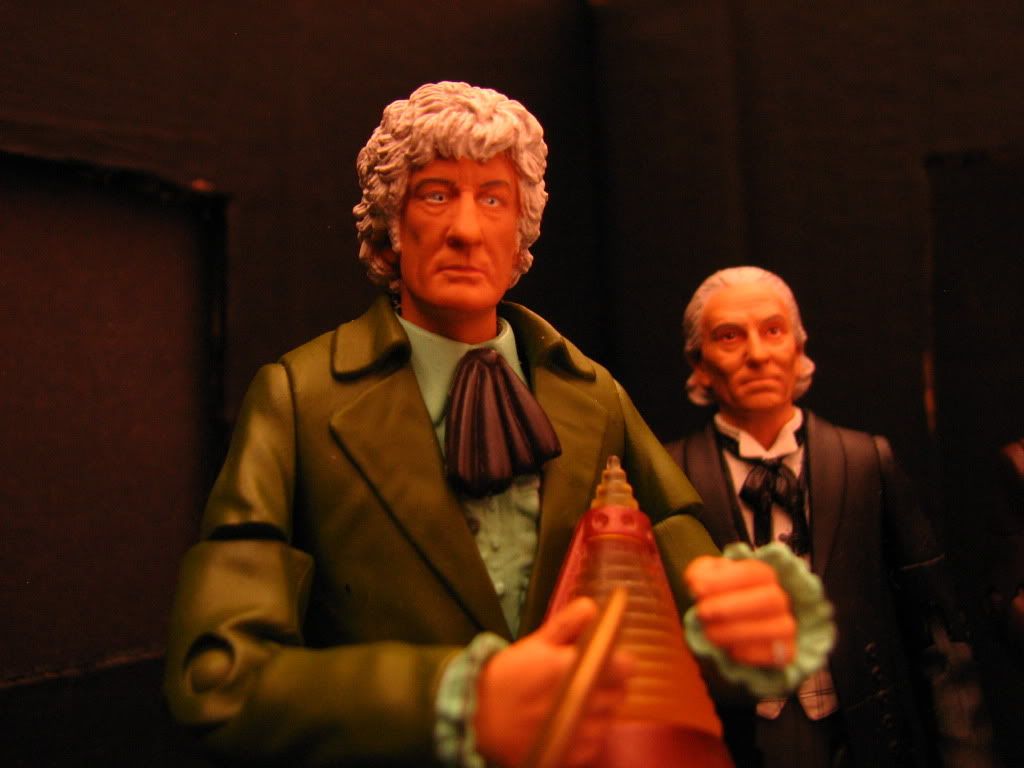
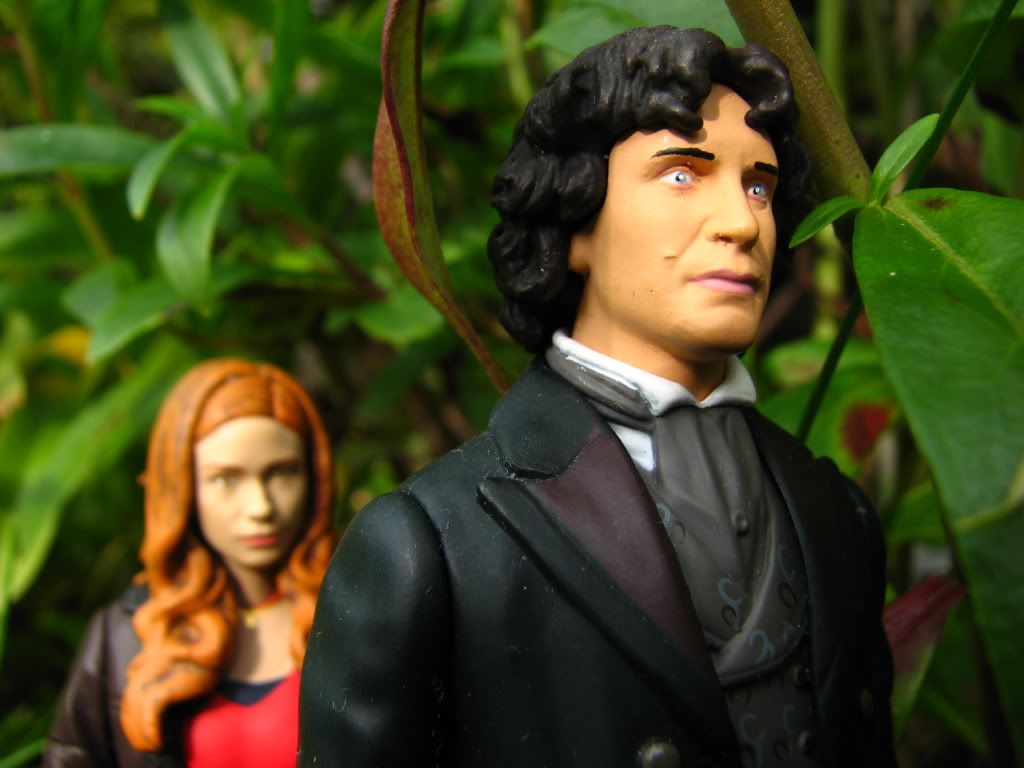
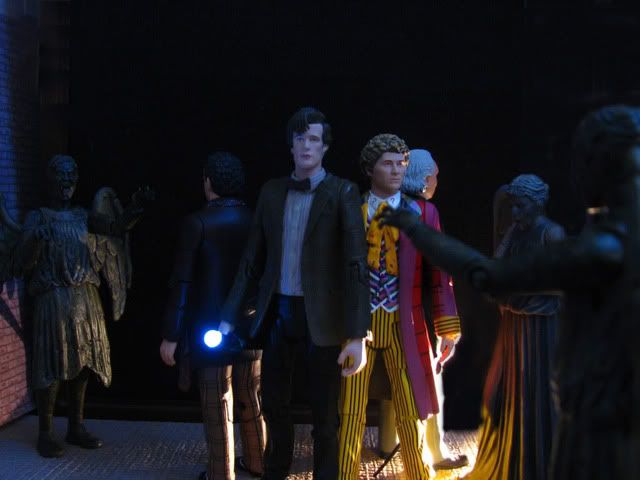
Against all expectations, it's something new from me - and it moves! If you like Doctor Who, or watching things, then here's The Silent Scream...

And since this is a blog, I thought I'd say a bit about the making of it:


It's not your normal Doctor Who episode - really, it's an experimental short film. (Intentionally, kinda, there's no theme music, or familiar TARDIS groaning) It started off as me filming something on my new camera, and naturally that led to a seven minute short, with lots of voices, mixing different styles of filmmaking!

18 May 2013

The Great Gatsby

At the moment, I'm reading another of F Scott Fitzgerald's books - in fact his first, This Side of Paradise. (It's rather dragging I'm afraid - well written, just not too engaging - but that's another story entirely) Undoubtedly the most famous of the things he wrote was The Great Gatsby - a novel which has just come out as a Hollywood blockbuster movie starring Leonardo DiCaprio and Carey Mulligan, directed by showman extraordinaire Baz Luhrmann.


A few months ago I read the book itself. It had been on my reading list for a while, given its popularity - but I went into it knowing very little, especially about the plot. So I didn't quite know what to expect - it wasn't as if I'd read any other of Fitzgerald's work, or was familiar with his distinctive, effortlessly poetic writing style. (I haven't seen any other film adaptations either!) But I did enjoy it.

I was caught up in the characters, the plot, the words, the atmosphere. In my mind, though the prose was pleasant (and the cynic in me thought it was almost written to be analysed for countless GCSE literature courses), the atmosphere seemed pretty harsh and brutal. This was a shady world of corruption and capitalism and, in the end, murder and death. Strangely enough I hadn't got the full impact of it - it's a book trying to define its time, but read ninety years later, you take the motor cars and the alcoholic parties for granted. When in actual fact this was the era of Prohibition (hey - I'm not American, perhaps that's why some of it was lost on me). But I could see why it was successful, even if I didn't quite get everything on my first (and only, thus far) reading.

But then you read that it wasn't initially successful at all. When it was first published in 1926, though the author had realised he was creating a novel's novel, a fine piece of literature which would, in part, define and also transcend its decade... it received mixed reviews. It didn't sell very well. People, apparently, didn't quite get it. So bear that in mind when reading the book - or indeed, seeing the new film that's just been released (you know, that one that's been getting mixed reviews...).

So what about the film?

The first thing that strikes you is the visuals - it's a blockbuster in every sense of the word, and it looks absolutely lavish. The parties are wild, and brilliantly staged. There's great sweeping shots from one bay to the next, and cars whizzing by over huge landscapes - created, of course, by the latest computer effects. In fact, for me watching it in 2D, there's a bit too much of it, and at times it's almost too well done. Almost all the exteriors of the film are done in greenscreen, which gives it an odd look to my somewhat trained eyes, almost like a comic-book. Given that it isn't, and the subject matter isn't sci-fi or fantasy, it's jarring. Whether or not it looks better in 3D (even if you have to wear the glasses and focus a lot), I don't know.


Where the film shined the most for me, apart from it being gorgeous to look at, was the actors. The quieter moments, where the characters are sitting in a room and talking. And they are good characters, and very good actors - after all, one of the reasons the book is adapted is because of the plot and the characters. Even though at first it doesn't really feel like they're centre stage, amongst all the visual trappings. And the music too - it's a great soundtrack, the dazzling jewel in the film being Lana Del Rey's sumptuous Young and Beautiful, and there's also Florence + the Machine's amazing, directly-inspired Only the Love. Sure, it's odd seeing people in the 1920s dancing along to modern club music, to rap, and a jazzy rendition of Beyonce's Crazy in Love. But, it's of its time, and it works. Coupled with the CGI, the 3D, and the glitz and glamour, this film will date very very fast - ironic, given the source material. But hey - Hollywood does this sorts of blockbusters every year, so why not, in Gatsby's spirit, give people a huge showstopper to remember?

It's definitely a tough book to film. Being somebody else's adaptation of the novel, it's always going to be somebody else's view of what they think the novel is saying. It's one of those books where you often have to read into the poetry or things that are happening just out of the main picture - subtlety, in other words. That's kind of hard to capture - the film uses voiceover, but then that ruins the scenes where the characters are properly interacting.
Watching it on screen, with the film following the plot of the novel faithfully (overly so, perhaps), some scenes I thought were spoilt by showing it in detail, and would be better left to our imaginations - I didn't imagine Gatsby's love affair was quite so passionate when I read it, for instance. And then, some scenes I thought worked really well, where the film deliberately showed us its themes, and what the story was all about. And then spelt it out in voiceover. And underlined with a red pen, twice.

The book, I believe, has reached high acclaim, right up there as one of the best American novels. Similarly, the film absolutely adores the book. Take the last chapter, the last paragraph: reading it fresh, I thought it was an enigmatic, poetic, if downbeat end to the whole story, but I didn't realise that it was especially famous. The ending of the movie tries to capture the essence of those words on the page... well, it tries too hard. I'd have been happy with just a voiceover to be honest. When the film starts to quote parts of the book, literally writing the words up on the screen, you realise this is a very unusual adaptation. Whether it's a good thing or not is up to the viewer.

17 Apr 2013

The obligatory Broadchurch post

Six weeks ago, the first part of Broadchurch aired - a slow, Dorset-set drama about a crime that shocks a small village. Since then it has slowly and surely built up to what some people are tipping the telly drama event of the year (well, so far at any rate). Certainly it's a big hit ratings-wise.

It's amazingly well made, which is odd because it's an ITV drama - great cast, lovely stylish direction and music, and even the writing's up to scratch. One of its strengths is in its sincerity. Not only is there realism in the local police's investigation, but you've also got Olivia Colman in it, and she's amazing, which adds some warmth and humour and truthfulness to the subject material. Given the slow pace - seven or eight weeks is a long time in this digital age - and that it's dealing with heightened events, it's the characters and the humanity that stops the whole thing getting silly.

Many people have compared it to Danish drama The Killing and you can see why: a (relatively) long, drawn out investigation isn't the norm on crime dramas these days - usually it's wrapped up in two hours. It takes its time with the potential suspects (an isolated community, with huge murder mystery style potential suspicions), and we see the story, mainly, from the point of view of the police, the victim's family, and the press. Like The Killing, it's quietly stylish (although this has much more slow-mo), but also it's very gripping, with a new development and twist seemingly every week. The cliffhangers might not match The Killing's - though Episode 6's nighttime chase could have been lifted from the other - but it's proving to be unmissable.

Final episode's next week, and we still don't really know who's done it, and a whole heap of forgotten clues and soon-to-be-answered questions.

So - who killed Danny Latimer?


Seeing as everyone's got a pet theory - which everyone then has to change week on week - I thought I might post mine.

First off - the death. It's a bit hazy at the moment - first we see Danny on the cliffs at the dead of night (which nobody's mentioned!), then there's a hut, a boat which was later burned, and the body put on plain view on the beach... So, he was killed on the boat then. Why all the trouble - lack of evidence? Seemingly Danny went to meet his killer secretly that night... willingly? And did they want the body to be found straight away, because they had an alibi that night?

Susan Wright says she saw a man in a boat, dragging the body onto the beach - did she really? She lies easily, as we've seen. And though she recognised the man as Nige - who is now a credible suspect - can we trust her? Could she be the murderer herself? (unlikely)

Danny's friend Tom can't have done it - that would be silly, even if he's acting strangely. Even more silly would be his father, and Ellie's husband, Joe Miller. I know people are speculating it, but he's the least likely person who could have done it, and the only evidence against him would be the stuff with his son. So no - but Tom definitely knows something important, perhaps who Danny was going to meet.

In your standard murder mystery, often it's the most likely person who did it. Here, the most likely person was the first person arrested, Mark Latimer. He got off, as he had an alibi (though it was the first time he'd ever slept around...) and not much of a motive-  but could later evidence change things around? It's not the most likely, but he's still in the picture, and it would bring the story round full circle if it was a big main character like that.

Otherwise, my (figurative) money's probably on the dark horse, psychic Steve. It's a bit of a ludicrous character, but played perfectly down-to-earth. I can see why he's in the show - it ties in with the themes of grief and the public and adds a layer of mystery. But, presuming he isn't a psychic then - how did he know about the boat? He hasn't been in it much, but he's still a suspect too... Don't get me started on motive though!

And then you've also got the nice young vicar with a shady past (who was more trusted than the newspaper seller with a shady past!), and the thing with Danny's sister's boyfriend...

Regardless of what the end result might be, it's still been one of the best things on TV this year. Now we just have to wait until Monday...

14 Apr 2013

Cold War

This is beginning to be a regular occurence!


This week, Doctor Who's action movie, and a rather fine one at that. It's packed to the gills (and definitely merits a future rewatch). The TARDIS lands on a submarine - and a Russian one, in the middle of the cold war! Back in the day, that would be enough in itself - but here, it's a colourful backdrop for an alien menace which happens to be on board. They thought it was a mammoth... it's not!

Ultimately the setting of this story is uncontroversially spot on - you can't argue with confined spaces, water gushing in, the works. It's beautifully made - and shown off in a particularly beautiful episode. Warriors of the Deep this ain't - there's well controlled lighting, a dark spooky atmosphere, lots of steam and water.

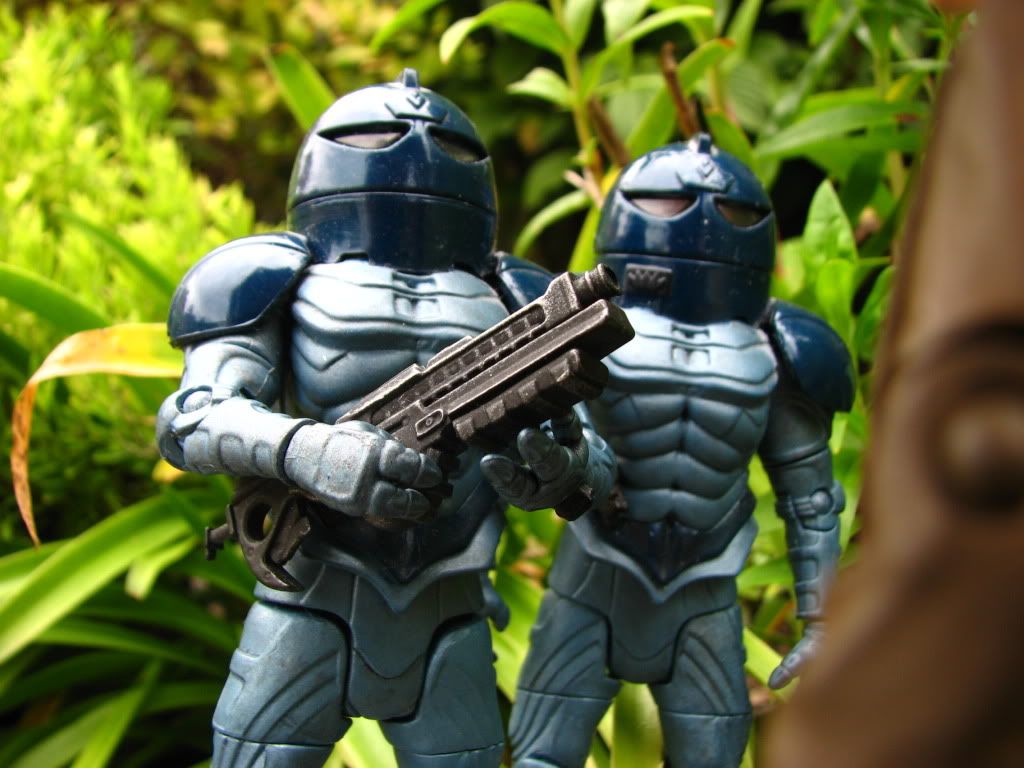
And add into the mix a very cleverly redesigned version of an old enemy - the Ice Warrior! Some people have compared this episode to Dalek (I guess because it reboots a monster by putting it on its own in an confined space, and making it a killing machine) - but as the episode goes on, it reminded me more (certainly visually) of the stalking-on-a-spaceship action of 42. The Doctor's reaction is great - and establishes that this alien is not only dangerous, but also has a personality - something absent from the mysterious, parasitic monsters last week - and a history.

Perhaps its greatest moment was that twist, which I didn't see coming at all - that Skaldak the Ice Warrior had escaped his suit! (There I was thinking - they could have shown more shots of its mouth saying the lines!) From there on, it turns into a real monster movie, Alien style. The bony, green alien hands look excellently creepy - that'll be why they redesigned it, although they don't quite fit in with what we recognise already as Ice Warriors - but I was expecting to see the whole thing. I know there's a budget, but it returning to its suit out of shot felt slightly clumsy - there's keeping a monster in shadow, and then there's hardly showing anything at all. Nonetheless, it gave the suit (now a design classic) a tiny bit more screentime - something that perhaps this episode suffered from.

The atmosphere was tense - especially when it came to Clara, realising nicely that things might not work out so well this time. But I felt a feeling of unease, and not wholly intentionally I expect. There's a disorientating (but stylish) bit early on where Clara loses consciousness, and then wakes up to find everything happening. Okay, it's a pacy episode, and so it cuts out some of the real-time explaining, but it puts you on the back foot.
Similarly, as ever with twists, if you don't know where the thing's going, or think you do and something else entirely happens - like Skaldak escaping - you feel slightly out of the action. That's not to say it doesn't make sense - just that, when you build up a monster, for him to mostly skulk about in the shadows halfway through, it feels a bit mystifying.

The cast is strong, stronger than most - I love Tobias Menzies already, and then you've got Liam Cunningham and David Warner too, playing three very different characters
They aren't especially nuanced, though - see also Victory of the Daleks (except Churchill), although editing may have something to do with it in both - but then it's an action movie. It's still a nice set-up - and the Cold War provides not only weapons (nuclear - huge threat there, well explained) but imagery that contrasts with the big old Martian, a character in itself, separated by culture and suspicion. Red planet, red army, perhaps.

Does it provide a satisfying ending though? It's a happy one - not least because there's no armageddon - but I couldn't help feeling a little cheated. Dare I use a certain latin phrase describing godlike denouments? The giant (if pretty, and almost Nekross-like) spaceship wasn't the only problem though - the Mutually Assured Destruction threat felt slightly forced, and it was a shame that we never glimpsed the Ice Warrior after he had teleported away - a shot of him in the spaceship hesistating would have made the situation clearer. (And can submarines do trips from pole to pole?)

And we get a reference to Ultravox - hooray!

6 Apr 2013

The Rings of Akhaten

Odd title, that one.


I thought I'd write something longer about this week's Doctor Who, given the general split in people's initial opinion. So:

It's always going to be an uphill struggle, doing an alien story like this. Building a culture, making it look the part, finding something to connect to - and I thought it worked. Having a bunch of random aliens in the marketplace may be a bit Star Wars, but it draws you in (even if I was playing 'spot the reused bits of alien'). It even makes you forget most of the episode is done in a studio. As to the culture - the idea behind the religion not only felt original and emotional, but also gave the story a plot (and a monster) that was a twist on the usual.

There's a lot of green-screen, which works to various degrees - the lowest one being the very ambitious hover moped chase across an asteroid field. But they were trying very hard with that one. But the lovely vistas and alien suns are just pretty distractions - for the acting! It's lovely to finally see Jenna Louise-Coleman in the companion role - the getting-into-trouble role, and actually apart from the Doctor for once. Yes, I know she did similar things with ice monsters and Spoonheads, but it feels right, here. Almost traditional - in a story that tries very hard to be different. And Matt Smith, well - I was thinking he was being marvellous even before he made his speech at the end.

But maybe it's the sign of a dull episode that - when you notice how good the regulars are (which invariably they are, every week!). And for a story that seemed very 'Episode 2', it's like somebody smudged together lots of different Doctor Who tales together - you've got exploding planets and weird freaky aliens (Episode 2 in 2005), mysterious religious cults with alien gods (Episode 2 in 2008), a lost girl that the companion finds (that'll be Episode 2 in 2010), a CGI menace that was held back by reciting in a theatre (well, a bit of a stretch, but it reminded me of the Shakespeare one - though the singing was quite new, if a little out of place).

That's not to say the episode didn't work in its own right, or that it wasn't an exotic slice of adventure. Although I'm not sure where they're going with Clara - whilst it's lovely to see her past, are they trying to make us warm to her, or be fearful of who she might really be...?

24 Mar 2013

Flashback: The Eleven Doctors

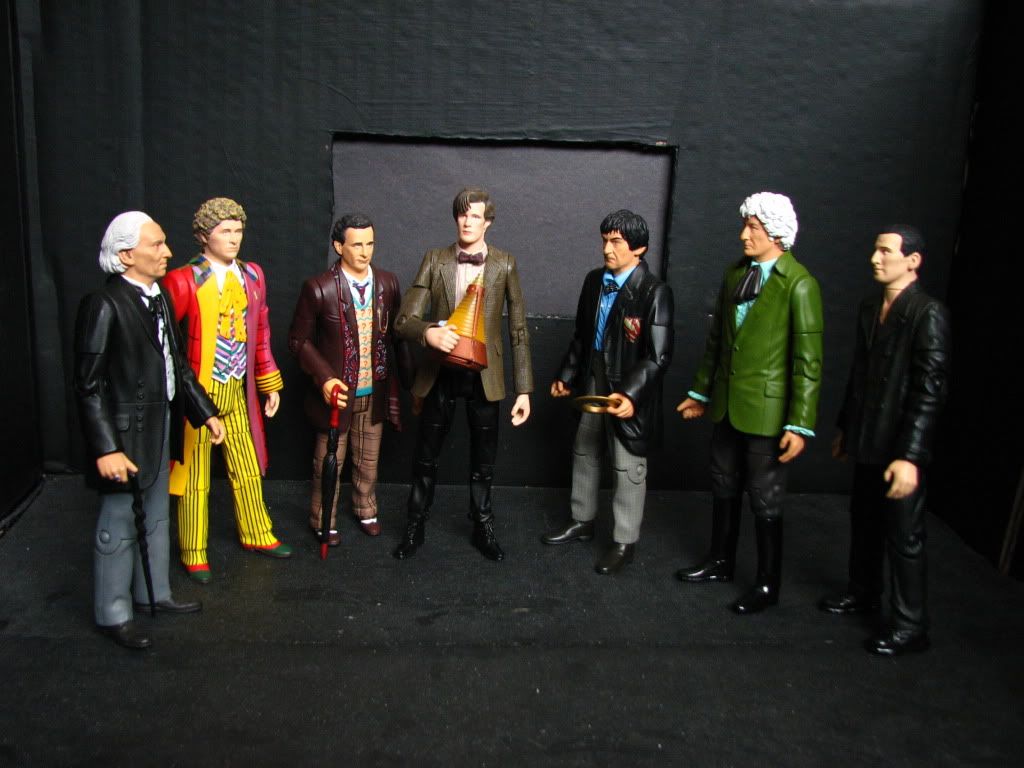
I've been meaning to write an article on a Doctor Who fan film series I made a few years back in the summer holidays - and with talk rife at the moment, what better time to talk about my own take on 'Eleven Doctors' - featuring the voices of Matt Smith, William Hartnell, Patrick Troughton, and all the rest?


I'm sure it won't be news to anyone reading this, but 2013 is a particularly special year for Doctor Who - its fiftieth anniversary, to be exact. At the time of writing - with filming due to start next month - speculations are wild for what the upcoming special story will be like. Will any the old actors who played the Doctor turn up - like in previous years? And what about including ones that are dead, or very old? Could there be other old guest stars, companions, monsters? What does Steven Moffat have up his sleeve?

Well, I don't have any answers*. But I do have my take on what such a special could be like...

It was back in the summer of 2010, and Matt Smith had just done his first 13 week run playing the Doctor (and only 13 week run, come to think of it!). Added to that, for the first time, the earlier Doctors were being released in toy form - fans could get a complete set of all eleven! In this era, where all the early years of the show are readily available and embraced, this sparked a lot of imaginations...


At the time, I'd done a few films with action figures. The Doctor versus the Daleks, that kind of thing, normally stop motion. With some of them, I'd put on voices - and because I'm rubbish at impressions, using sound clips from the TV show. If I was going to do a 'meetup' adventure of all of them - which was irresistable! - I'd have to make them talk to each other, and that meant using the original actors.

Yep, even Paul McGann!
It was ambitious. Actually, it started off as a one-off - a fun, short episode where the Doctors found themselves together, and decided to argue, ending on a cliffhanger. (I often end things on a cliffhanger, and then never resolve it!) I knew a website which handily offered soundbites from the show, so I was able to pick and choose a range of dialogue for the characters to say, and then piece things together, like a giant jigsaw puzzle. As the scale of the adventure increased - a very exciting prospect! - I quickly exhausted the list, and had to source my own clips from the DVDs, a few audios, deleted scenes, extra games, practically everything (with big thanks to online transcripts of the episodes, saving me a lot of time when I wanted something specific, like opening a door!).

Some ideas I'd had from the start. Others came to me whilst I was collating possible voices - for the story has to be driven by what the characters are able to say, or else the whole thing feels manufactured. One thing was certain - I wanted to feature all the Doctors, taking an equal share of the lead role (a hard task in itself - that's eleven lead characters!). Although I didn't have much choice when it came to companions, as many weren't released yet - I chose Amy, as she was the current one, though I couldn't resist featuring K-9 and Captain Jack too. However, all the big monsters would feature, like in previous specials - so thanks to the range of toys, we had Daleks, Cybermen, The Master (with a rather hammy voice), Weeping Angels, Sea Devils, Sontarans, Autons... the works!


And whilst the plot was always going to be weaker than most, I tried to make it as much like a proper new series story as possible - whilst nicking the general 'quest' format from The Five Doctors, and with a few blatant homages to old stories along the way.

As it turns out, the series was really popular. About two months elapsed between the first and the last part (including a holiday, hence a slightly rushed editing on Part Two), with the production getting slicker as it went - the first part, with static figures in a dark room talking, is a little quaint now I look back. The whole thing totals an hour - pleasingly, about as long as a 'proper' episode!

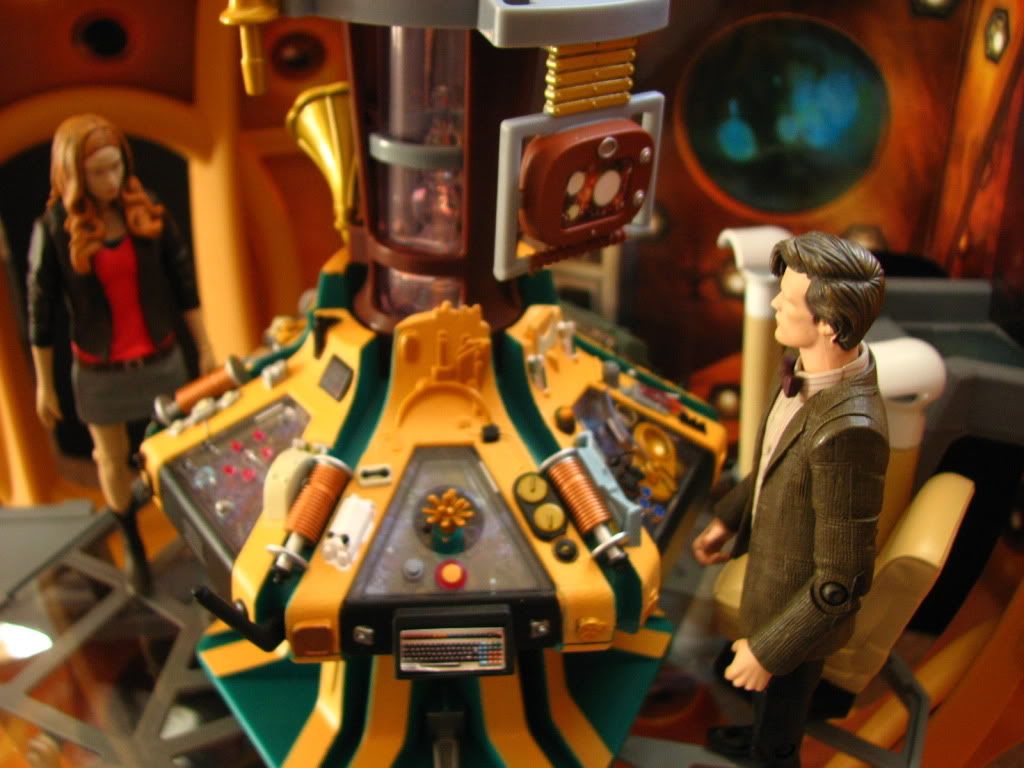
Plus a short scene at the end, in the new TARDIS set - which has just come out when recording the final part!
So, if you haven't seen it yet, why not have a watch? It's made out of six-inch-tall plastic toys by a teenager (on his own!), with various cardboard spaceships and a back garden becoming a rainforest. But it's bursting with imagination - and who could resist pitting William Hartnell against the Weeping Angels?


For more videos, before and since (I was going to follow this up with other invidual Doctor stories - but I only got as far as a dark Tom Baker tale!), see my Youtube Channel - http://www.youtube.com/user/Aquatics64

And Babelcolour's 'The Ten Doctors' is highly recommended - like this, but made out of video clips. Highly accomplished!

(*though I'd expect something like the Doctor visiting his past - possibly solving a mystery, like the Silence stuff - and so we have quite a few references and cameos, but an actual storyline. Think Wedding of River Song crossed with a Who convention!)

5 Mar 2013

The Oscar Wilde Murder Mysteries


On the 30th August 1889, a very auspicious dinner was held. It was an event to discuss forthcoming material for Lippincott's Monthly Magazine, and among the diners were two of the most acclaimed writers of the forthcoming decade, if not the century. One was Arthur Conan Doyle, who contributed his second novel featuring Sherlock Holmes, 'The Sign of the Four'. In only a few years, Sherlock Holmes would become a household name. As would another writer, but for very different reasons: also attending was Oscar Wilde - the Irish poet, playwright, and personality, later writing 'The Picture of Dorian Gray'.

This meeting provides the incredible conceit behind Gyles Brandreth's ongoing series of novels: what if Oscar Wilde, one of the greatest minds of the age, had investigated murders and crimes, in the style of Sherlock Holmes - together with Conan Doyle (and others) as Watson?

What makes the series far more convincing than you might have first thought, is the level of research. Brandreth - a self confessed Wilde afficiando - plunges you into the time of the 1890s, complete with an array of colourful characters, most of which are real people. Due to Oscar's social standing, he mixes with princes, with acclaimed actresses, and with writers like Bram Stoker - yes, he really did know the man who came to write 'Dracula'. And he captures the vibrant wit and voice of the main character, without reducing him to an endless stream of epigrams and quotes from his plays - at times, delving into Oscar's complex morality and conscience. This grey area chimes well with the dark and shady practices that the books are (entertainingly!) full of - the crimes and corruption that form the 'murder mysteries'.

So far, there are six books in the series - and happily, they can be read in any order. Each is set in a clear place and point in Oscar's life- there's a highly researched picture of London as Oscar would have known it, as well as trips to Italy, and his time spent in Paris, back when he first became famous.

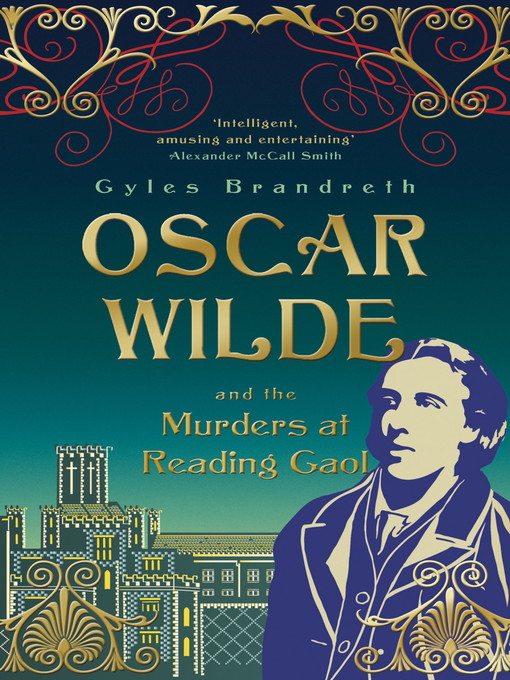
The latest book, published late last year, tackles Oscar's darkest period - the two years of imprisonment, spent in Reading Gaol.
Unlike most of the other books, here there is no Watson figure. It was a time when Oscar found himself cut off from his old way of life, and his old friends, and so rightly it has a very different feel to the rest of the series. Gyles Brandreth takes perhaps a risky approach, by telling the story from Oscar's point of view. He narrates his time spent there, and so we hear of his thoughts and feelings. That this approach is successful, shows what a clear voice the author has shaped throughout the books - that he can get into his mind, and eloquently express the trials and anguish of prison life.

It's a very accomplished book, and like the others in the series, a very good murder mystery indeed. Like the best of them, it keeps you guessing, with a cast of suspicious suspects - although, it's probably best to discount those characters that you know really existed!
In a way, the concrete grounding in fact is the series's weakness. Some of the books feel more researched than others, or having more of a historical basis. They say you should never let the facts get in the way of a good story - although the investigations and murders themselves are fictional (hopefully!), a few of the suspects and cameos are minor celebrities, which can upset the deductive process - where anybody might be the killer!
Nevertheless, there have been a few occasions - including with this book, Oscar Wilde and the Murders at Reading Gaol - just how historically accurate they are. I naively assumed that much of the book, with the inner workings of the prison, with its harsh rules and wardens, were fictionalised, by the author reading between the lines, but no - using detailed accounts from the past, with various documents and testimonies, Gyles Brandreth was able to recreate this dark period of Oscar's life with a high level of detail - that it was so readable does him credit.

 The inside cover of the latest novel provides a final delight - an adaptation of the series could be on the cards, produced with the BBC and also Sprout Pictures, part-owned by a certain Stephen Fry... that would be truly exquisite!

31 Jan 2013

Warm Bodies

Possibly the weirdest idea for a film in a long time, 'Warm Bodies' (out next week) is a post-apocalyptic tale of a teen zombie falling in love with a pretty human girl, who's part of the resistance. And he's eaten her ex-boyfriend. Yep - it's probably the second zom-rom-com around...


The two leads are terrific, especially Nicholas Hoult, who has to spend the film in zombie-makeup. It's surprising just how much we root for him, considering zombies have a top speed of twenty words a minute (excluding voiceovers).

Being a genre mash-up, it's got recognisable set-pieces from both romantic comedies and zombie horror. It could easily feel clichė, but surprisingly it doesn't, which is a testament to the makers of the film. But it's definitely primarily a comedy - and pretty funny, too.

The slightly stock nature of the plot at times could be a bad point, but it does help keep things light. It's a fun movie overall - perhaps let down by the lack of 'heart'. I guess that's obvious for a zombie movie, but these characters feel like they need to be fleshed out more. Besides that, it's pitched well for the audience (with some nifty effects, too), and should be a hit.

24 Jan 2013

Agatha Christie's Autobiography - a review


After reading almost all of her canon of work, I've delved into one of Agatha Christie's most important tomes - her autobiography. Though published in the months after her death, it covered her life up to when she was in her seventies, about ten years before she died. Whilst I was reading and discovering her books, I'd built up a strong image of who she was - by what subjects she wrote about, or information regarding the publishing of her books, or that famous disappearance - and even some particularly autobiographical characters she created. So, how would I find reading this, her own, perhaps definitive, account of an eventful life?

The book is a long one - it weighs in at 250,000 words, and took her fifteen years to complete it. But the extra time was worth it, as it's packed full of interesting stories and happenings. And whilst there are digressions along the way, it has all the economy - and excitement - of one of her great books.

People who are expecting a complete guide of every process that goes into writing one of her novels are going to be disappointed - it's an autobiography after all, a personal account of the story of her life. The books rarely feature - and when they do, they're the ones that she considers important personally, or that she has strong memories of, or has picked out as a good book when reading back many years later. There's particularly a fair amount about how she came to write her first book, The Mysterious Affair at Styles, and also the publishing side of things.
It's interesting to read how at first Agatha Christie didn't consider herself as a novel writer, but as a wife who started to do that sort of thing on the side to make some extra money. Ten years on, and she found herself writing books even when she didn't want to - a sign, for her, that it was now a job, and she would write a book every year. There are recollections of crafting some of her early work - the light hearted adventure type thrillers "that are more fun, and quicker to write", yet few of the period in the 1930s in which some of her most acclaimed detective stories were published. However, she also delves into other parts of her work (such as poems, short stories, romantic novels and acclaimed plays) and interestingly, her thoughts on the process of writing, and how she came to do it in the first place. Written in the first person, she shares a lot of personal opinions, and it builds up a picture of her own character - and in one frank section, she simply gives us a list of things she likes and things she doesn't!

That's not to say the life she's lead isn't recognisable as something out of a Christie novel. Plenty of autobiographical detail seems to have been included in her work, sure to be picked up on by those who have read it. Things like travelling on the Orient Express, dig sites in Syria and Iraq, or an exotic business holiday to South Africa, which was then extensively used in the early thriller The Man in the Brown Suit. Much of her childhood seems very close to the Mary Westmacott romantic novels, in which she painted a picture of someone's life story - some things copied word for word - and later novels, like Postern of Fate. But these references are fewer than you'd think - she says she rarely based characters on anybody in real life, certainly not people she knew, and after all - in her eyes, they were purely escapism.
Rather, the avid Agatha Christie reader gets a sense of the time she was living in, and the wider world in which her books were written in - a time of country houses, servants, generations of men becoming soldiers, and unexpected foreign travels. It's easy to forget that some of the events she describes happened over a hundred years ago.

After a slow start, though with many detailed recollections of her early years - no less busy than her later ones, as her parents moved around France as she was growing up - she then covers the events of her reaching adulthood, with plenty of prospective husbands! Personally, I found the book picked up pace, despite the many amusing and heartfelt events of her childhood - and became even more interesting when it went on to cover the events of the First World War, and the interesting world of the VADs, and events that would strongly shape her future.

The book, and by extension her own life, covers a lot of ground - from schooling, to nursing, to travelling round the world - and is often a joy to read. Her books are often praised for their readability, and this one is just the same. Despite the length, it's accessible, enjoyable and moving - giving us an insight into the modest, retiring crime writer, whose audience - including me - previously only knew through her detective novels.

13 Jan 2013

Children's TV - and a plea

I have vast swathes of recollections of things I used to watch when I was younger (not to mention books!). CITV generally ruled, although we did watch some CBBC - and that's aside from the indomitable collection of Disney videos. (Breakfast TV, normally filled with cartoons - although that included Pokemon - was strictly limited to holidays)
When I was younger - Thomas the Tank Engine, Bodger and Badger, Noddy, Old Bear, Sooty, Dennis the Menace, Winnie the Pooh (ohh, great cartoons those were). Probably the greatest show, which definitely stands up to rewatching, The Animals of Farthing Wood, and similarly the perfect Mr Bean. Goosebumps, Sabrina the Teenage Witch, Hey Arnold, hazy memories of the ultra scary Blair-Witch style Jeopardy and Are You Afraid of the Dark. Sunday evening dramas like Aquilla, the oft-mentioned (in my family) Black Hearts in Battersea and The Wolves of Willoughby Chase, The Phoenix and the Carpet, and something involving chocolate. The Worst Witch, The Demon Headmaster - based on the books, with a creepy series about plants and cloning too - Children's Ward (a soap, basically). My Parents are Aliens, Jungle Run, Art Attack, Zzzap!. The original, far inferior, Horrible Histories. And also lots of pretty good shows about computer games - which seems odd now, looking back.

And then there's a drama series, which must have been shown around 2002-2003, which I can't for the life of me track down. And of course, I remember a lot about it - albeit not its strange, weird name that you could hardly pronounce (an acronym, perhaps).
It was presented as a game show or reality show, and had a group of about eight children (who were slightly annoying and bickering) staying in "the world's largest film set". A bit like The Truman Show then - weird things happened each week, shot on 'hidden' cameras, but we were given a glimpse of what was happening behind the scenes - stuntmen and actors and people moving the set around.
I think I missed the first episode (it was on twice a week, Mondays and Tuesdays I think, about 4.30 - I used to scour TV listings even when I was younger), but there was a cake competition I remember, which ended up being poisoned and making the entire town ill, and the villagers angry. In another episode, the group ate some drugged blackberries, and then woke up to find the entire set had been switched to the medieval times, in a sort of time travel adventure. In another, the group stood outside a TV shop, when suddenly aliens attacked (at night - so basically just lights and explosions) and random bystanders were seemingly killed in front of them.
Of course, this made an impression on me - but I can't find anything about it online at all. At the end of the series, the group of children that remained won a prize, a huge money prize (a million dollars?) but couldn't spend it until they were older. It's probably an American or Canadian or Australian show or something, which is why I can't find it.

Around the time of this mysterious show they were syndicating lots of similar dramas from other countries. Pirate Islands was good, set on a virtual tropical island with an over-the-top pirate captain's ship parked nearby. Blake Holsey High looked cool, of a similar style to Buffy, but I only saw the first few episodes. Alongside more home-grown stuff - Sir Gadabout and Harry and the Wrinklies, and odd stuff like Don't Eat the Neighbours.

Later I moved to BBC for some reason - watching Blue Peter for once (though I can't remember many others - though Shoebox Zoo was good, and later things like Trapped!) and then, when I was about 13, Doctor Who would have arrived! And it was long overdue...

3 Jan 2013

The Greatest Show in the Galaxy - review

Is this my first proper Doctor Who article on here? Blimey. Well, I saw this late 1980s story recently, and wondered if I could write a review on it. It's a tricky one to get your opinion round, so perhaps it's a good idea. Here goes then.

The icing on the cake of any Doctor Who story is if it includes a scary monster, something that will last long in the memory of children watching. The setting of The Greatest Show in the Galaxy delivers on this front - the Doctor and companion Ace visit the renowned Psychic Circus, whose acts are turning murderous... Killer clowns? It's a classic frightening image that rarely crops up in the show, possibly because it's almost too frightening for half seven in the evening (see The Deadly Assassin for a previous incredibly scary cameo).

And elsewhere, it's a typical Doctor Who adventure, and very reminiscent of other stories of the era. The wealth of location filming in a rather fine desert-like quarry means the production stands up rather well. The writer, Stephen Wyatt, also wrote Paradise Towers in the previous season, to mixed reviews. The similarities are there if you look for them - both have settings populated by a variety of surreal characters, and by the Doctor has arrived, the place has run down, with the robots seemingly developing a mind of their own, in order to appease a god-like figure. But thanks to a much more grounded location - a circus tent! The corridors are simply walled by bits of cloth, genius! - and more focused direction, this second story is far better (even if the production was apparently rather troubled - but you can't tell).

Inside the circus of terror... cheap but cool!


With Sylvester McCoy having found his feet by now, the Doctor is a delight to watch, not least demonstrating some crazy circus skills in the final part. Ace, by comparison, doesn't have an awful lot of character moments, although her fear of clowns is acknowledged (and, in part, overcome), but does get a strong part of the plot, helping the Doctor as his plan comes together whilst defeating robots, without hardly a scream or a pointless question. But it's the mysterious Mags who steals the limelight, getting a nifty twist to her character and a cliffhanger too.

At four parts, it's not too long, but perhaps the story sags in the two middle parts set entirely inside the circus tent. The bad guys only show their faces at the climax of Part Four, alas - and they're pretty famous, bandied about everywhere, like on the DVD cover - though they are done well, with menacing voices. Similar pacing is abound in the likes of Ghost Light or Paradise Towers or The Curse of Fenric - but at least it means the final episode isn't a damp squib.

It's a story with a wonderfully surreal flair, a script that's surprisingly original (not to mention layered - you can read plenty into the McCoy stories, this one included), whilst still keeping traditional monsters and thrills. This surely means, with some competition, The Greatest Show in the Galaxy is among the top stories of the era.

17 Dec 2012

Flickr highlights - 2012

Here's a (relatively) small selection of some of my most popular and best things I've put up this year - some Doctor Who related, some of where I live and other places. For more photos, here's a link to my page on Flickr.

TARDIS (of Mars) Summer Breeze Cyber Love An Awful Lot of Running sunday afternoon Autumn/Winter The Empress Hunting Bath in Miniature II Walk Across a Summer Meadow Tunnel of Love Lost at Sea Roman Baths Dalek Patrol Comic Book of the Daleks! Blue Sky Thinking Abandoned Hospital 1 Prisoner Zero Bath Cityscape Evening View Maximum Extermination! Musn't Linger Sunrise 2 "I am usually referred to as the Master..." Bennett Sunset The Dalek Invasion of Earth (colourised) Ben and Polly (comparison) pastel Now Loading “Marriage is a wonderful institution, but who would want to live in an institution?” Hooded Men Stars Asylum of the Daleks! sunday afternoon 2 pulteney street noir